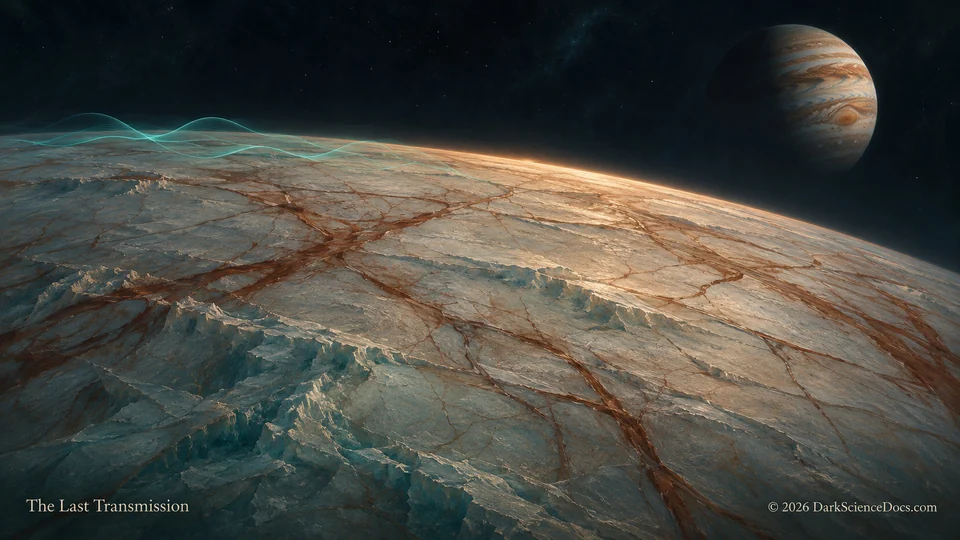
Europa’s Radar Echo: The Ice Above the Ocean
Investigate Europa’s bright radar return, the ice-scattering explanation, and the next measurements Europa Clipper can make above a hidden ocean.
Enter the investigation
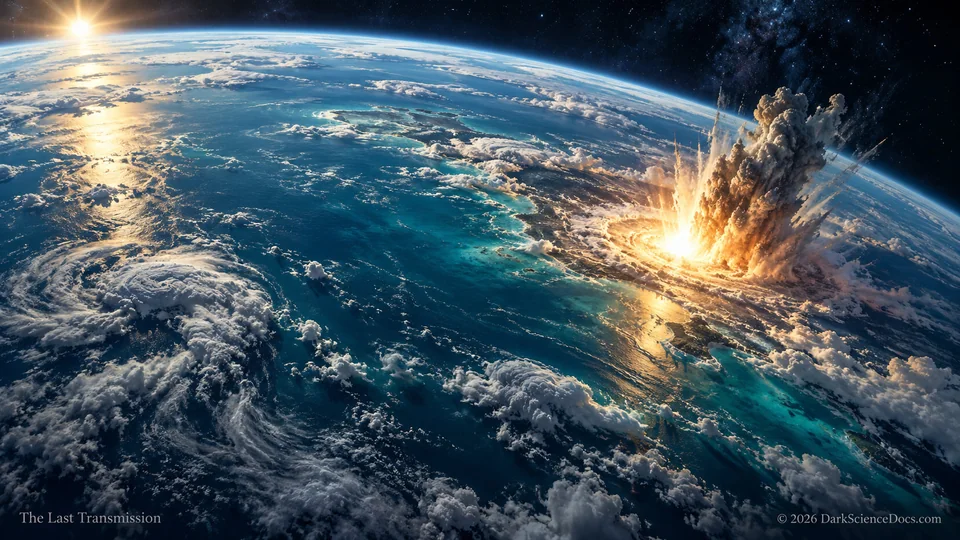
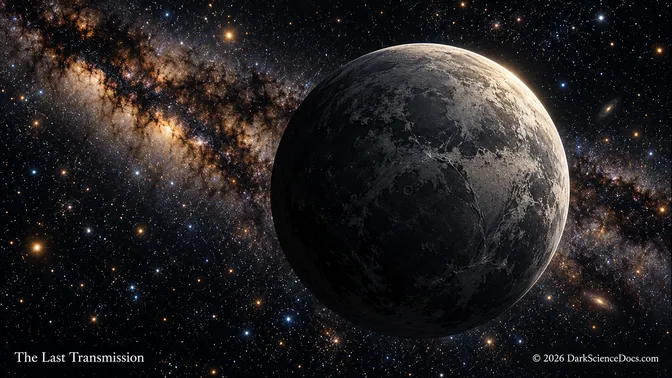
INCOMING SIGNAL / 001
Real science, told with the tension it deserves. Enter the investigations, watch the documentaries, and follow the evidence into the dark.
THE WEEKLY SCIENCE MYSTERY
Follow three clues, reconsider your explanation, and see what the evidence supports. New for Monday, November 2: The atoms that chose an exit.
Open this week’s mysterySeven cases are ready to investigate. Your casebook stays in this browser, without an account.
Visit your casebook ↗GO FURTHER. LEAVE WITH A BETTER QUESTION.
Follow a question through the Atlas, labs and evidence files. Pause at a chapter break, then return to the next clue.
Six journeys. Eight stops each. Your Explorer’s Log keeps your place in this browser, without an account.
A FIELD GUIDE TO THE UNSETTLING
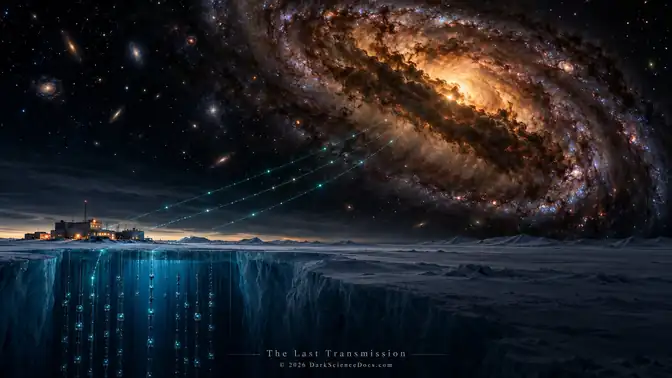
Every investigation begins with something real: a measurement, a machine, a fossil, a signal. The farther we follow it, the more unfamiliar the ordinary universe becomes. The Last Transmission brings those stories together in words, images, and film.

EXPLORATION MAP 001
Explore Saturn’s rings, Jupiter’s moons, the Sun, Mars, Venus, and the Earth–Moon system, and Pluto with Charon. Each destination opens a trail into the evidence.
Explore the 3D map →INTERACTIVE EXPEDITION / PHOBOS
Turn the moon, stand beneath Mars, then toss a rock in a world that barely holds it down.
Explore Phobos →
LIVE FIELD CALENDAR / ROMAN SPACE TELESCOPE
Roman is on its way to L2. Follow the published milestone, the questions its instruments will investigate, and what the agency has actually confirmed.
Open the science countdowns →Until the early-December arrival window begins
START WITH A QUESTION
Oceans under ice, chemistry in distant atmospheres, and the difficult question of where life might begin.
↗02 / FIELD NOTESSpacecraft, planetary discoveries, and the machines we send into places we cannot follow.
↗03 / FIELD NOTESDark matter, fundamental physics, and observations that refuse to fit neatly inside the models.
↗04 / FIELD NOTESThe unseen machinery of civilization, strange life on Earth, and risks hiding in familiar places.
↗FEATURED INVESTIGATIONS

Investigate Europa’s bright radar return, the ice-scattering explanation, and the next measurements Europa Clipper can make above a hidden ocean.
Enter the investigation
Follow the evidence from Chicxulub’s impact winter to crater hydrothermal systems, mammal recovery, and the search for habitats on Mars.
Enter the investigation
Rubin found a large, distant object among crowded Milky Way stars; older images extend its track back to 2016. Its exact size and formal classification remain open.
Enter the investigation
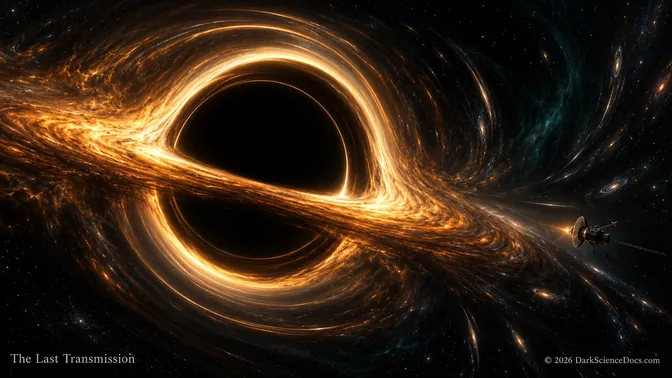
The ideal Kerr solution has an inner horizon beyond which initial data cease to uniquely fix the classical future. Whether that structure survives real disturbances is unresolved.
Enter the investigation
IceCube connects a directional excess of high-energy neutrinos with an obscured active galaxy. The signal opens a view of particle acceleration while leaving its exact location and mechanism unsettled.
Enter the investigation
A large fungus collected in Yunnan connects anatomy, molecular classification and an inferred ecological transition. Its evolutionary age and relationship with trees ask different kinds of questions.
Enter the investigationFIELD GUIDE / BLACK HOLES
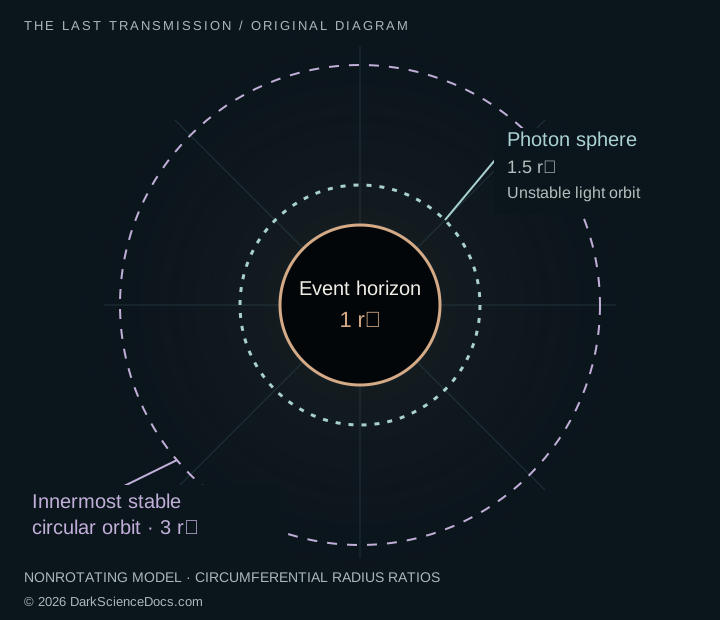
Learn what an event horizon means, follow the difference between two falling clocks, and compare tidal forces around stellar and supermassive black holes. Original diagrams and a mass comparison connect the science to the Atlas.
Open the Black Holes Field GuideFIELD GUIDE / OCEANS BEYOND EARTH
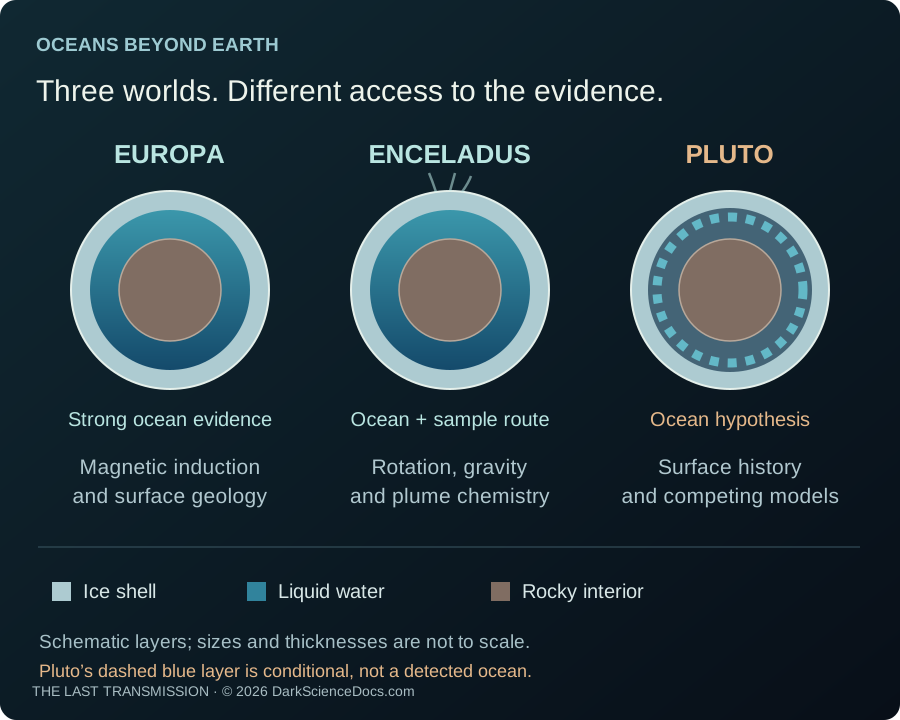
Compare Europa’s magnetic response, Enceladus’s sampled spray, and Pluto’s competing interior models. Follow the measurements into the hidden-ocean question, the search for habitable conditions, and the Atlas.
Open Oceans Beyond EarthFIELD GUIDE / HOW STARS DIE
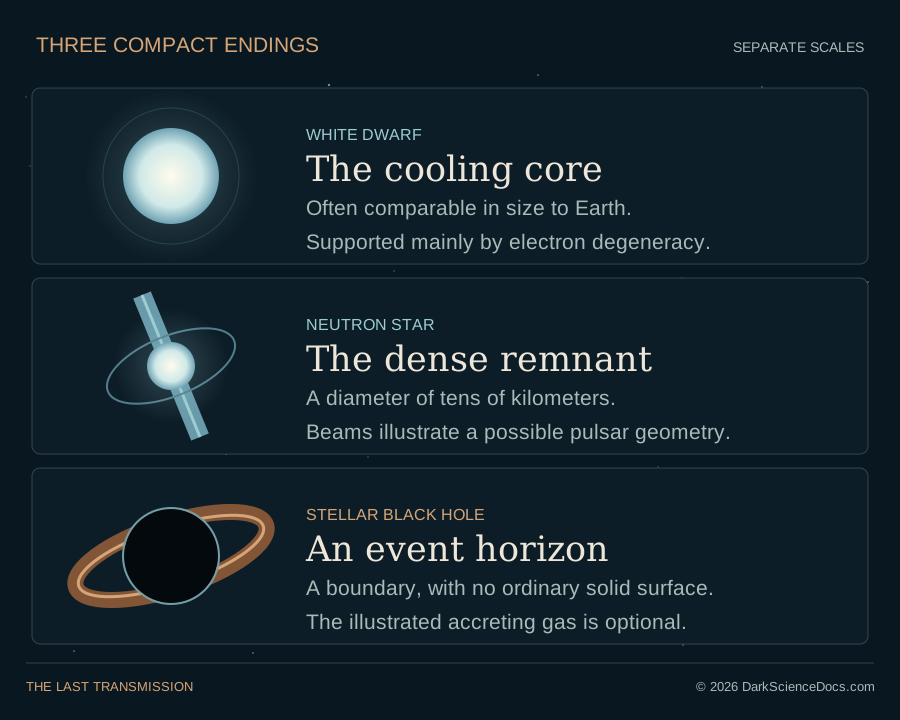
Follow single stars and interacting companions into white dwarfs, neutron stars and black holes. Compare the physics of the endings with the observations that let us reconstruct a stellar life.
Open How Stars DieTHE EVIDENCE FILES
What can a bright radar echo reveal about Europa’s ice? Follow the signal, its leading explanation, and the limits of the claim. 46 original research guides beneath the stories.
Open the Evidence Files →
NEW DOCUMENTARY / THE LAST TRANSMISSION
Watch the Europa ghost-signal documentary, then follow its radar clues into the ice-shell evidence and Europa Clipper’s next tests.
Watch the documentary Follow the evidenceFROM THE ARCHIVE

An unusually bright radar echo is helping scientists investigate the frozen shell of an ocean world, where the search for life begins with understanding what the ice allows through.

Earth’s impact history reveals how a collision can redirect evolution, create hidden habitats, and change where we look for life beyond our planet.

Hidden among the Milky Way’s crowded stars, a possible dwarf planet beyond Pluto has emerged from a decade of overlooked images, reminding us how much of our own solar system remains unfamiliar.

Einstein's equations reveal a second horizon inside a spinning black hole, where the future may cease to be predictable. Beyond it lies one of the most disturbing possibilities in physics.

Scientists have uncovered extraordinary chemical evidence that a dying star may have created an entirely new world from its own ashes.

Einstein's equations reveal a terrifying possibility: crossing the stars may be easier than returning to the world you left behind.
THE VISUAL ARCHIVE
Explore the artwork behind the investigations, then step into the story that gave each image its meaning.
Enter the visual archive →
LIGHT LAB
Move foreground galaxies to explore gravitational lensing, build a spectrum, measure parallax, shift a source’s light to explore radial motion, or investigate a dispersed radio burst.
Enter Light LabSCALE LAB / THREE USEFUL COMPARISONS
Compare black-hole horizons, calculate a signal’s travel time, and zoom from a cell toward an atom. Every tool shows its working and the assumptions behind its answer.
Open Scale LabSCIENTIFIC INQUIRY / APPLIED HERE
Explore all twelve principlesAcross this site, illustrations invite exploration while Evidence Files trace claims back to measurements. Follow what was observed, how it was interpreted, and what might change the answer. The inquiry guide gives you twelve useful questions to take into the next story.
Ask yourself What was actually observed, and what has been inferred from it?
FOR SCHOOLS, TEACHERS & ASTRONOMY GROUPS
Original activities for classrooms, astronomy clubs, and curious readers. Each includes an annotated diagram, questions, sources, and an answer discussion.
Browse the printable exploration guides →4 pages · US Letter, 8.5 × 11 inches · 57 KB
Read online and see the sources →4 pages · US Letter, 8.5 × 11 inches · 56 KB
Read online and see the sources →FROM THE VISUAL ARCHIVE
Read the investigation ↗