
VISUAL ARCHIVE / IMAGE STORY
A Natural Capsule Around a Spore
Protected moss spores were resilient in tests; this large-scale cutaway is explanatory.
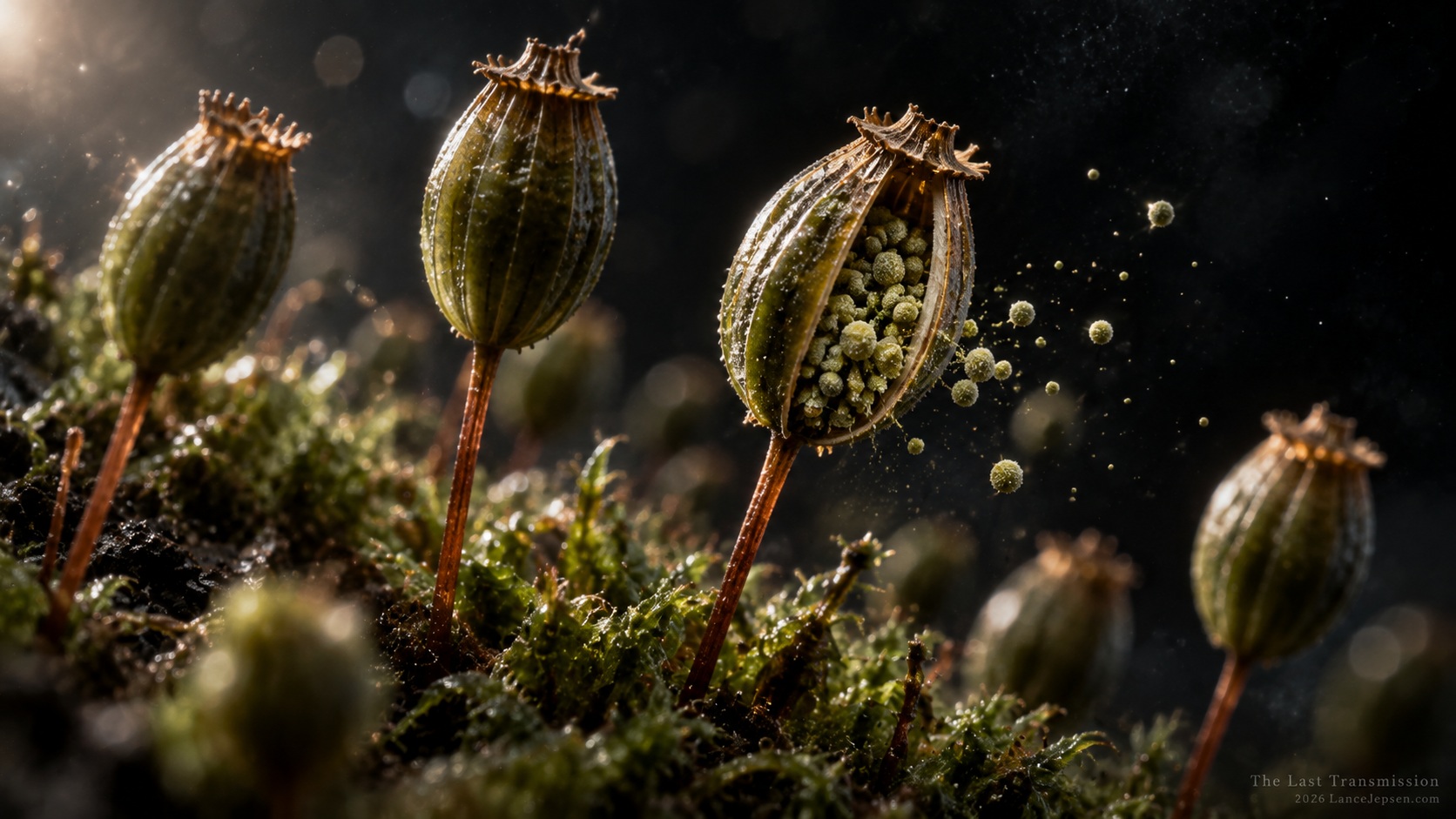
The sporangium surrounding moss spores may act as a natural protective chamber, helping shield dormant spores from radiation, desiccation and extreme environmental stress. AI-generated scientific illustration for The Last Transmission.
THE OBSERVATION
What we can actually see.
The study compared moss tissues under simulated stress and found spores enclosed in a sporangium especially resilient. Samples then spent 283 days outside the ISS, and many returned spores germinated. The comparison points to a protective role for the natural capsule under the tested conditions.
THE ILLUSTRATION
What the artwork imagines.
The open cross-section magnifies and simplifies tissue so the possible protection is visible. Shielding is not absolute, and the drawing does not give measured thicknesses or show a spore surviving every stage of space travel.
FROM THE ILLUSTRATED ARTICLE
The story that inspired it.
The article follows the humble moss sporangium as a candidate explanation for why dormant spores fared better than other tissues.
Read Life May Not Need a Spaceship to Cross Between WorldsCHECK THE RECORD
The image interprets the research below. Follow the original work for the measurements and limits behind the scene.
Maeng et al., moss spores exposed outside the ISSOTHER IMAGE STORIES
 A Spore on a Journey No One Has Seen
 Nine Months Outside the Station
 The Mark Shared by Titan and Pluto