Follow the signal through worlds and galaxies, descend into an ocean, then move inward toward cells and matter. Each scene opens a research file and shows where the evidence ends and the illustration begins.
01 / OUTWARD
Cosmic Maps.
Explore the observable neighborhood of galaxies, the Milky Way’s dark heart, and the worlds around our Sun. Each step changes scale; the scenes are independent models rather than one continuous flight.
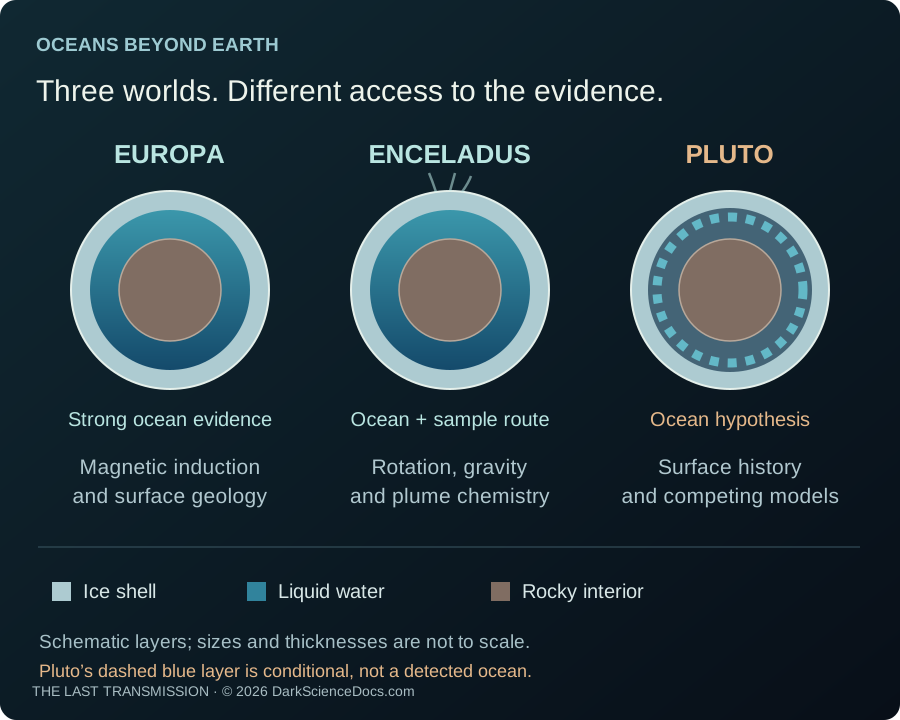
Between worlds and cells lies an environment where light, chemistry, and geology change with depth. Start with a guided Earth ocean descent; follow the separate evidence for other ocean worlds from there.
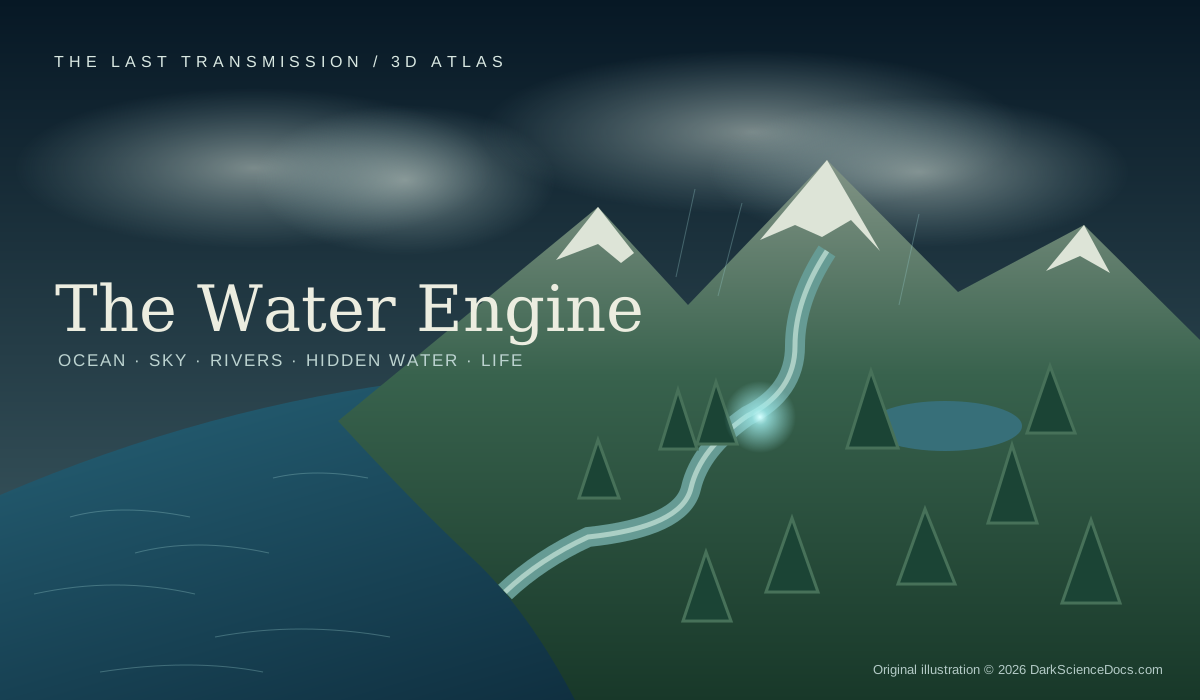
Follow the hydrologic cycle, enter a rainforest ecosystem, then move inward to its cellular machinery. Compare a eukaryotic cell with a bacterium and explore the energy systems inside mitochondria and chloroplasts.
Start with an atom, then follow the three gratings that made a 7,000-atom cluster reveal its wave behavior. Then explore antimatter confinement and read the tracks left by a high-energy particle collision.
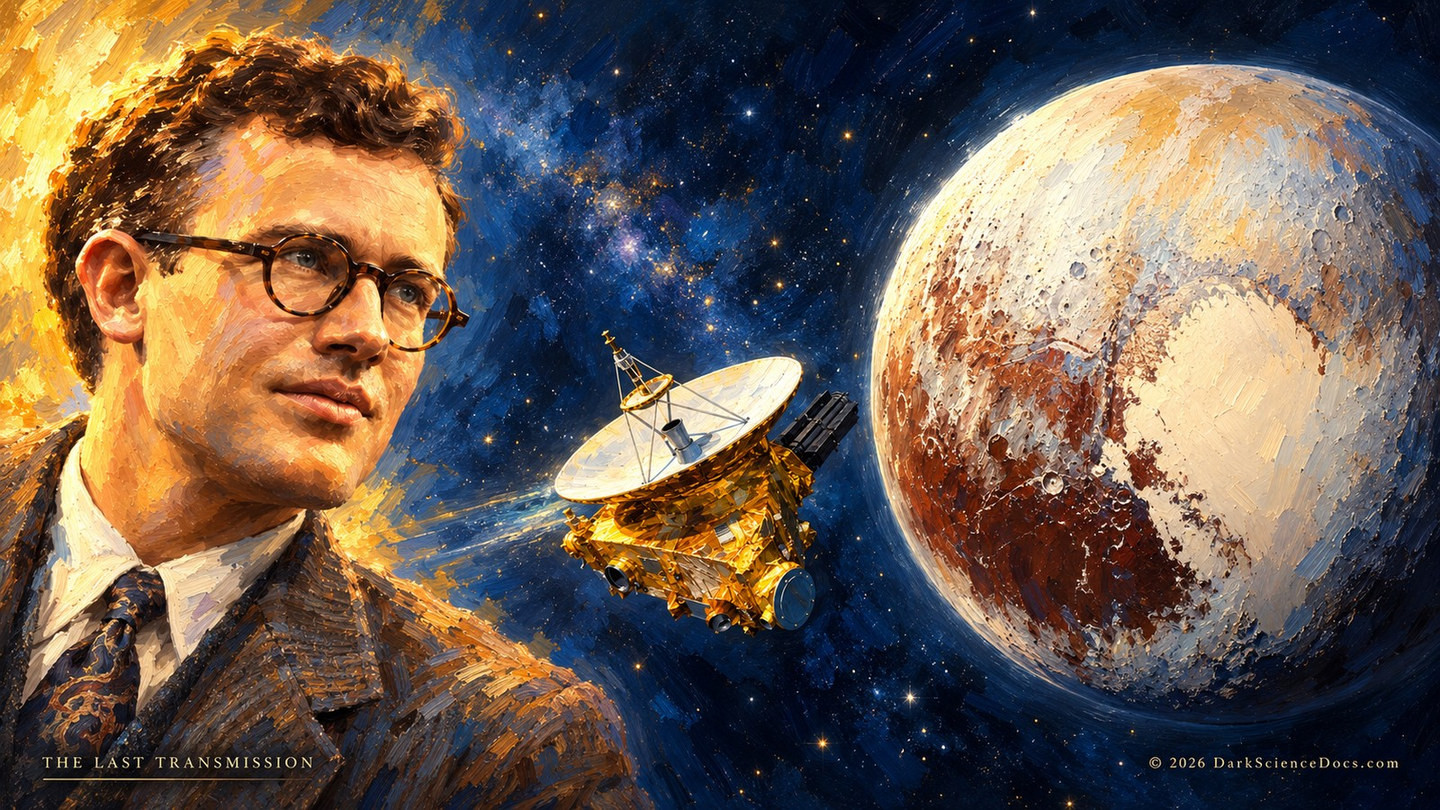
A discovery became a destination. Follow Clyde Tombaugh, the memorial carried aboard New Horizons, and the people who revealed a world he never saw up close.
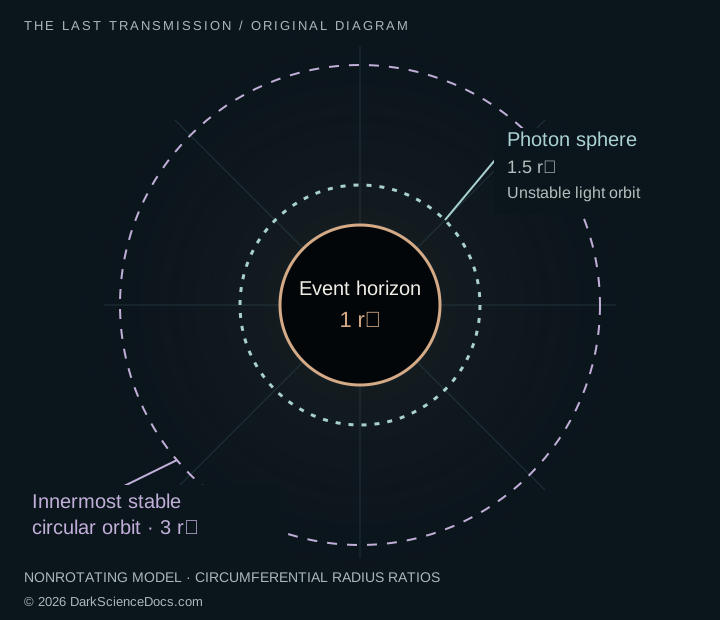
Learn what an event horizon means, follow the difference between two falling clocks, and compare tidal forces around stellar and supermassive black holes. Original diagrams and a mass comparison connect the science to the Atlas.
Compare Europa’s magnetic response, Enceladus’s sampled spray, and Pluto’s competing interior models. Follow the measurements into the hidden-ocean question, the search for habitable conditions, and the Atlas.
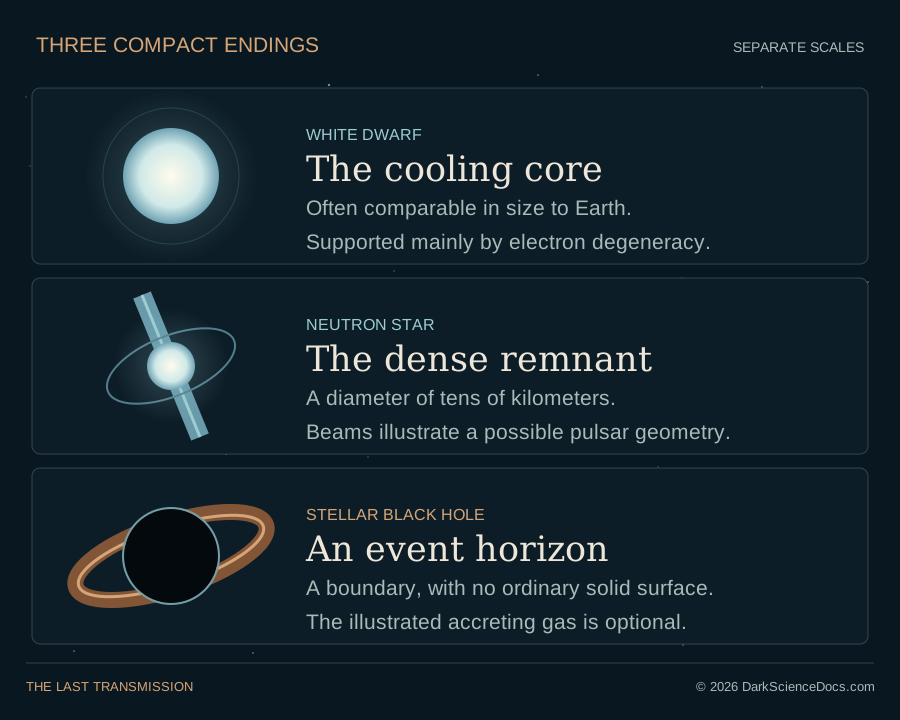
Follow single stars and interacting companions into white dwarfs, neutron stars and black holes. Compare the physics of the endings with the observations that let us reconstruct a stellar life.
Compare black-hole horizons, calculate a signal’s travel time, and zoom from a cell toward an atom. Every tool shows its working and the assumptions behind its answer.
TAKE THE QUESTION OFFSCREEN / PRINTABLE ACTIVITIES
Print. Investigate. Discuss.
Original activities for classrooms, astronomy clubs, and curious readers. Each includes an annotated diagram, questions, sources, and an answer discussion.
The Atlas lets you manipulate selected structures and scenarios. Its illustrations are designed to teach relationships, with scale and complexity chosen for that purpose. Repeating a screen experiment is useful for learning but is different from testing the world with additional observations.
Ask yourself Which assumptions drive this result, and where would the model stop being useful?
THE SIGNAL CONTINUES
Some discoveries stay with you.
Get the illustrated investigations delivered to your inbox. Then follow the questions that refuse to leave.