
EVIDENCE FILE 43 / SOURCE-LED
What Does the Geologic Record Establish About Snowball Earth?
Separate the observation from the proposed explanation and its limitations.
THE SHORT ANSWER
Low-latitude glacial deposits, paleomagnetic evidence, and distinctive postglacial carbonate sequences support exceptionally extensive Cryogenian glaciation.
That supports further investigation, but it does not by itself prove every interpretation associated with the discovery.
OBSERVATION / INFERENCE / LIMIT
Follow the chain of reasoning.
The record
Low-latitude glacial deposits, paleomagnetic evidence, and distinctive postglacial carbonate sequences support exceptionally extensive Cryogenian glaciation.
The proposed explanation
Ice may have reached low latitudes and, in some models, covered nearly the whole ocean; life likely persisted in localized environments such as meltwater or ice-margin refuges.
The limit of the claim
Geologic clues do not resolve exact ice coverage at every date or locate every surviving ecosystem. “Snowball” and “slushball” proposals make different predictions.
HOW WE GET FROM SIGNAL TO STORY
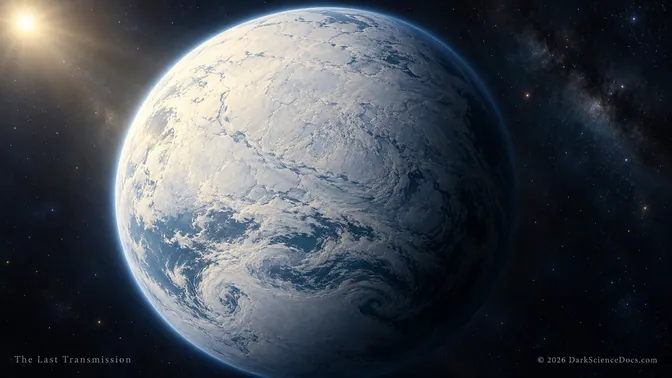
Compare the evidence with the illustration.
Earth’s Cryogenian rock record includes deposits difficult to explain without massive glaciation at low latitudes. Geologists combine those rocks with paleomagnetic constraints, isotope signals, and the sedimentary layers marking transitions out of severe cold.
The debate is not whether ancient glaciations were important, but how continuous the ice cover was and which reservoirs of liquid water remained accessible. Life was already present, so any model must leave physically plausible pathways for long-term survival.
Possible refuges include water near the margins and bases of ice, localized meltwater environments, and seasonally or geographically favorable marine regions. The presence of later descendants tells us some lineages survived, but it does not uniquely determine where every ancestor lived.
FOLLOW THE NEXT TEST
Return to the investigation.
PRIMARY RESEARCH & FURTHER READING