
VISUAL ARCHIVE / IMAGE STORY
A Sky Far From Other Galaxies
An imagined observer asks how cosmic isolation would change the view beyond a home galaxy.
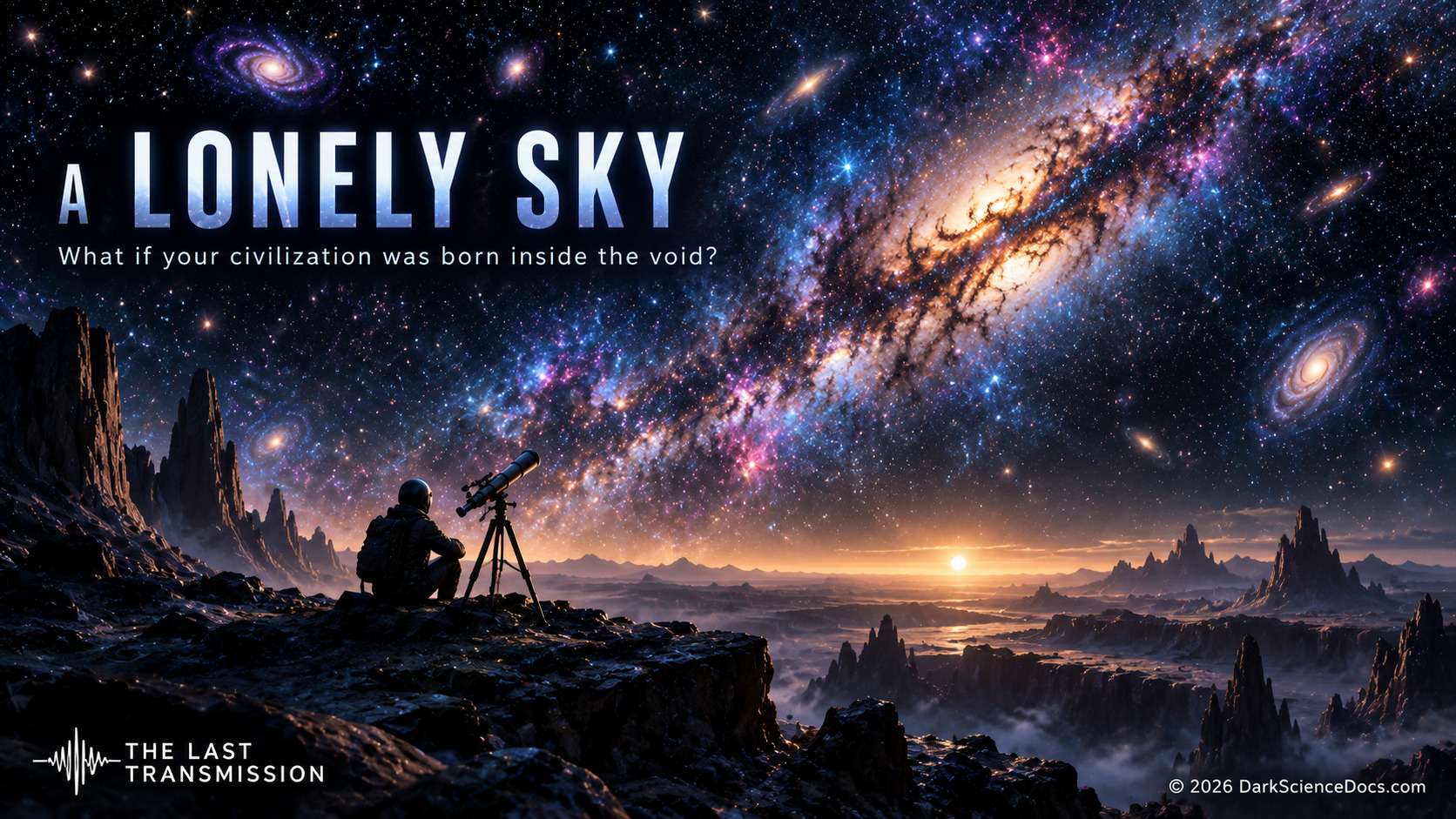
An imagined civilization observes the heavens from a planet inside an isolated galaxy. Its own galaxy still fills the sky with stars, but the nearest external galaxies may be far beyond the reach of ordinary telescopes.
THE OBSERVATION
What we can actually see.
A planet inside a galaxy still has that galaxy’s stars in its sky, even when surrounding intergalactic space is underdense. The visibility of external galaxies depends on distance, brightness, and instruments; the civilization here is fictional.
THE ILLUSTRATION
What the artwork imagines.
The composition visualizes this idea: An imagined observer asks how cosmic isolation would change the view beyond a home galaxy. An imagined civilization observes the heavens from a planet inside an isolated galaxy. Its own galaxy still fills the sky with stars, but the nearest external galaxies may be far beyond the reach of ordinary telescopes.
FROM THE ILLUSTRATED ARTICLE
The story that inspired it.
The article explores the discovery of the Boötes Void and the difference between a sparse intergalactic environment and an empty sky. It uses an imagined isolated observer to ask how surroundings could change our understanding of the wider universe. This frame focuses on an imagined observer asks how cosmic isolation would change the view beyond a home galaxy.
Read The Great Nothing: What If Your Galaxy Was Trapped Inside 330 Million Light-Years of Emptiness?CHECK THE RECORD
The image interprets the research below. Follow the original work for the measurements and limits behind the scene.
Research record: doi.org/10.1086/183623 Research record: doi.org/10.1086/165080 Research record: ui.adsabs.harvard.edu/abs/1987ApJ...314L..33M/abstract Research record: arxiv.org/abs/astro-ph/9511128 Research record: doi.org/10.1086/118604 Research record: ui.adsabs.harvard.edu/search/q=title%3A%22A%20hierarchy%20of%20voids%22OTHER IMAGE STORIES
Keep looking.
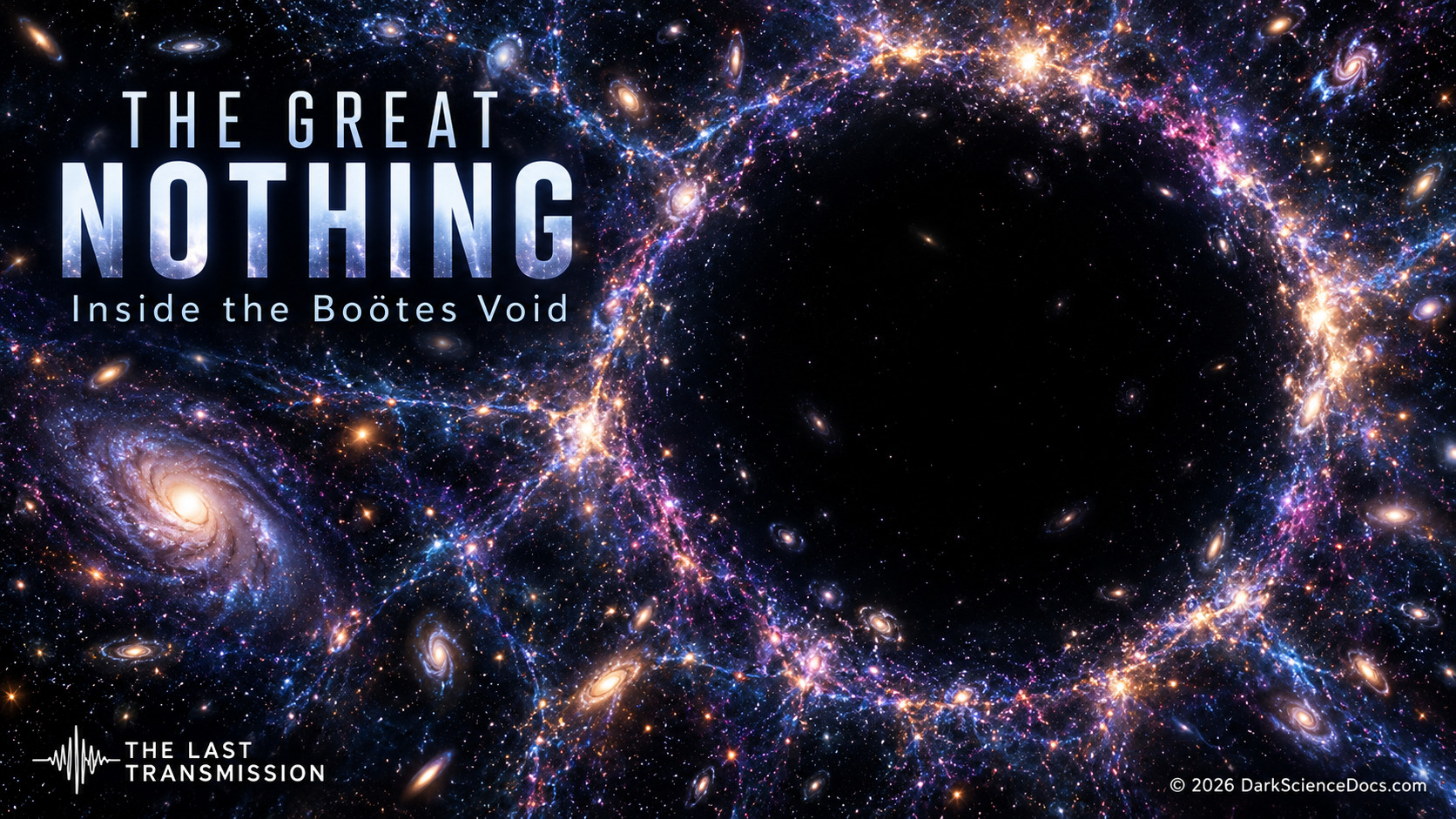 The Great Underdensity
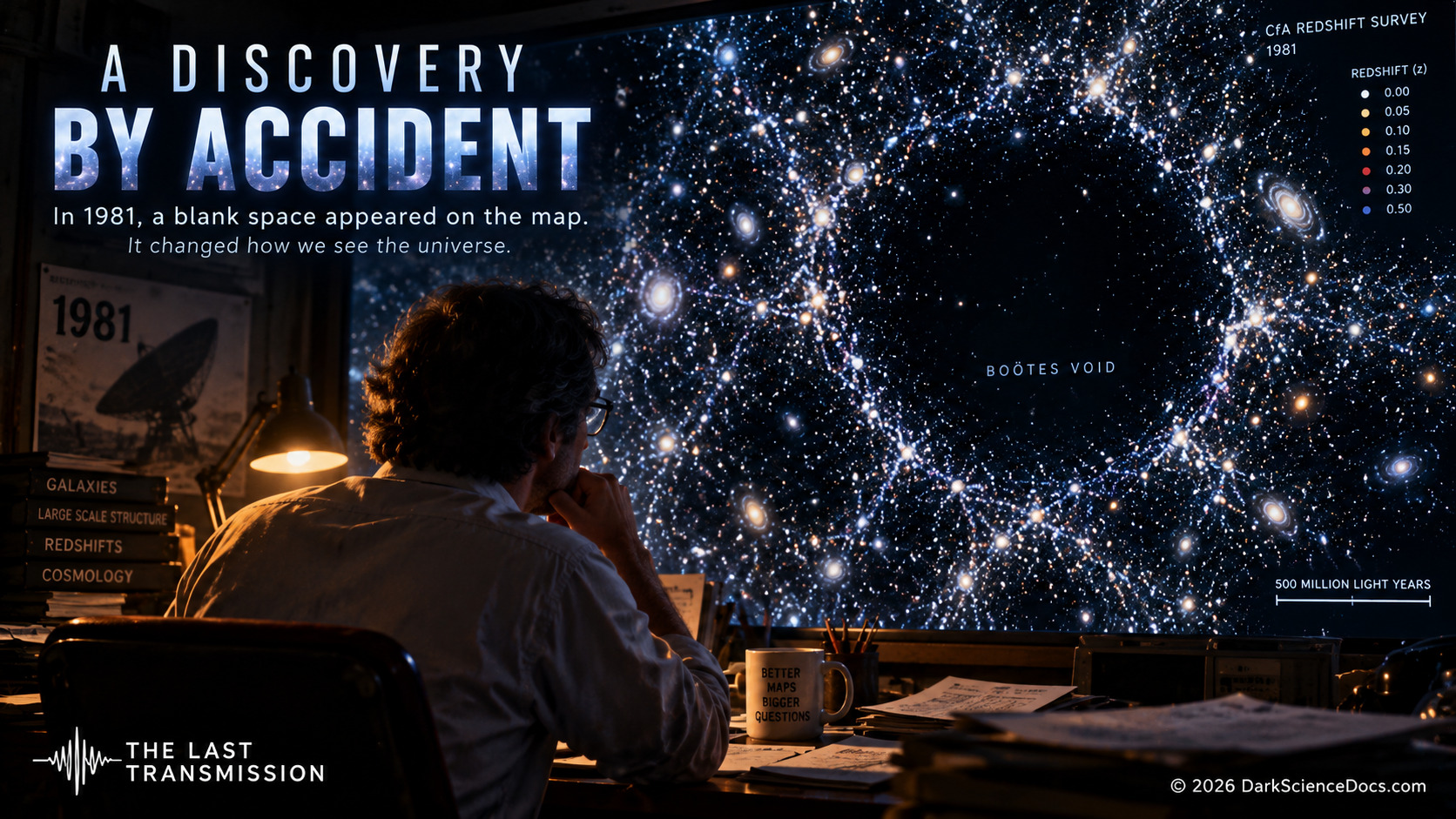 Absence Found in a Survey
 The Mark Shared by Titan and Pluto
EXPLORE IN 3D / MAP 13
Move outward through the cosmic neighborhood
Move from our galactic neighborhood toward the cosmic web. The explorer explains scale; it is not an observed map of the Boötes Void or the imagined civilization in this artwork.
Open Universe map