
VISUAL ARCHIVE / IMAGE STORY
Chemistry Left in the Layers
Geochemical clues connect the crater’s altered environment and impact material.
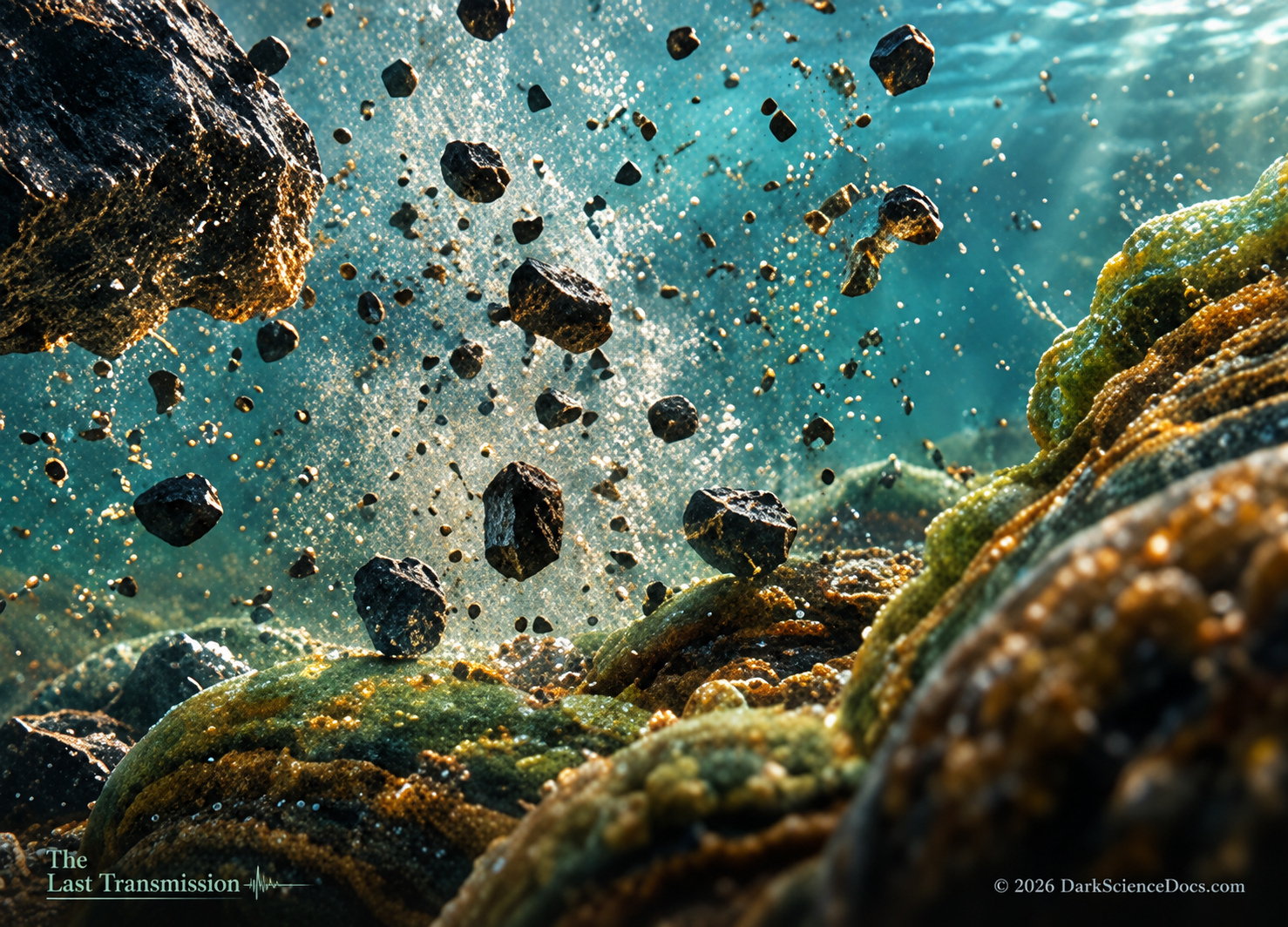
The stromatolites described in the study contain chemical clues linking their growth environment to both hydrothermal activity and extraterrestrial material. This AI-generated visualization represents the intersection of meteorite debris, mineral chemistry and microbial growth. The Last Transmission | © 2026 DarkScienceDocs.com
THE OBSERVATION
What we can actually see.
The paper analyzes signatures including europium and osmium in stromatolite-bearing material to evaluate hydrothermal influence and an extraterrestrial contribution. Interpretation depends on the full geological setting and analytical controls.
THE ILLUSTRATION
What the artwork imagines.
The glowing flecks make invisible elemental measurements visible. The image cannot show the measured isotope ratios, prove a life-origin event, or assign a meteorite grain to a particular microbe.
FROM THE ILLUSTRATED ARTICLE
The story that inspired it.
The Hapcheon study connects an impact structure, hydrothermal alteration, and stromatolite evidence without claiming that the impact created life. Geochemical clues connect the crater’s altered environment and impact material.
Read The Crater That Learned to BreatheCHECK THE RECORD
The image interprets the research below. Follow the original work for the measurements and limits behind the scene.
Communications Earth & Environment: Hapcheon impact studyOTHER IMAGE STORIES
 The Basin After the Fire
 When an Impact Opens the Crust
 The Mark Shared by Titan and Pluto