

33 / Life after an impact
When a Crater Became a Habitat
At Korea's Hapcheon impact structure, researchers describe stromatolite formation in a lake affected by post-impact hydrothermal activity. An impact may have opened opportunities after its destruction.
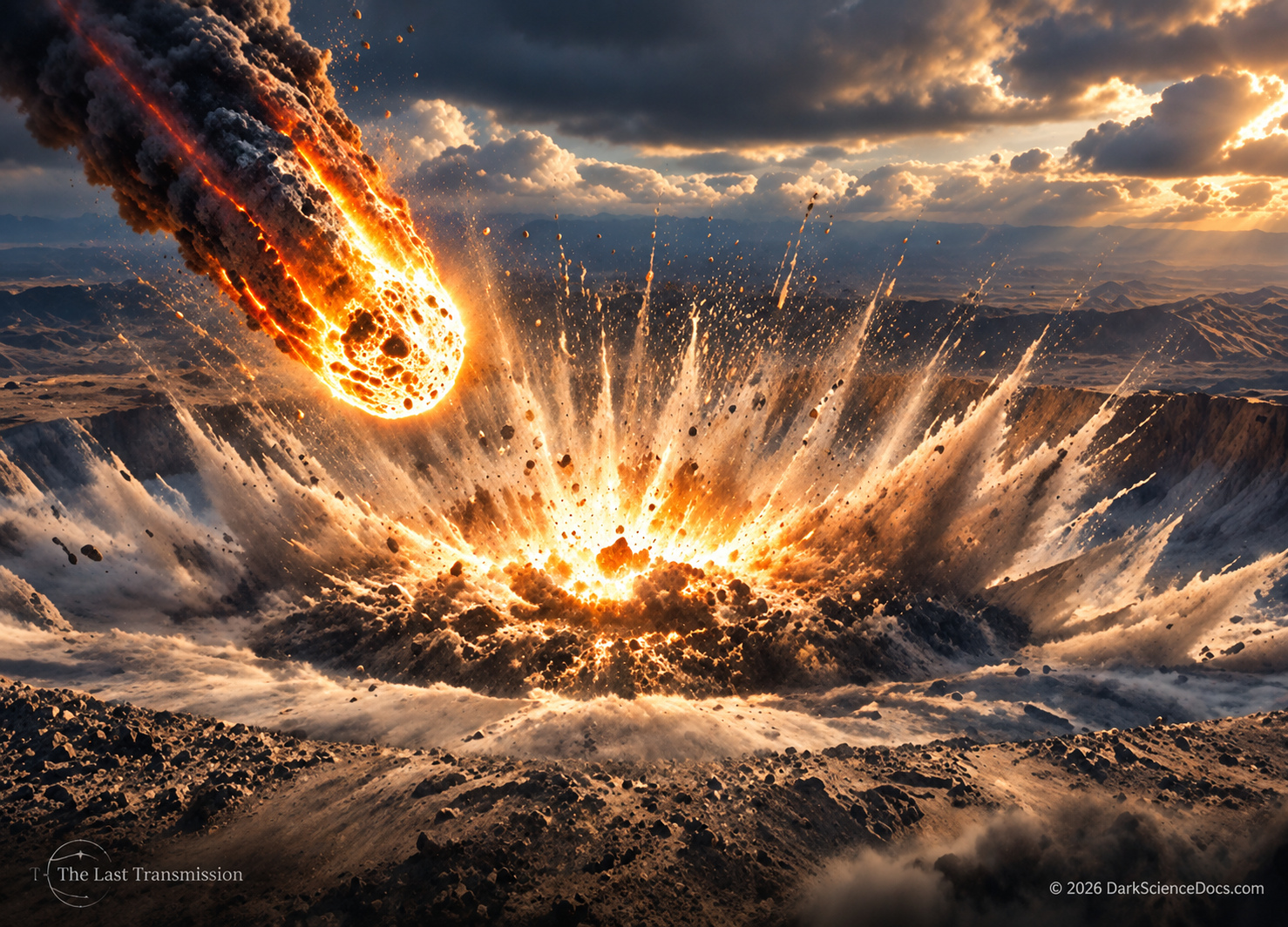
The impact was a violent beginning, not an origin-of-life experiment we can replay. Rock fractured, a basin formed, water collected, and lingering heat helped drive fluids through the structure. The reported stromatolites are layered traces associated with microbial communities in a later lacustrine setting. Reading their chemistry alongside the geology lets researchers ask how an impact-generated environment supported life already present, and whether some ancient craters elsewhere offered similar combinations of heat, minerals, and water.
The full investigation continues with the evidence, illustrations, and sources at The Last Transmission on Substack.
Continue reading on SubstackTHE EVIDENCE / THE OPEN QUESTION
What we know.
The published study describes stromatolites in post-impact hydrothermal lake deposits and analyzes their setting and geochemical record. The crater's impact origin and later sedimentary history provide the sequence in which the structures are interpreted.
What remains open.
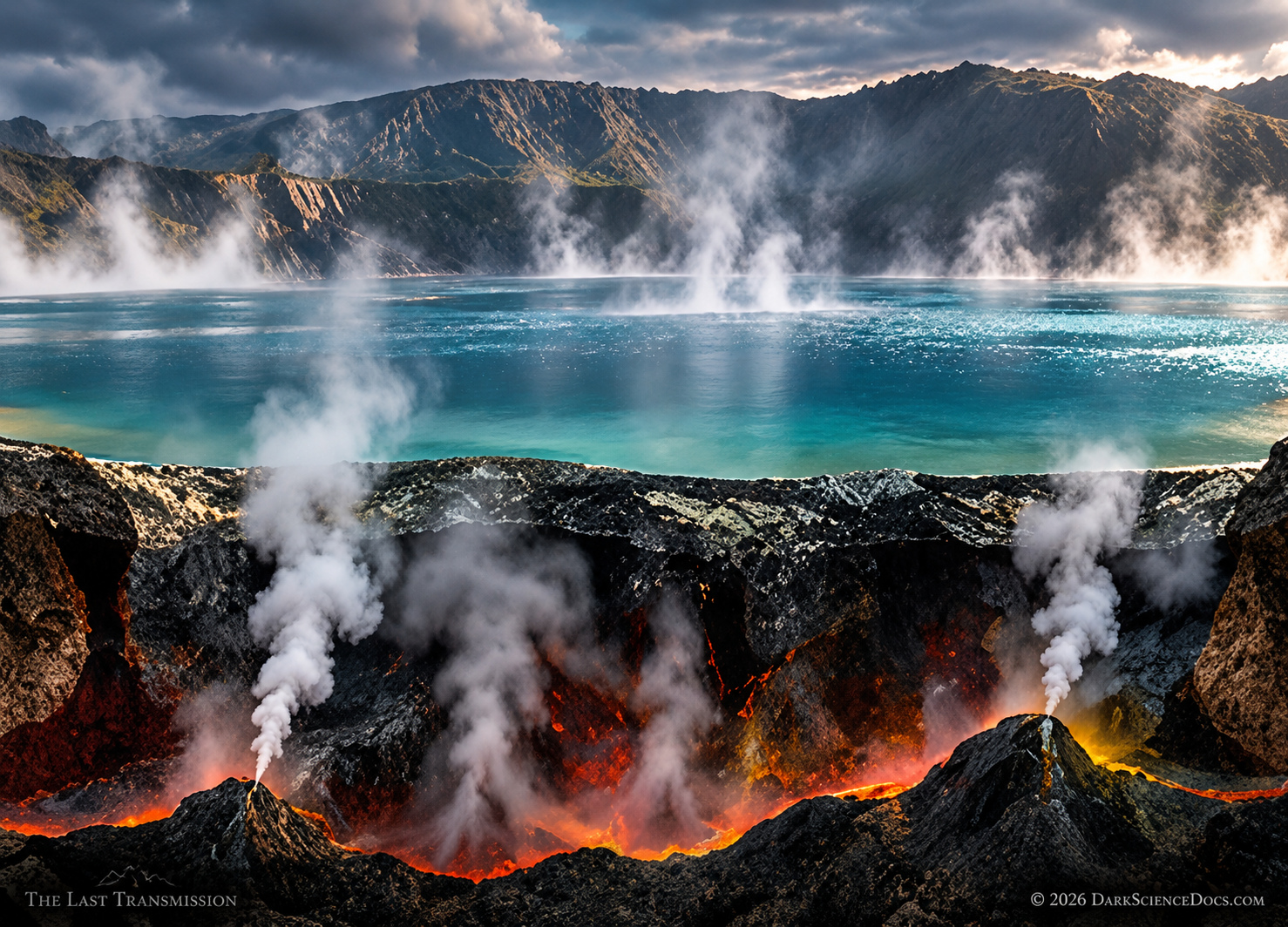
These formations do not show that life began in the crater, nor that an impact caused the first metabolism. A concept image of a glowing crater lake cannot recover the exact colors, organisms, or timing of each fluid pathway.
Why it matters.
A crater is often treated as the end of a story. Here, the more interesting question begins after the collision: how long the altered landscape held water, heat, and niches where living systems could persist.
GO DEEPER / EVIDENCE FILE
Did an Asteroid Crater Become a Habitat?
Hapcheon core samples reveal post-impact stromatolites and chemical signs consistent with hot-water circulation. They do not show that an impact created life.
FOLLOW THE EVIDENCE
Research behind the field note.
EXPLORE IN 3D / MAP 06
Set the crater in a planetary story
Explore Young Earth and the Moon’s impact record before returning to the evidence from Hapcheon.
Open Earth & Moon mapWATCH THE RELATED DOCUMENTARY
The story in motion.
VISUAL EVIDENCE
Inside the investigation.
FOLLOW THE THREAD
Related signals.
The Planets That Could Be Better Than Earth Have One Terrifying Problem
Scientists have identified distant worlds that may offer life conditions more favorable than our own. Some could have warmer oceans, longer-lived suns, and billions of extra years for evolution.

They Grew a Human Cortex Inside a Mouse. Then They Tested Its Memory.
Scientists created mice whose cortical tissue was almost entirely derived from human cells. The tissue grew, formed connections, generated electrical activity, and revealed something extraordinary.
They Found Plutonium at the Bottom of the Pacific. The Explosion That Made It May Be Over 95 Million Years Old.
Deep beneath the ocean, scientists discovered radioactive debris from beyond Earth. The most disturbing clue was an element they could not find.