
VISUAL ARCHIVE / IMAGE STORY
A Lake Above Warm Rock
Post-impact water and heat may have sustained a hydrothermal setting.
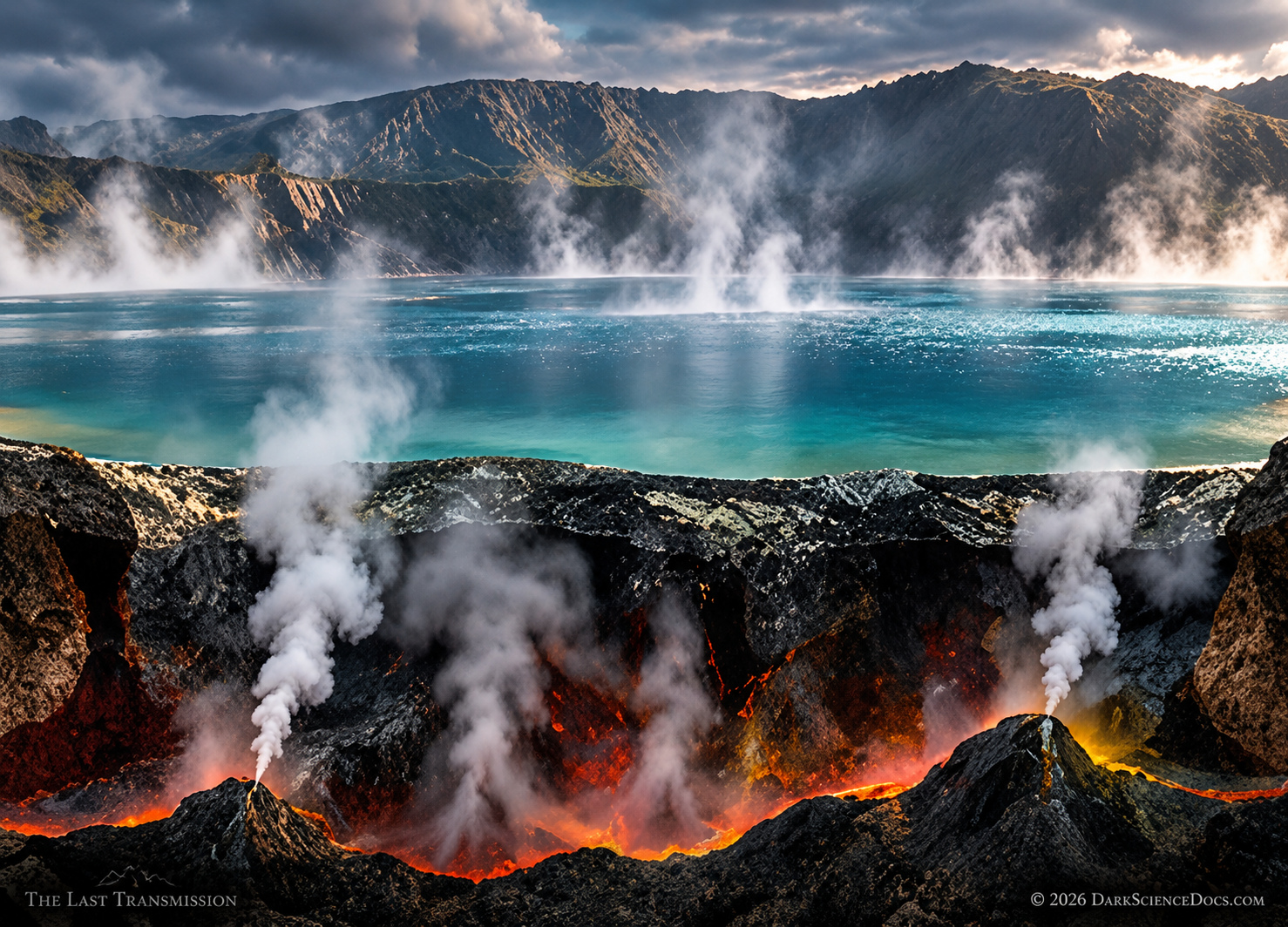
After the impact, the basin filled with water and may have supported hydrothermal circulation driven by heat stored in the fractured crust below. This AI-generated scene represents the warm, mineral-rich lake environment inferred from the geological evidence. The Last Transmission | © 2026 DarkScienceDocs.com
THE OBSERVATION
What we can actually see.
The geological interpretation combines lake deposits with evidence of altered rocks and circulation after the impact. Fluid pathways and duration are reconstructed from surviving materials, not monitored directly in the ancient basin.
THE ILLUSTRATION
What the artwork imagines.
The steaming lake is an AI-generated scene. Its color, shoreline, and vents are visual hypotheses rather than mapped observations of the former Hapcheon lake.
FROM THE ILLUSTRATED ARTICLE
The story that inspired it.
The Hapcheon study connects an impact structure, hydrothermal alteration, and stromatolite evidence without claiming that the impact created life. Post-impact water and heat may have sustained a hydrothermal setting.
Read The Crater That Learned to BreatheCHECK THE RECORD
The image interprets the research below. Follow the original work for the measurements and limits behind the scene.
Communications Earth & Environment: Hapcheon impact studyOTHER IMAGE STORIES
 The Basin After the Fire
 When an Impact Opens the Crust
 The Mark Shared by Titan and Pluto