
VISUAL ARCHIVE / IMAGE STORY
Many Craters, Many Possible Habitats
Impacts can create temporary combinations of water, rock, and heat.
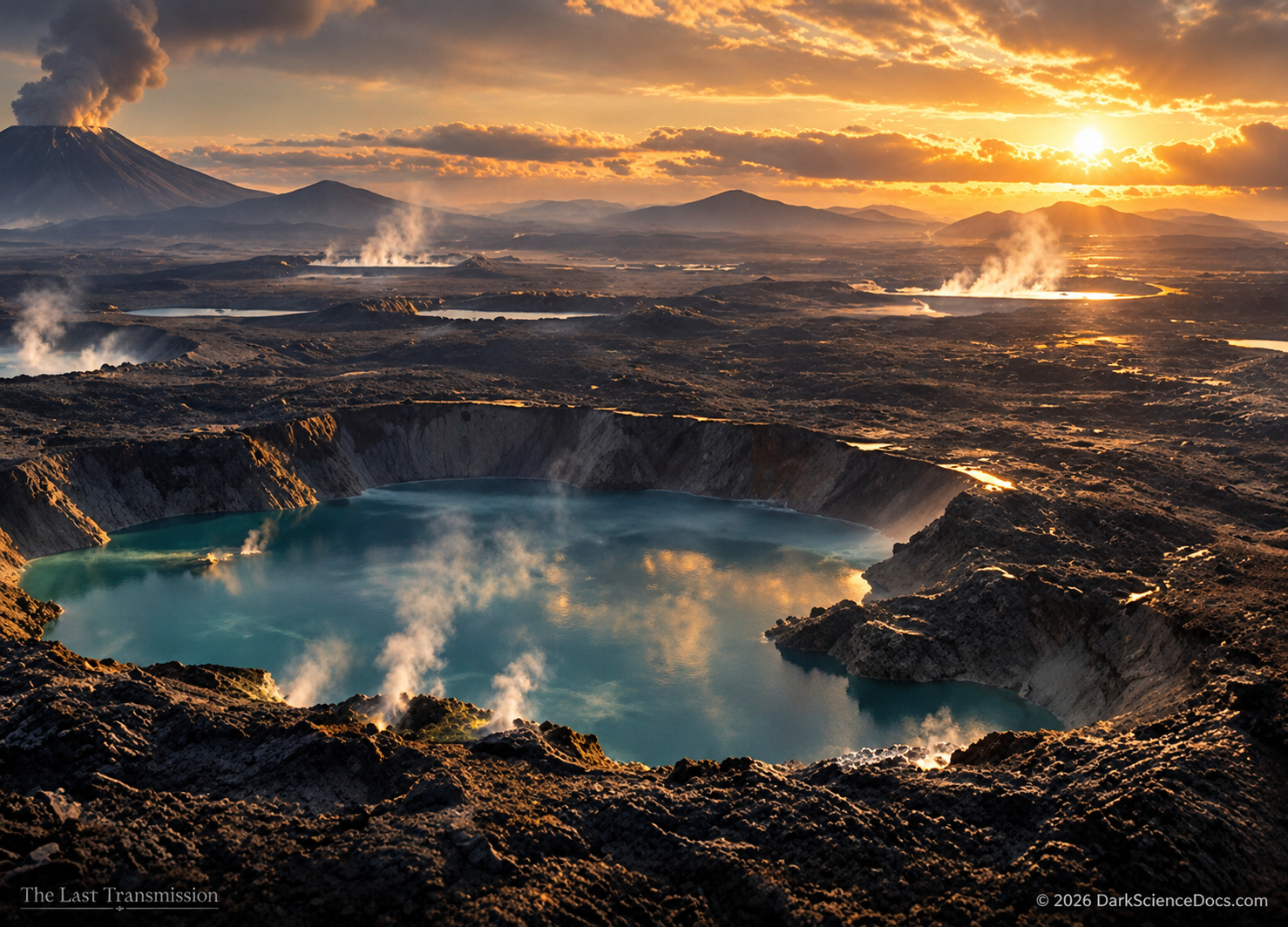
Early Earth experienced far more frequent impacts than the modern planet. Each crater could have created its own combination of heat, water, fractured minerals and fluctuating shorelines. This AI-generated scene imagines a young world scattered with temporary biological laboratories. The Last Transmission | © 2026 DarkScienceDocs.com
THE OBSERVATION
What we can actually see.
Hapcheon provides one case for examining how a crater lake may support microbial life after an impact. Applying that lesson to early Earth is a hypothesis that needs more sites and independent evidence.
THE ILLUSTRATION
What the artwork imagines.
The crater-filled young Earth is AI-generated speculation. It does not map actual early biological laboratories or demonstrate that impact craters were where life began.
FROM THE ILLUSTRATED ARTICLE
The story that inspired it.
The Hapcheon study connects an impact structure, hydrothermal alteration, and stromatolite evidence without claiming that the impact created life. Impacts can create temporary combinations of water, rock, and heat.
Read The Crater That Learned to BreatheCHECK THE RECORD
The image interprets the research below. Follow the original work for the measurements and limits behind the scene.
Communications Earth & Environment: Hapcheon impact studyOTHER IMAGE STORIES
 The Basin After the Fire
 When an Impact Opens the Crust
 The Mark Shared by Titan and Pluto