
VISUAL ARCHIVE / IMAGE STORY
The Rock That Might Carry Life
Impacts can eject rock, but a complete life-bearing trip between worlds has not been observed.
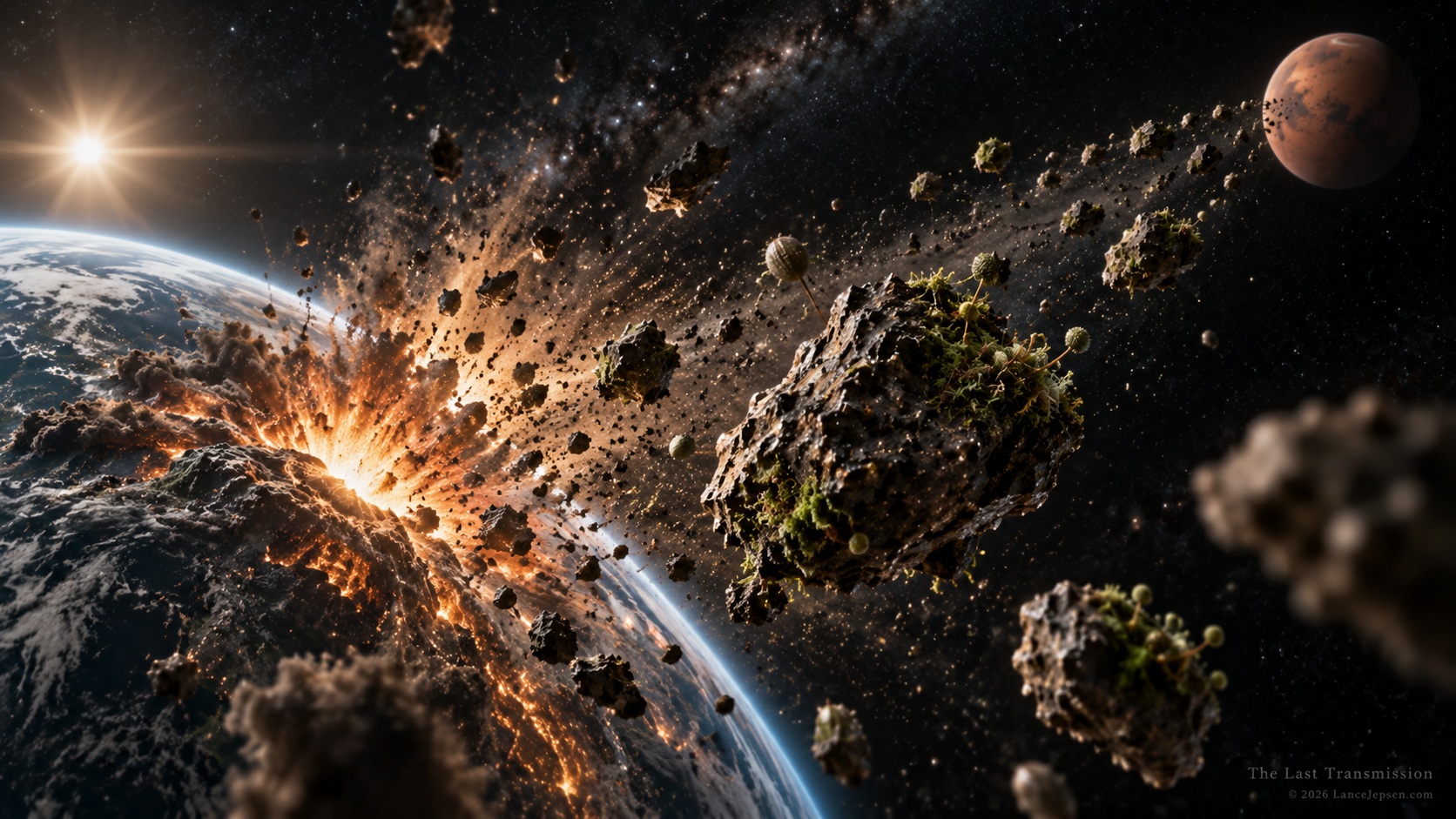
Large impacts can eject planetary rock into space, creating a possible transportation mechanism for protected microorganisms or spores. This conceptual illustration imagines life-bearing fragments leaving Earth on an interplanetary trajectory toward Mars. AI-generated illustration for The Last Transmission.
THE OBSERVATION
What we can actually see.
Impact physics can launch planetary rock into space, and meteorites provide evidence that material crosses between worlds. Separately, the moss study tested survival during low-Earth-orbit exposure. Those findings concern parts of a longer chain; they do not demonstrate that protected organisms survived ejection, cruise, arrival, and reproduction elsewhere.
THE ILLUSTRATION
What the artwork imagines.
The fragments, living cargo, and destination join disconnected evidence into a speculative route. The direction, timing, and biological success of such a journey are not established by the moss experiment.
FROM THE ILLUSTRATED ARTICLE
The story that inspired it.
The article deliberately tests the tempting leap from spores surviving in space to life spreading through the Solar System.
Read Life May Not Need a Spaceship to Cross Between WorldsCHECK THE RECORD
The image interprets the research below. Follow the original work for the measurements and limits behind the scene.
Maeng et al., moss spores exposed outside the ISSOTHER IMAGE STORIES
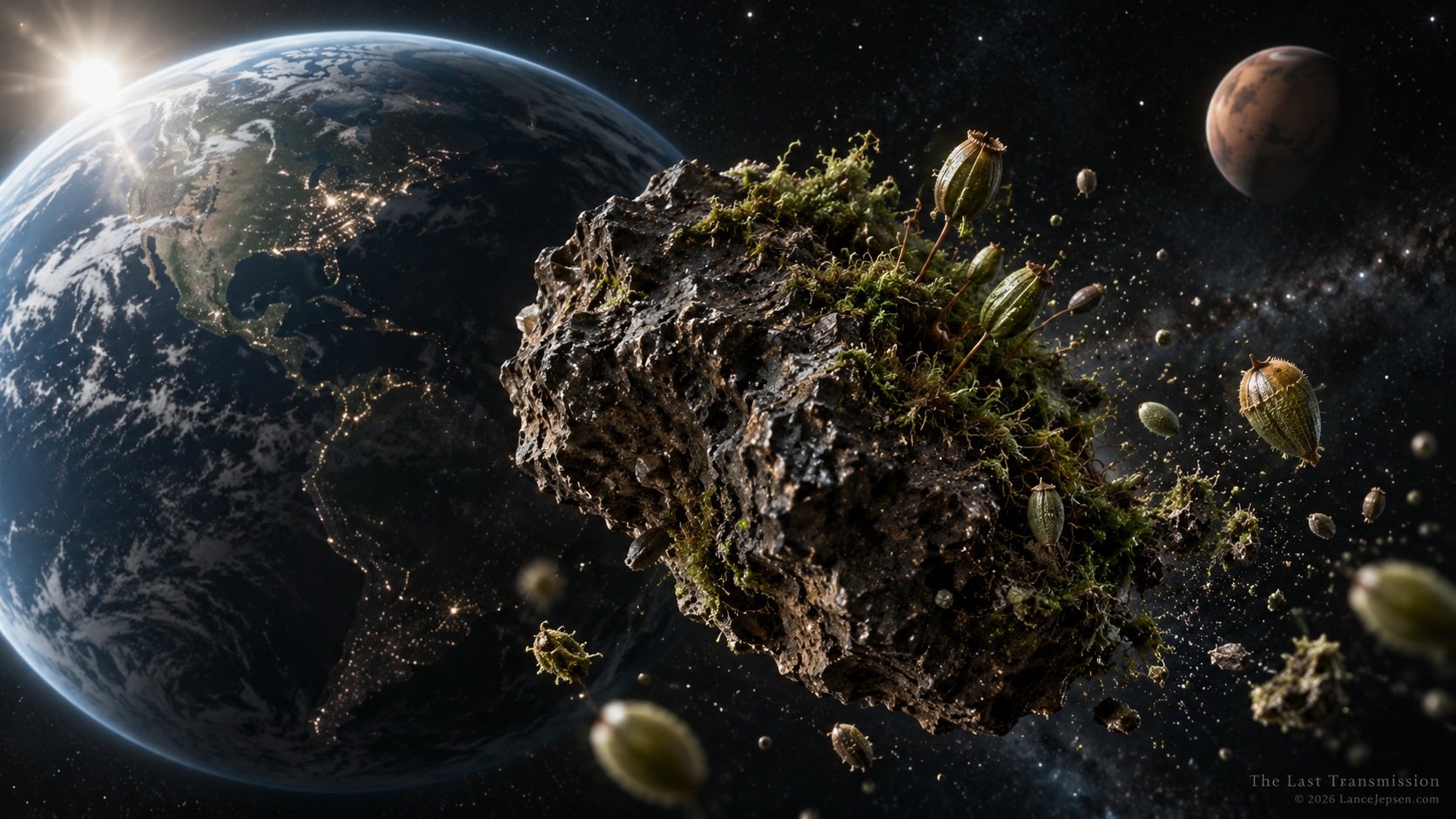 A Spore on a Journey No One Has Seen
 A Natural Capsule Around a Spore
 The Mark Shared by Titan and Pluto