
VISUAL ARCHIVE / IMAGE STORY
Could Moss Help Build an Off-World Garden?
Survival of spores is one step; a self-sustaining Martian ecosystem remains speculation.
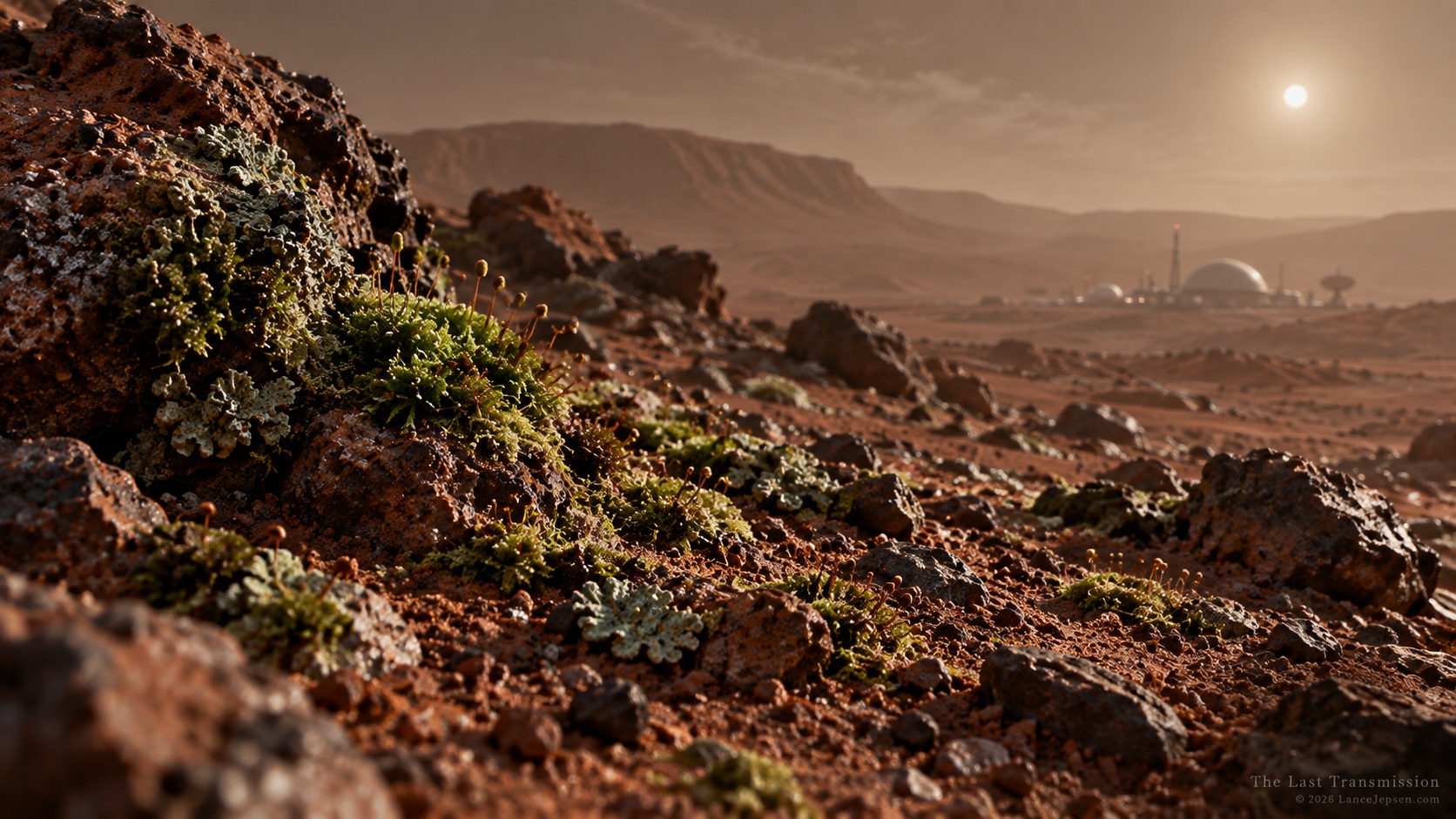
Could hardy pioneer organisms someday help establish biological support systems beyond Earth? Researchers have proposed bryophytes as candidates for future carbon cycling, oxygen production and regolith modification. This image is a speculative concept, not a depiction of current Mars conditions. AI-generated illustration for The Last Transmission.
THE OBSERVATION
What we can actually see.
The experiment tested whether dormant moss spores retained the ability to germinate after exposure outside the ISS. It did not demonstrate sustained plant growth in Martian gravity, soil chemistry, pressure, or radiation. Researchers can investigate bryophytes as potential future habitat organisms without treating that future as a result already achieved.
THE ILLUSTRATION
What the artwork imagines.
The living green setting is an imagined application, not a view of present-day Mars. Soil, atmosphere, and the pictured abundance of life would require engineering and tests far beyond the spore-survival result.
FROM THE ILLUSTRATED ARTICLE
The story that inspired it.
The article ends by separating a genuine resilience experiment from the larger dream of life taking hold away from Earth.
Read Life May Not Need a Spaceship to Cross Between WorldsCHECK THE RECORD
The image interprets the research below. Follow the original work for the measurements and limits behind the scene.
Maeng et al., moss spores exposed outside the ISSOTHER IMAGE STORIES
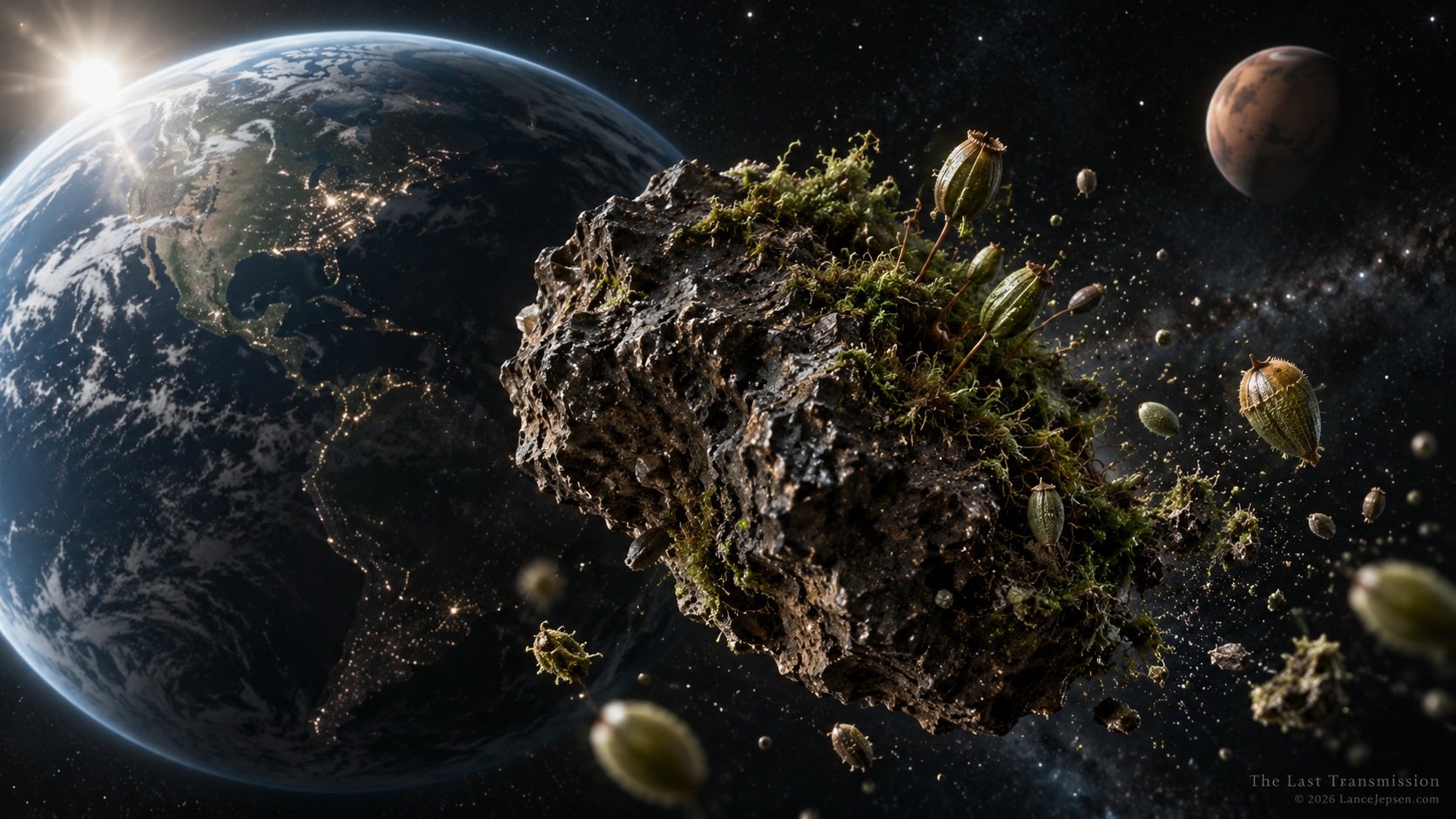 A Spore on a Journey No One Has Seen
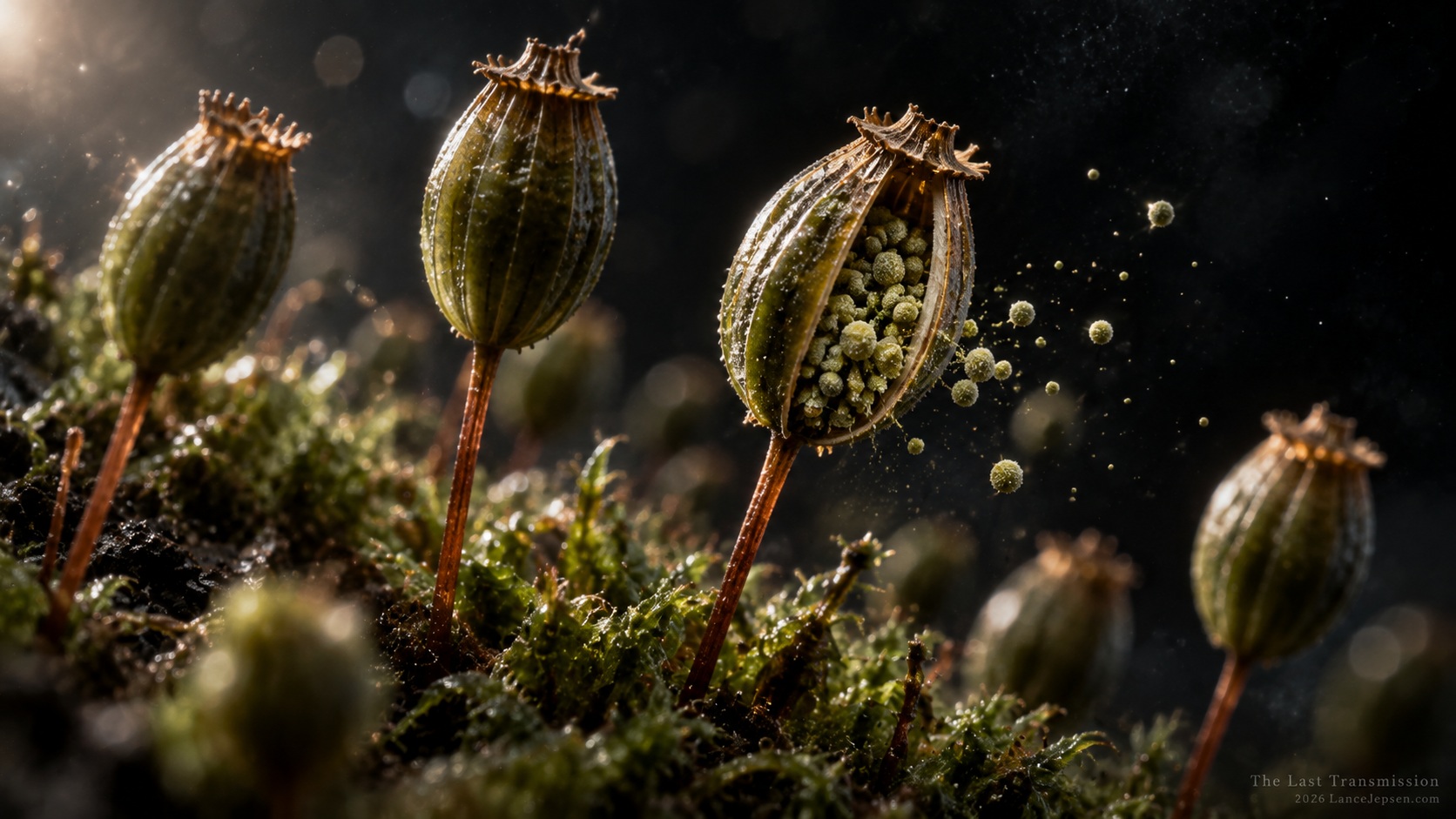 A Natural Capsule Around a Spore
 The Mark Shared by Titan and Pluto