
VISUAL ARCHIVE / IMAGE STORY
A Conceptual VIPER Traverse
VIPER is designed to investigate the distribution and physical state of lunar water during a planned mission of roughly 100 Earth days. This scene imagines its work on the surface; it does not depict an event that has occurred. AI-generated conceptual illustration.
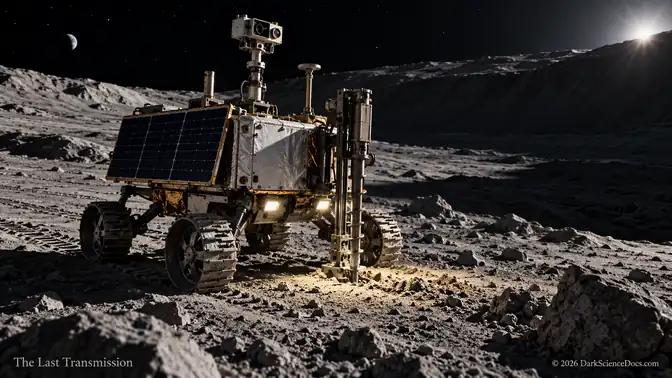
VIPER is designed to investigate the distribution and physical state of lunar water during a planned mission of roughly 100 Earth days. This scene imagines its work on the surface; it does not depict an event that has occurred. AI-generated conceptual illustration.
THE OBSERVATION
What we can actually see.
Permanently shadowed regions can preserve volatile material, while nearby illuminated terrain offers different operating conditions. VIPER is designed to investigate lunar water and its surroundings; mission plans are distinct from completed surface measurements.
THE ILLUSTRATION
What the artwork imagines.
VIPER is designed to investigate the distribution and physical state of lunar water during a planned mission of roughly 100 Earth days. This scene imagines its work on the surface; it does not depict an event that has occurred. AI-generated conceptual illustration. The selected artwork is a conceptual reconstruction. Viewpoint, lighting and apparent detail are illustrative, not additional measurements or a confirmed photograph of the depicted event.
FROM THE ILLUSTRATED ARTICLE
The story that inspired it.
Lunar ice is a scientific resource question before it becomes a settlement plan. Terrain, cold, power and instrument measurements determine how much a rover can establish about a promising polar site.
Read The Moon’s Darkest Places Could Decide Whether We StayCHECK THE RECORD
The image interprets the research below. Follow the original work for the measurements and limits behind the scene.
1. NASA — The Lunar South Pole Region. Polar lighting, cold traps, terrain, dust, and operational challenges. 2. NASA Science — VIPER Science and Exploration. Planned mission duration, resource questions, and the origin of lunar water. 3. NASA — NASA Provides Progress Update on Moon Base Rovers. Published October 20, 2026; updated October 21. Current VIPER, CLV-1, Pegasus, and smaller-rover progress. 4. NASA — NASA Selects Blue Origin to Deliver VIPER Rover to Moon’s South Pole. September 19, 2025. Delivery target, project history, and staged contract arrangements. 5. NASA Science — VIPER Rover and Instruments. NSS, TRIDENT, NIRVSS, and MSolo capabilities.OTHER IMAGE STORIES
 A Scout at the Edge of Lunar Shadow
 A Rover Examines Subsurface Material
 The Mark Shared by Titan and Pluto