
VISUAL ARCHIVE / IMAGE STORY
A Spectrum as a Historical Clue
Starlight can reveal chemical composition, one ingredient in galactic archaeology.
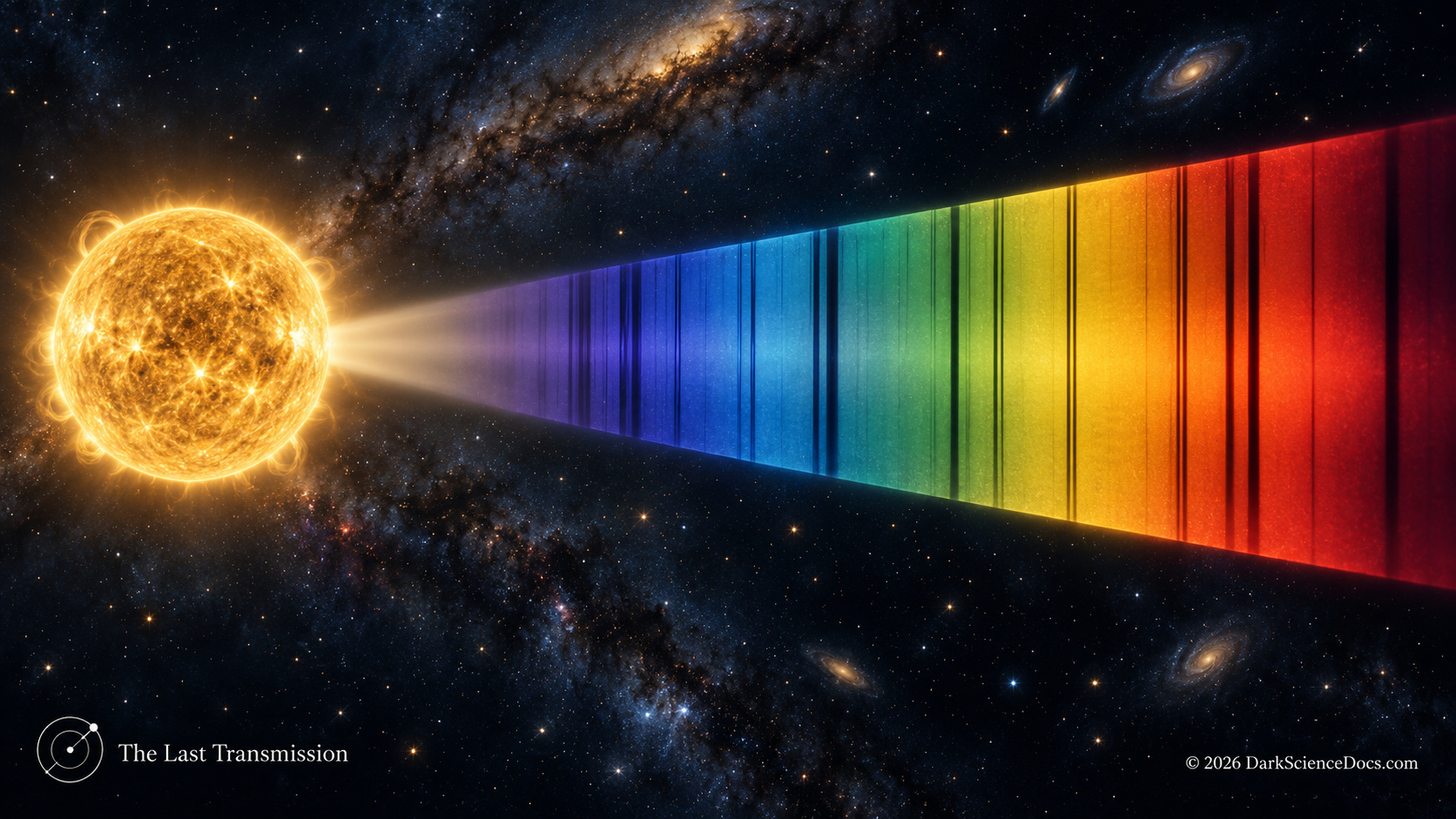
Starlight carries chemical information that helps astronomers investigate stellar histories. This spectrum is illustrative and contains no measured data. AI-generated illustration.
THE OBSERVATION
What we can actually see.
Spectroscopy measures how a star’s light varies with wavelength; line strengths help estimate elemental abundances. Combined with age and motion, chemistry can test possible origins for groups of stars, subject to calibration and modeling uncertainty.
THE ILLUSTRATION
What the artwork imagines.
The tidy colored spectrum is explanatory artwork without measured values. Its lines should not be treated as an actual Gaia spectrum of the Sun or a particular solar twin.
FROM THE ILLUSTRATED ARTICLE
The story that inspired it.
The article examines a proposed migration of the Sun through the Milky Way using stellar ages, chemistry, and motion. Starlight can reveal chemical composition, one ingredient in galactic archaeology.
Read The Sun’s 10,000-Light-Year Journey May Have Changed Earth’s FateCHECK THE RECORD
The image interprets the research below. Follow the original work for the measurements and limits behind the scene.
NAOJ: solar twins and migrationOTHER IMAGE STORIES
 The Sun's Unmapped Journey
 The Sun’s Unlocated Birth Cloud
 The Mark Shared by Titan and Pluto