
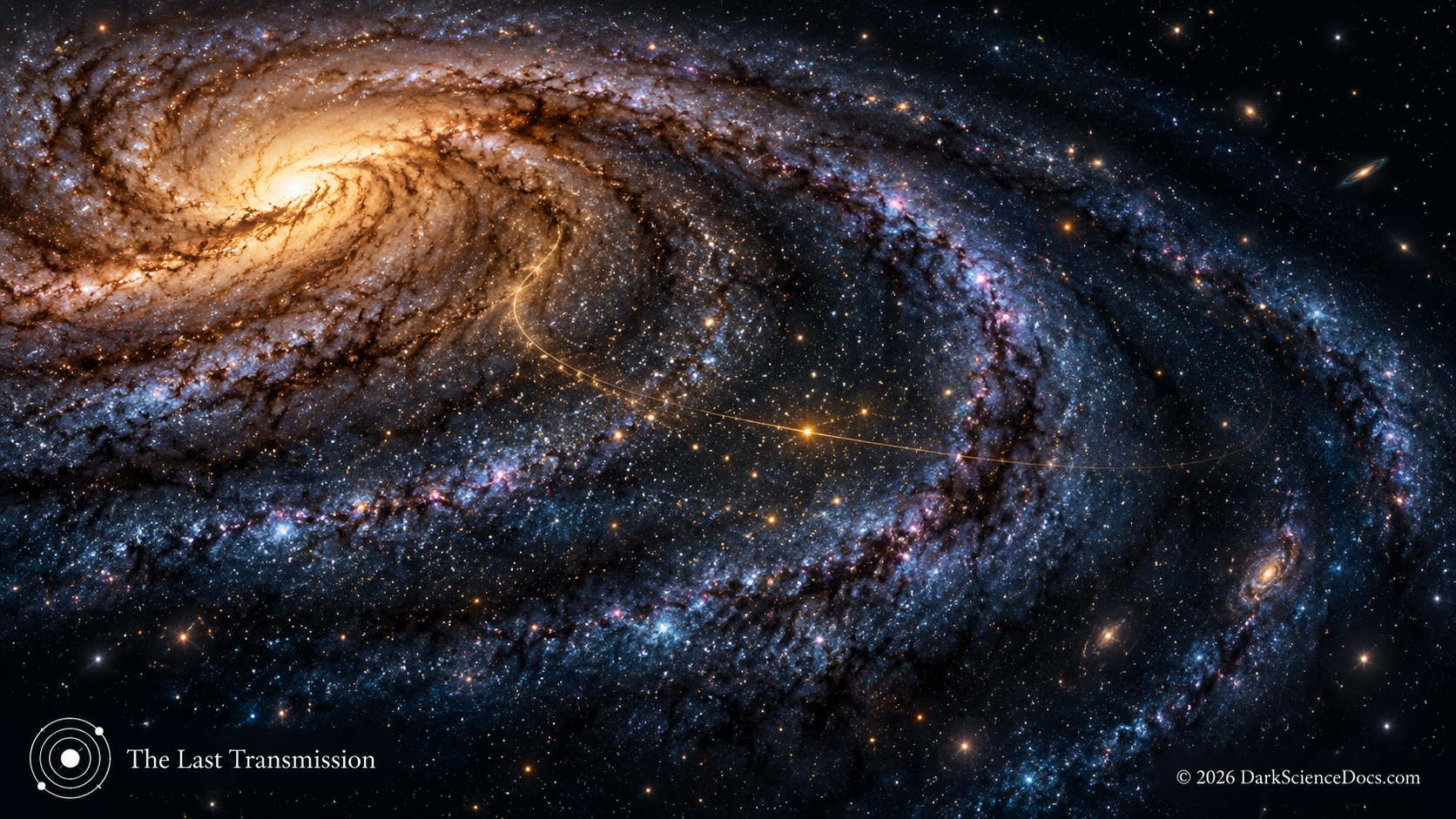
25 / The moving birthplace
Where Was the Sun Born?
Stars that resemble the Sun carry chemical and age clues to the Milky Way's past. Their pattern supports a migration story, but it cannot draw the Sun's exact route through the galaxy.
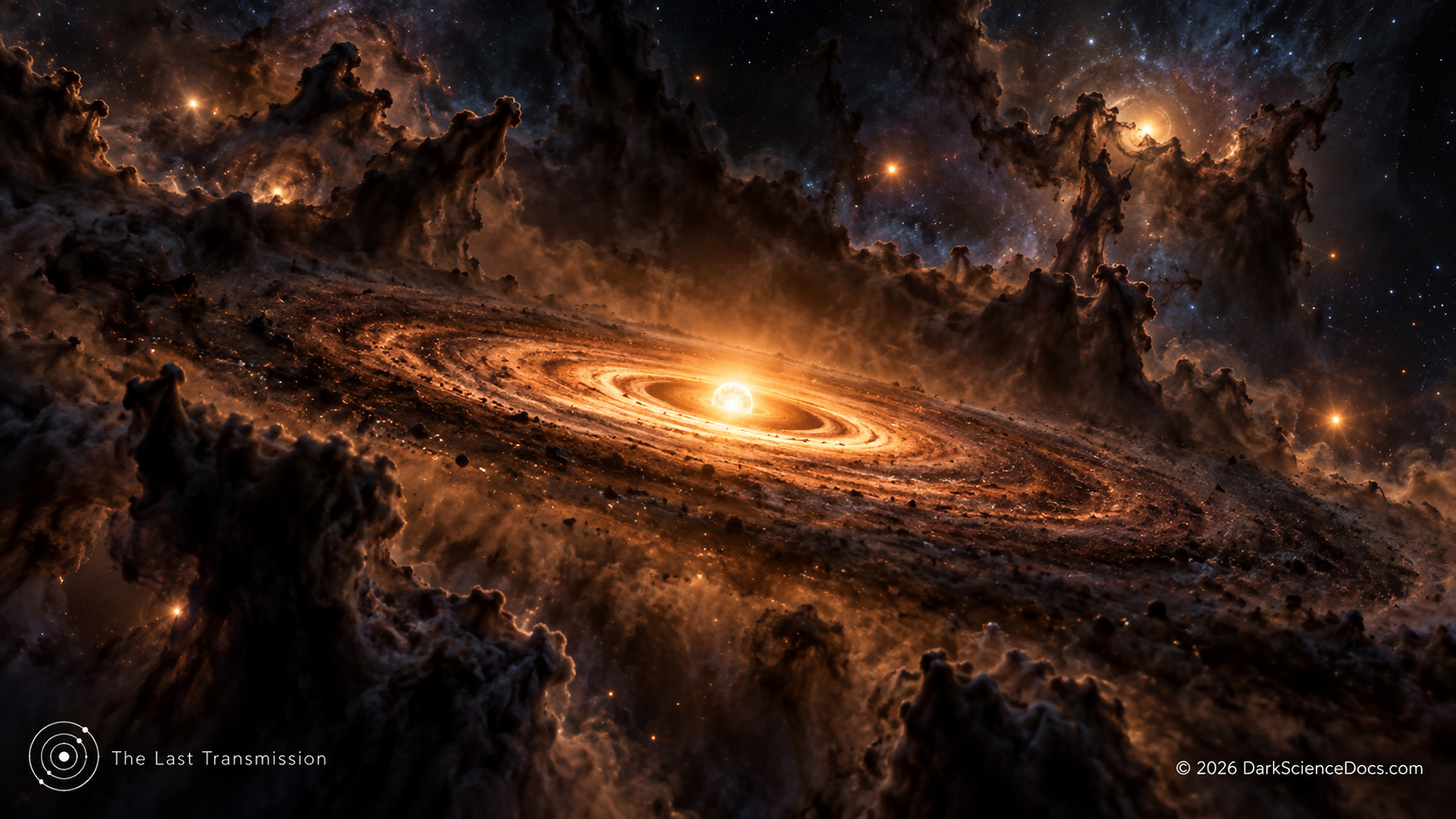
The Sun has orbited the Milky Way for billions of years in a disk that has not stood still. Astronomers compare solar twins by age, chemistry, and motion, using Gaia measurements to ask whether stars born nearer the galactic center could have moved outward. The proposed journey of roughly ten thousand light-years is a reconstruction from a population and a dynamical model. It invites a larger question about the environment in which Earth evolved, while resisting the easy claim that one specific galactic path caused life to appear.
The full investigation continues with the evidence, illustrations, and sources at The Last Transmission on Substack.
Continue reading on SubstackTHE EVIDENCE / THE OPEN QUESTION
What we know.
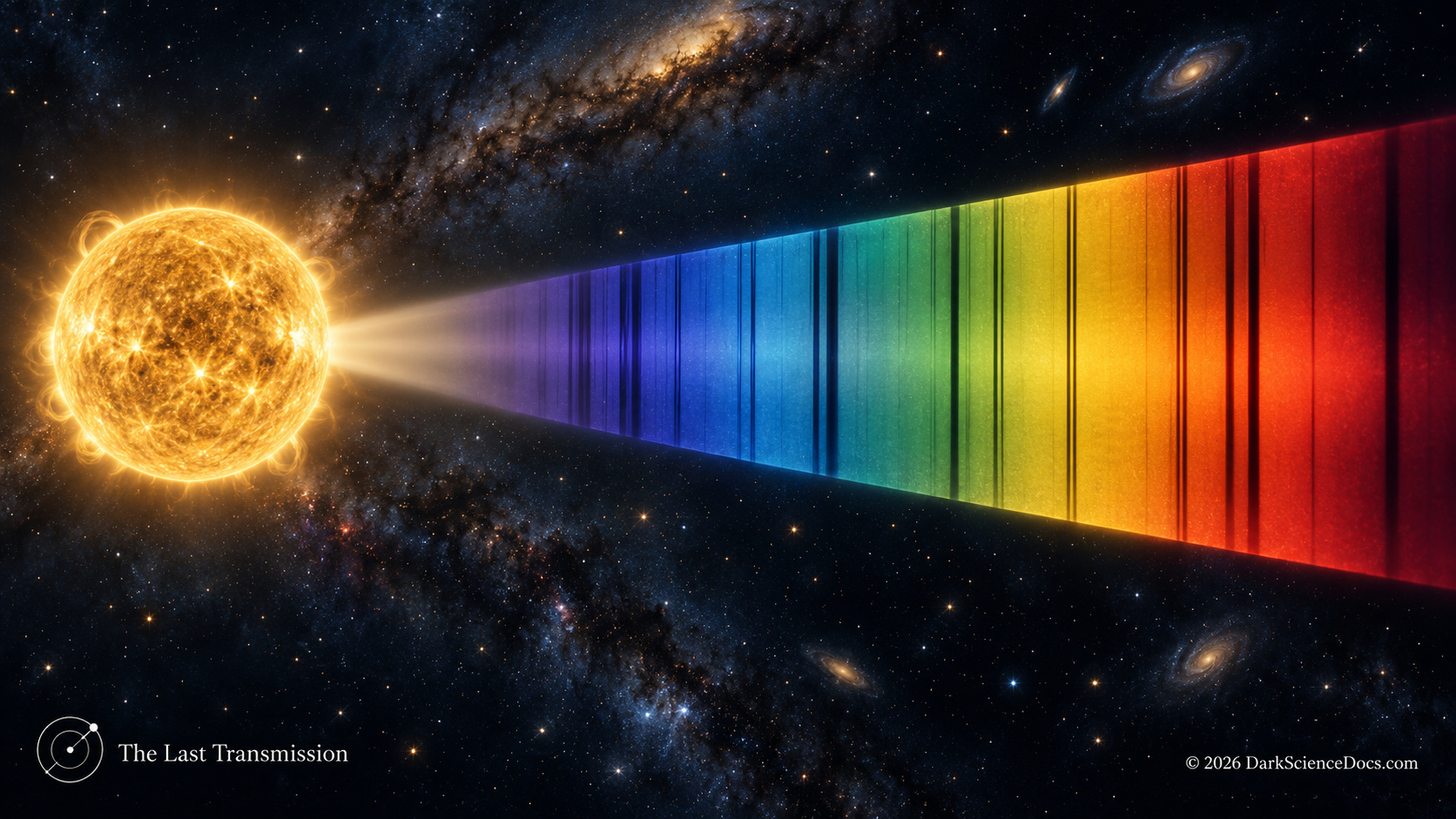
Gaia measures stellar positions and motions, and spectroscopy adds chemical information. Studies of thousands of solar twins compare ages and compositions with models of radial migration and the Milky Way's evolving bar and disk.
What remains open.
No one has followed the Sun's position backward as a measured track to its exact birthplace. Solar twins are comparison stars, not automatically its lost siblings. Changes in radiation, nearby explosions, and habitability along a possible route require separate evidence.
Why it matters.
The reconstruction changes the scale of a familiar question. Earth's history happened on a moving world beneath a moving star, and the next stellar catalog can sharpen that history without turning an intriguing migration into a settled biography.
FOLLOW THE EVIDENCE
Research behind the field note.
COMING MILESTONE / SCIENCE COUNTDOWN
The Milky Way gives up another map
A Gaia catalog is expected to deepen the record of stellar motion and chemistry behind the Sun’s possible galactic migration. December 2026, expected.
WATCH THE RELATED DOCUMENTARY
The story in motion.
VISUAL EVIDENCE
Inside the investigation.
FOLLOW THE THREAD
Related signals.
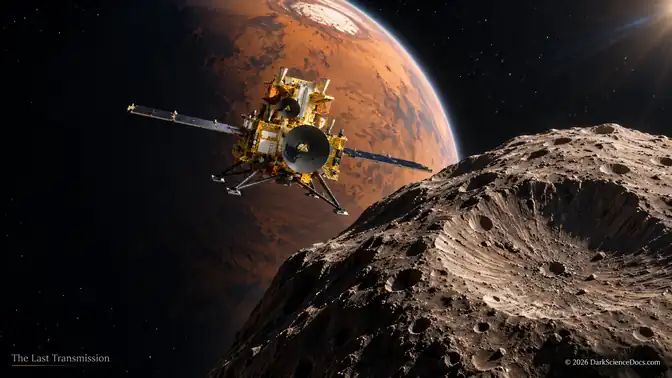
Phobos: The Moon That May Preserve Mars’s Past
MMX will investigate how Phobos formed and whether its dust contains fragments ejected from Mars. Follow the mission, the sample-return plan, and the limits of the evidence.

The People Who Cared for Laika Knew She Would Never Come Home
Before her one-way flight, a doctor brought her home to play with his children. That small kindness leaves us with a harder question about what it means to care.
A Star Blinked Twice. Whatever Caused It May Be Much Closer to Earth.
Two nearly identical optical disturbances, 4.4 seconds apart, appeared in HD 89389’s light. Follow the unexplained record, a foreground diffraction hypothesis, and the synchronized telescopes proposed to test it.