
VISUAL ARCHIVE / IMAGE STORY
Matter Before the Horizon
An imagined accretion flow illustrates where a quasar’s radiation can originate.
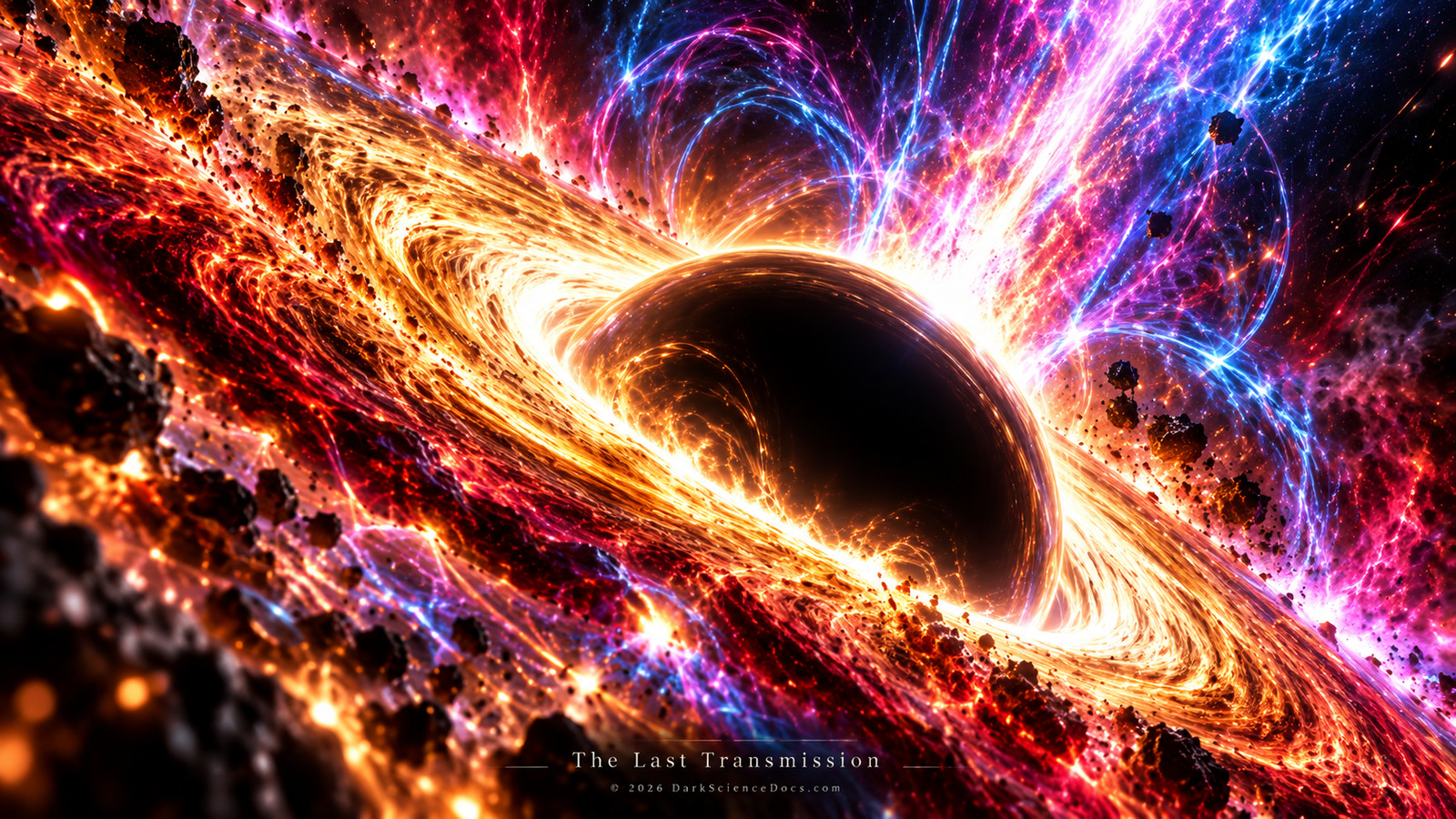
An artistic visualization of an active black hole surrounded by a turbulent accretion disk and energetic outflows. The colors and jet-like structures illustrate quasar physics; they are not a resolved photograph or a measured reconstruction of TON 618.
THE OBSERVATION
What we can actually see.
Gas outside a black hole can release gravitational energy as radiation during accretion. Quasar spectra constrain the source, but do not provide a resolved portrait of TON 618’s turbulent disk or the illustrated jet geometry.
THE ILLUSTRATION
What the artwork imagines.
The composition visualizes this idea: An imagined accretion flow illustrates where a quasar’s radiation can originate. An artistic visualization of an active black hole surrounded by a turbulent accretion disk and energetic outflows. The colors and jet-like structures illustrate quasar physics; they are not a resolved photograph or a measured reconstruction of TON 618.
FROM THE ILLUSTRATED ARTICLE
The story that inspired it.
The article traces TON 618 from a cataloged blue source to a distant quasar, then asks how spectroscopy and mass calibration change estimates of the enormous central black hole. Its comparisons make the scale vivid while keeping the uncertainty visible. This frame focuses on an imagined accretion flow illustrates where a quasar’s radiation can originate.
Read TON 618: The Black Hole So Enormous That Astronomers Still Disagree About Its SizeCHECK THE RECORD
The image interprets the research below. Follow the original work for the measurements and limits behind the scene.
Research record: doi.org/10.1086/182182 Research record: arxiv.org/abs/astro-ph/0406559 Research record: doi.org/10.3847/1538-3881/ab0956 Research record: www.nasa.gov/universe/nasa-animation-sizes-up-the-universes-biggest-black-holes/ Research record: science.nasa.gov/mission/hubble/science/science-behind-the-discoveries/hubble-quasars/ Research record: science.nasa.gov/mission/webb/science-overview/science-explainers/what-are-active-galactic-nuclei/OTHER IMAGE STORIES
Keep looking.
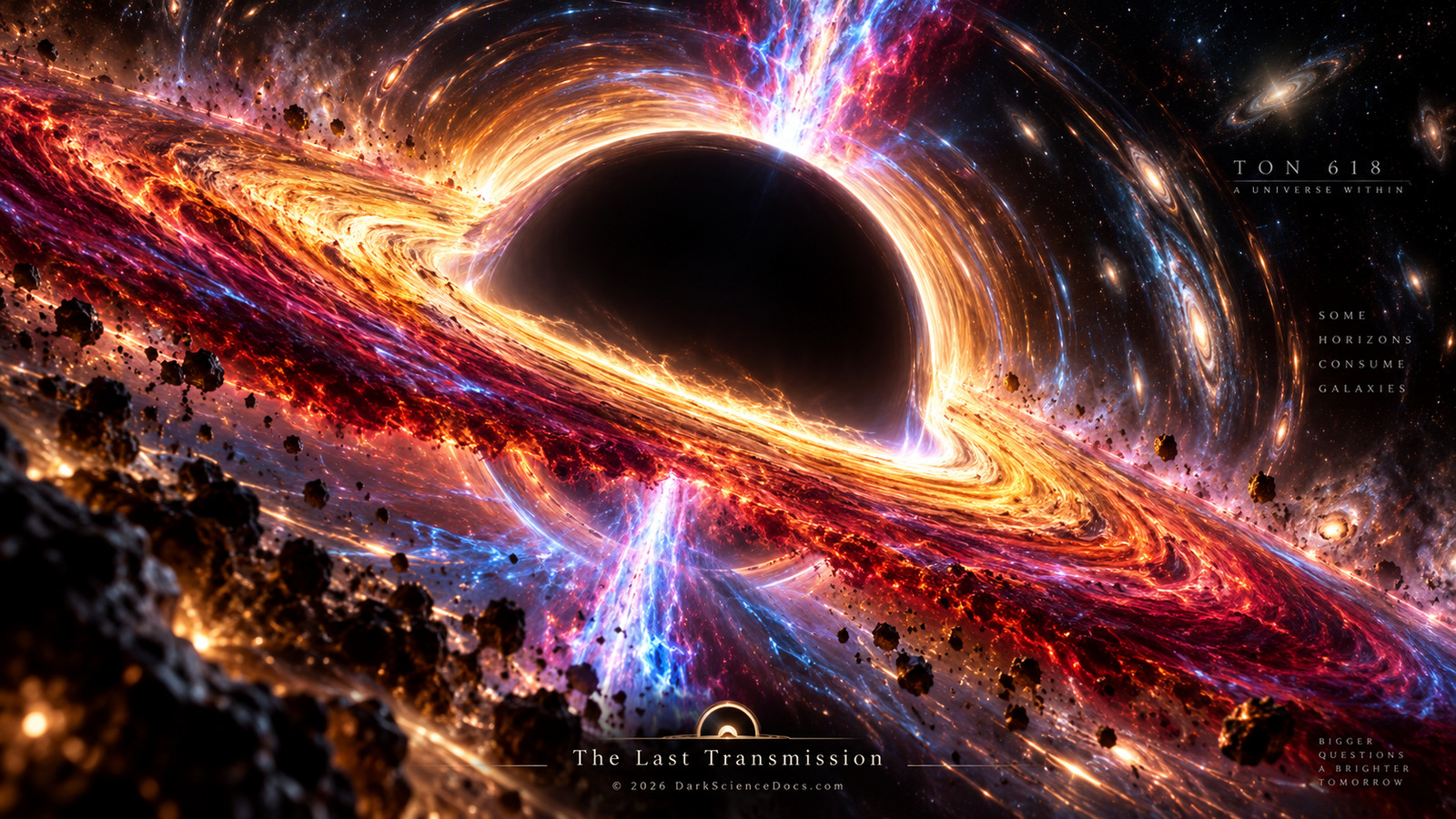 The Light Around TON 618
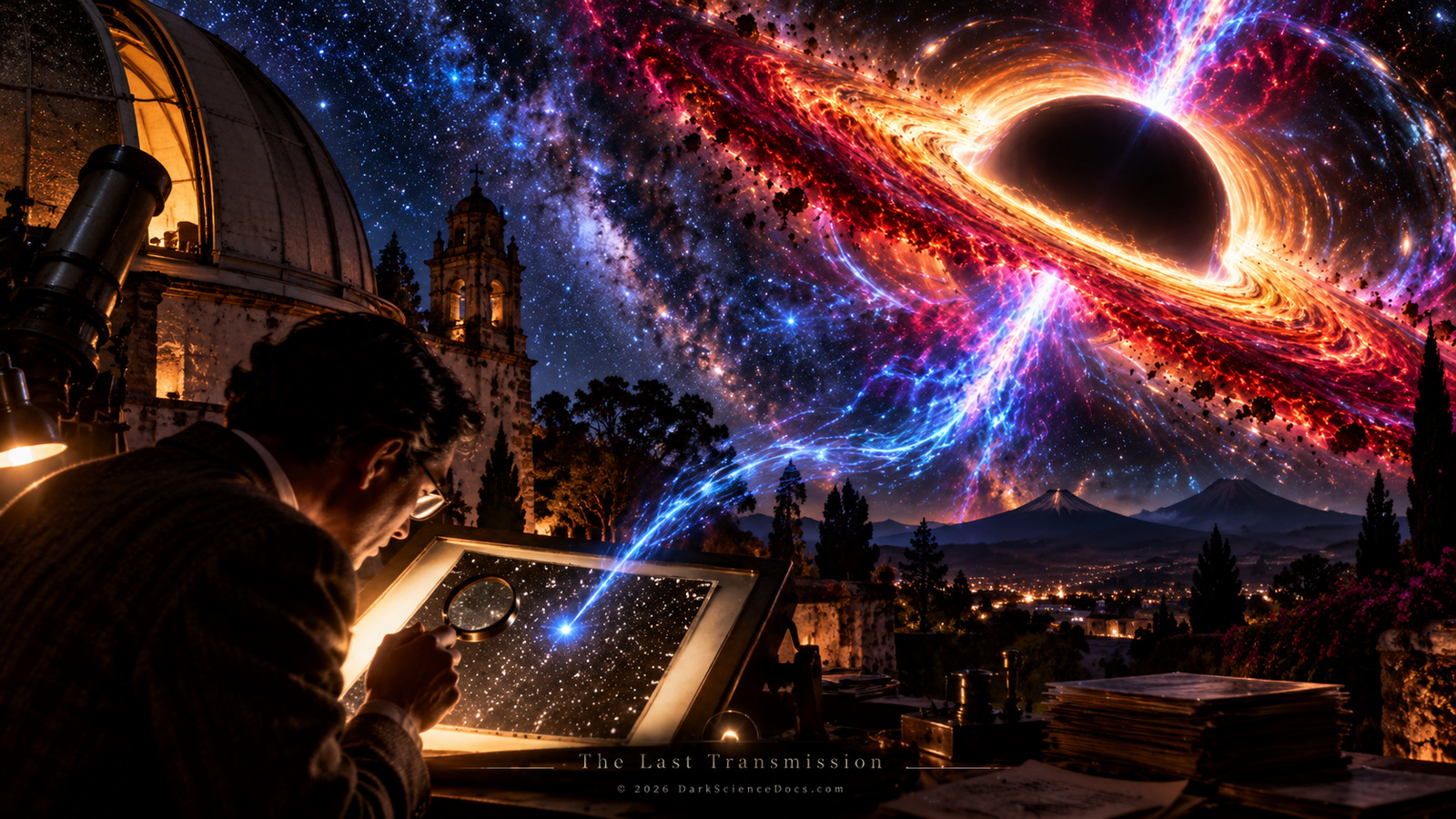 A Blue Dot on a Plate
 The Mark Shared by Titan and Pluto
EXPLORE IN 3D / MAP G-01
Compare the darkness near home
The Galactic Center offers a nearby comparison for gravity, orbiting stars, and lensing. Its illustrated black hole is Sagittarius A*, not a reconstruction of the distant quasar TON 618.
Open Sagittarius A* map