
VISUAL ARCHIVE / IMAGE STORY
A Cluster Found from Antarctica
The South Pole Telescope helped reveal the Phoenix Cluster.
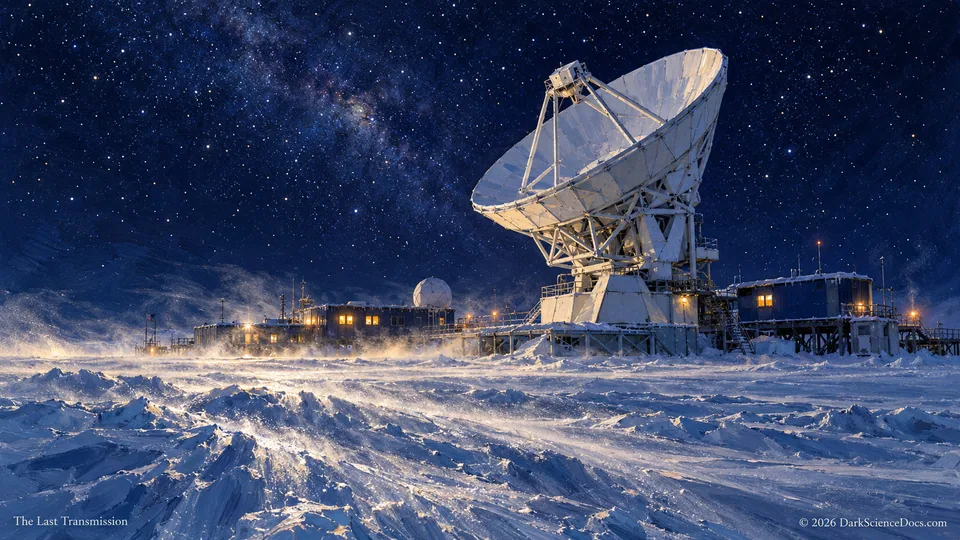
The South Pole Telescope helped reveal the Phoenix Cluster. This illustrated Antarctic scene evokes the observatory’s setting rather than reconstructing a particular night.
THE OBSERVATION
What we can actually see.
The research follows emission from ionized neon and other tracers into the cluster core. Different analyses estimate star formation over different averaging windows, with rates expressed as solar masses per year. An inferred cooling-flow rate describes gas moving through temperature ranges and is a separate quantity. Spatial relationships among cavities, cooling gas and young stars motivate a physical feedback interpretation.
THE ILLUSTRATION
What the artwork imagines.
The South Pole Telescope helped reveal the Phoenix Cluster. This illustrated Antarctic scene evokes the observatory’s setting rather than reconstructing a particular night. The viewpoint, illumination, colors and simultaneous arrangement are artistic choices. This is a cinematic illustration, not a direct instrument image or a quantitative reconstruction of every feature.
FROM THE ILLUSTRATED ARTICLE
The story that inspired it.
The Phoenix Cluster’s central galaxy forms stars amid powerful black-hole feedback. Infrared observations follow gas through an intermediate temperature range, making the competition between heating and condensation more visible. This frame focuses on a cluster found from antarctica, within the complete illustrated article and its source-linked research context.
Read The Black Hole That Couldn’t Stop the StarsCHECK THE RECORD
The image interprets the research below. Follow the original work for the measurements and limits behind the scene.
Directly Imaging the Cooling Flow in the Phoenix Cluster Cold Gas and Star Formation in the Phoenix Cluster with JWST Anatomy of a Cooling Flow: The Feedback Response to Pure Cooling in the Core of the Phoenix Cluster NASA/Chandra 2025-02-13 research accountOTHER IMAGE STORIES
Keep looking.
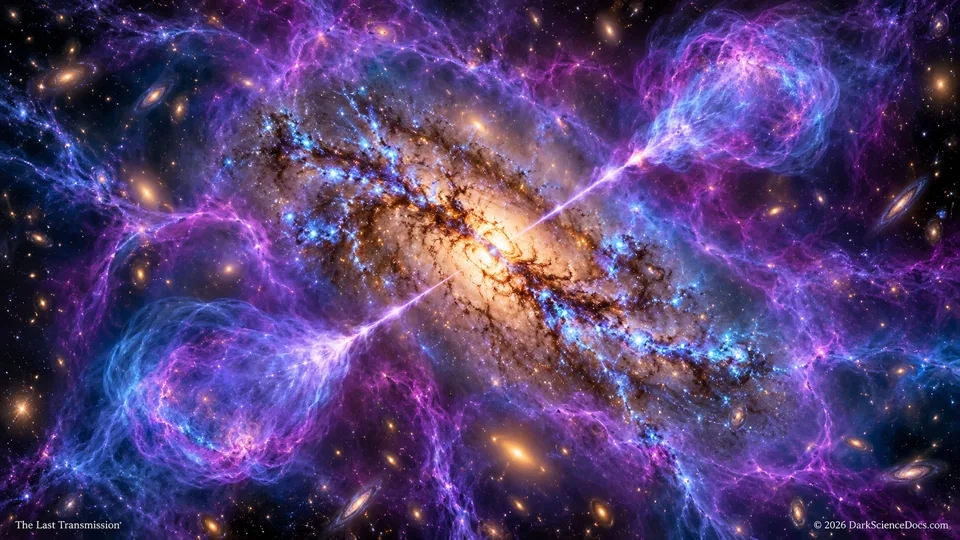 Stars Amid Phoenix’s Central Outburst
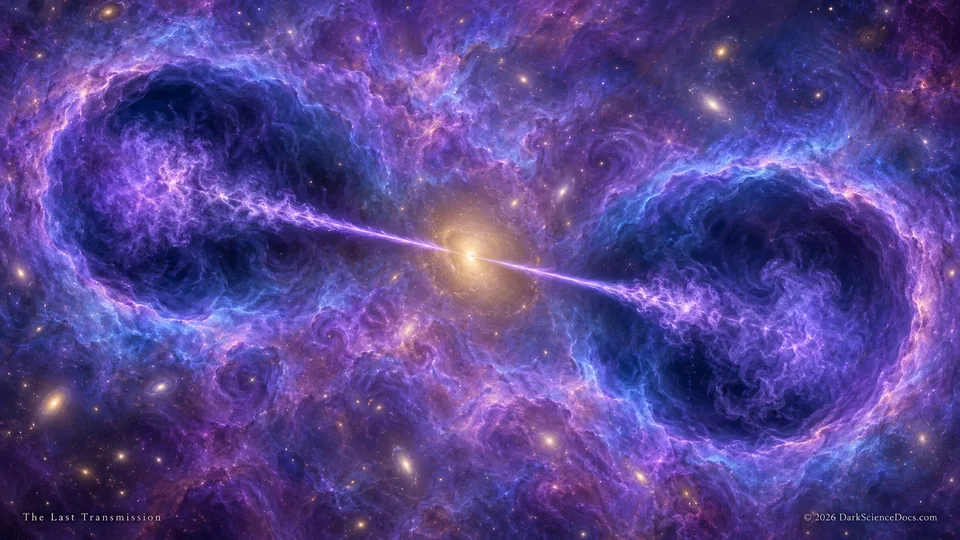 Cavities in a Hot Atmosphere
 The Mark Shared by Titan and Pluto
EXPLORE IN 3D / MAP G-01
Explore a nearby black-hole teaching model
Use Sagittarius A* as a nearby comparison. The model is not a reconstruction of the Phoenix Cluster or a little red dot.
Open Sagittarius A* map