
VISUAL ARCHIVE / IMAGE STORY
The Forests That Filled the Amber Record
The Cretaceous preserved abundant resin, but this forest and its creatures are a composite.
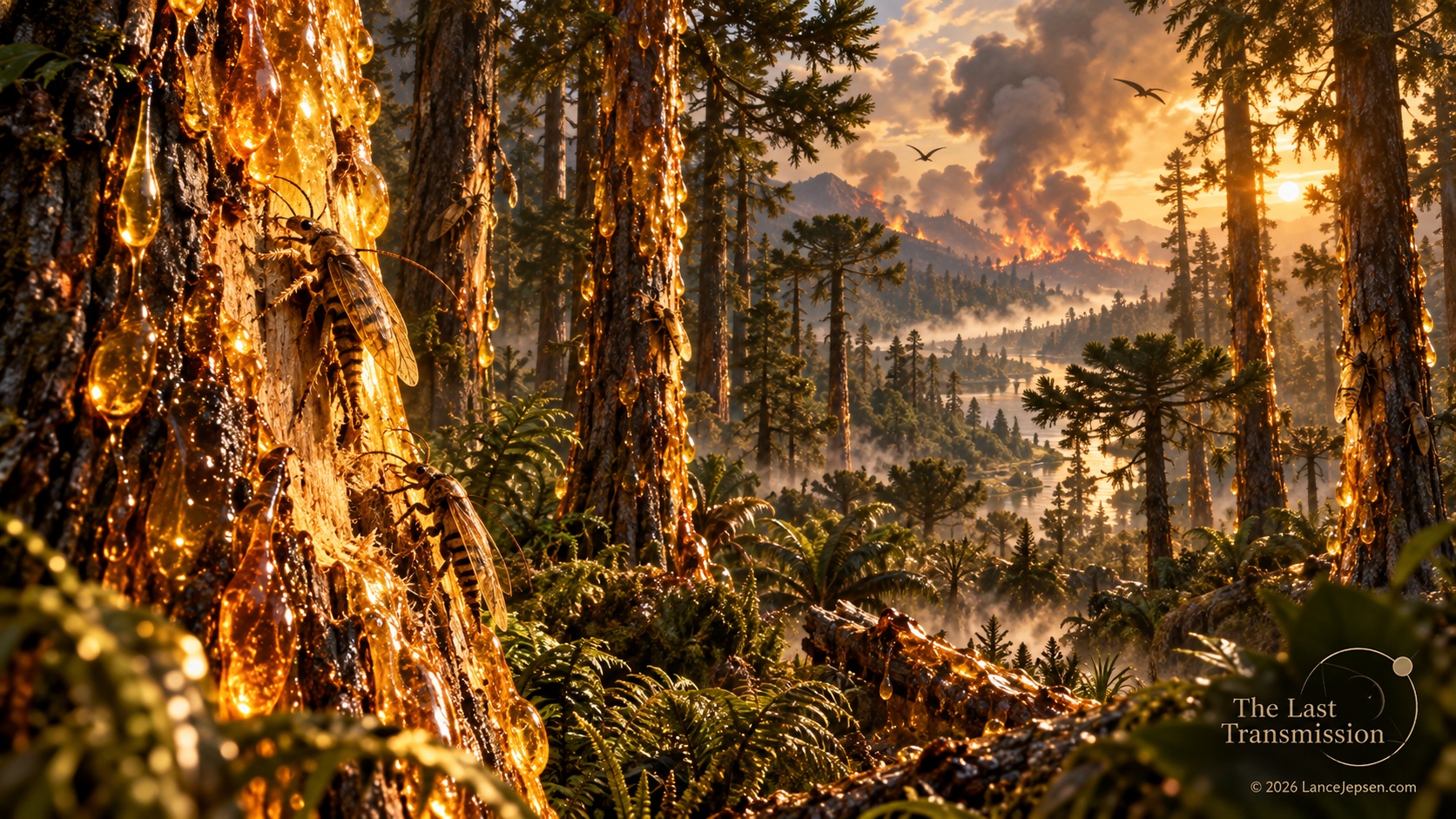
The great resin interval. During roughly 54 million years of the Cretaceous, resin production and preservation created an exceptional amber record. Climate, forest ecology, insects, fire, and preservation conditions may all have contributed. AI-generated speculative reconstruction.
THE OBSERVATION
What we can actually see.
Amber deposits are especially rich in parts of the Cretaceous record. Resin production, burial, and preservation are separate filters, so a spike in amber finds does not by itself mean every tree produced more resin. Climate, ecology, and the chance of surviving fossilization all need consideration.
THE ILLUSTRATION
What the artwork imagines.
The scene compresses forests, insects, and long environmental change into one moment. It is not a reconstruction of a single deposit or a census of the organisms living in a particular amber-producing woodland.
FROM THE ILLUSTRATED ARTICLE
The story that inspired it.
The article moves from the earliest tiny fragments to the later periods when resin became a remarkable archive of vanished ecosystems.
Read The Trees Were Bleeding 385 Million Years AgoCHECK THE RECORD
The image interprets the research below. Follow the original work for the measurements and limits behind the scene.
Middle Devonian amber discovery, Science AdvancesOTHER IMAGE STORIES
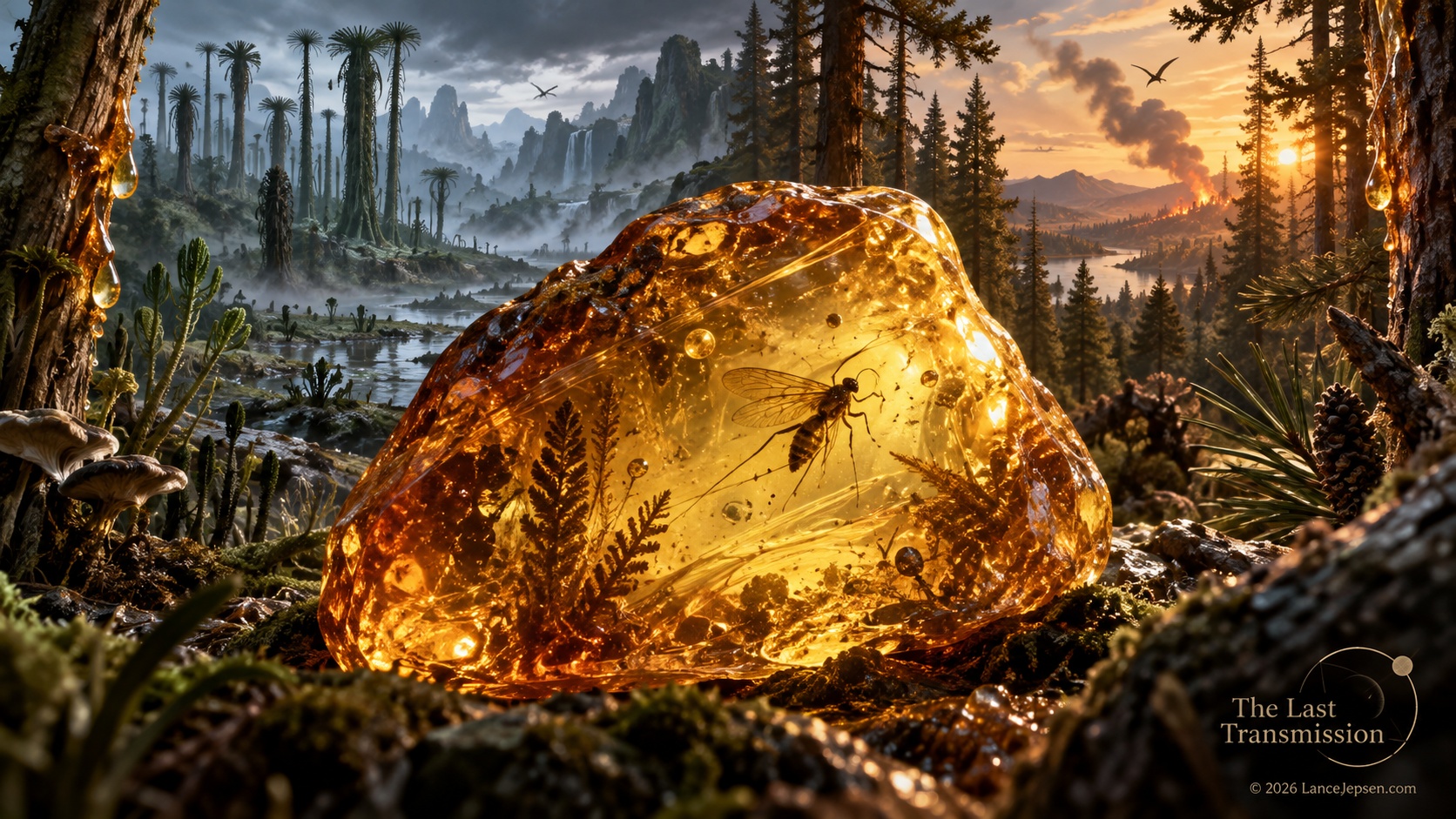 Amber Before the Jewel
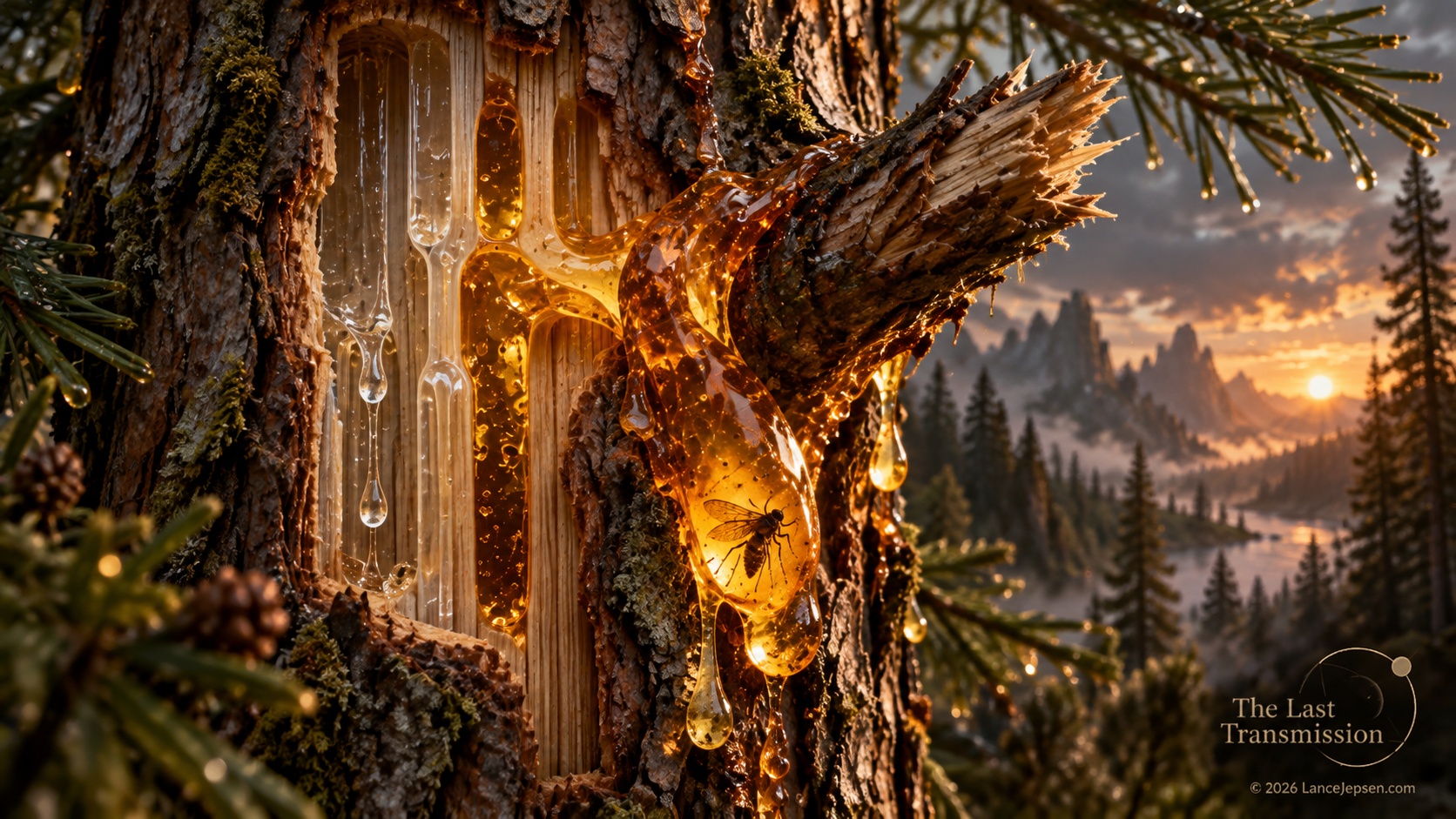 A Wound Sealed With Resin
 The Mark Shared by Titan and Pluto