
VISUAL ARCHIVE / IMAGE STORY
A Wound Sealed With Resin
Resin can help protect damaged plant tissue; this cross-section is explanatory artwork.
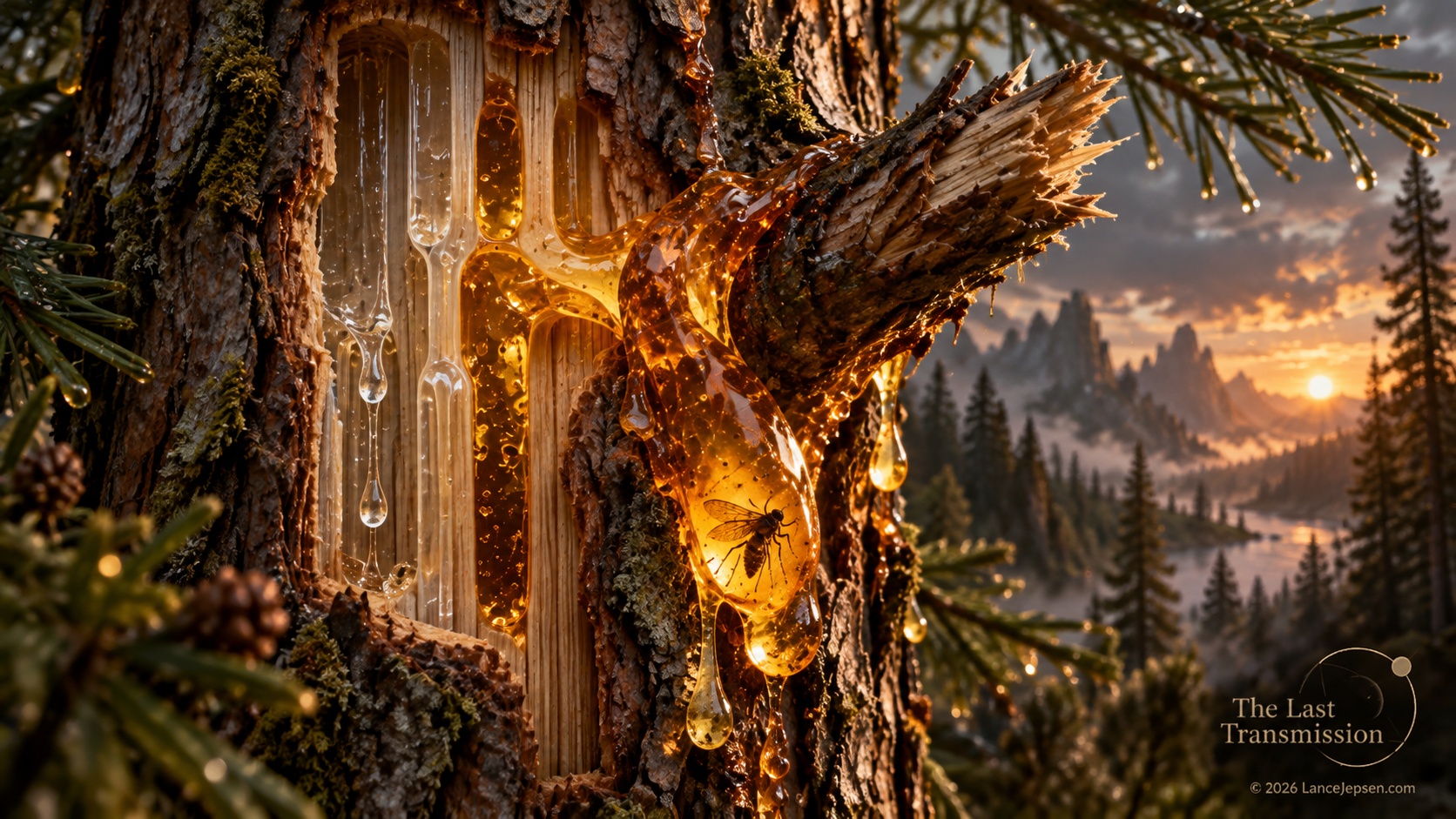
A biological bandage. Resin released around an injury can seal damaged tissue while creating a chemical and physical barrier against additional threats. The image shows a conceptual cutaway of resin channels and a wounded resin-producing tree. AI-generated editorial illustration.
THE OBSERVATION
What we can actually see.
Plant resins can seal injuries and help defend tissue against pests or pathogens. The ancient amber record shows resin existed hundreds of millions of years ago, but an isolated fossil fragment does not reveal the exact wound, fungal challenge, or anatomy of the plant that released it.
THE ILLUSTRATION
What the artwork imagines.
The neat cutaway and visible channels explain a biological function at a scale the fossil does not provide. The depicted tree is not a reconstruction of a named Devonian specimen, and the wound is a plausible scenario rather than a documented event.
FROM THE ILLUSTRATED ARTICLE
The story that inspired it.
The article asks what problem resin may have solved for early plants and follows that defensive material into the fossil record.
Read The Trees Were Bleeding 385 Million Years AgoCHECK THE RECORD
The image interprets the research below. Follow the original work for the measurements and limits behind the scene.
Middle Devonian amber discovery, Science AdvancesOTHER IMAGE STORIES
 Amber Before the Jewel
 The Oldest Amber Is Tiny
 The Mark Shared by Titan and Pluto