
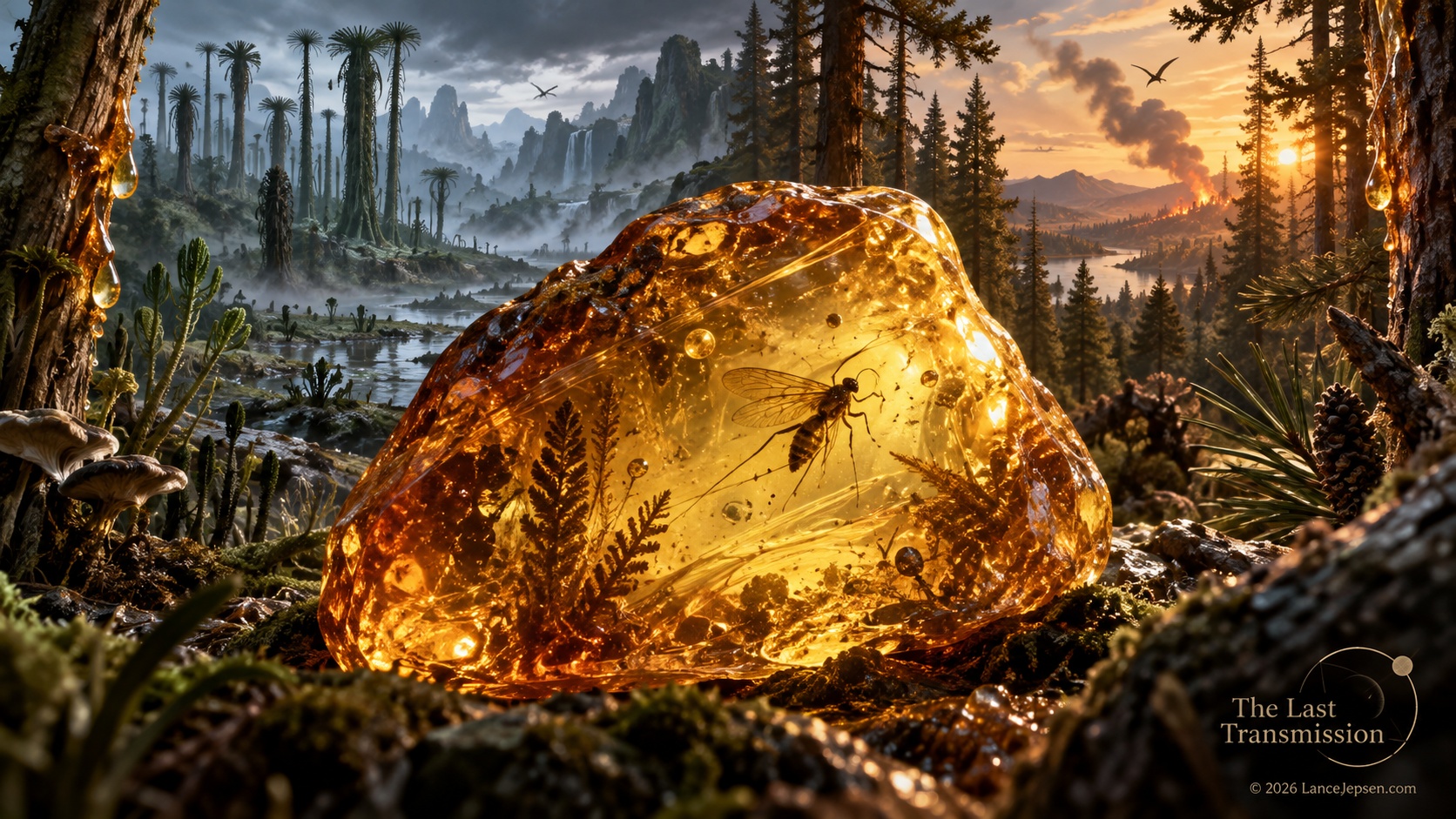
38 / A fossil of distress
The Trees Were Bleeding
Amber begins as resin, a material trees release in response to injury and other pressures. A deep-time discovery pushes that history farther back than many would expect.
We often see amber as a jewel with a trapped insect at its center. Before it became a fossil, resin belonged to a living organism facing its environment. That change in perspective turns a beautiful specimen into evidence of ancient stress, adaptation, and survival. This investigation follows the material back to the trees that made it.
The full investigation continues with the evidence, illustrations, and sources at The Last Transmission on Substack.
Continue reading on SubstackTHE EVIDENCE / THE OPEN QUESTION
What we know.
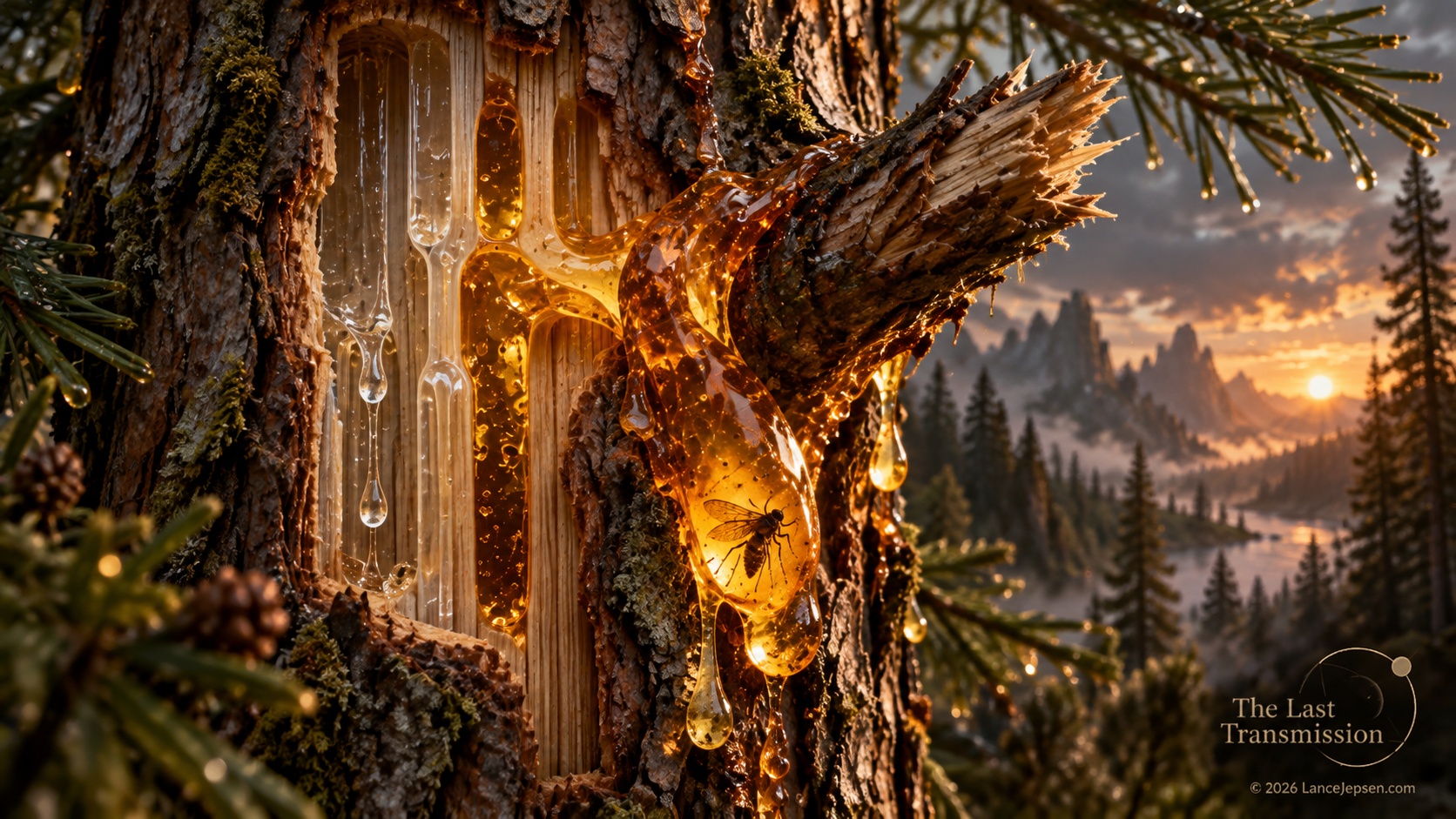
Resin is a mixture plants can release around injury and other stress. It can seal exposed tissue and make life harder for some attackers. Under unusual conditions, resin survives burial and chemical change to become the fossil material we call amber.
What remains open.
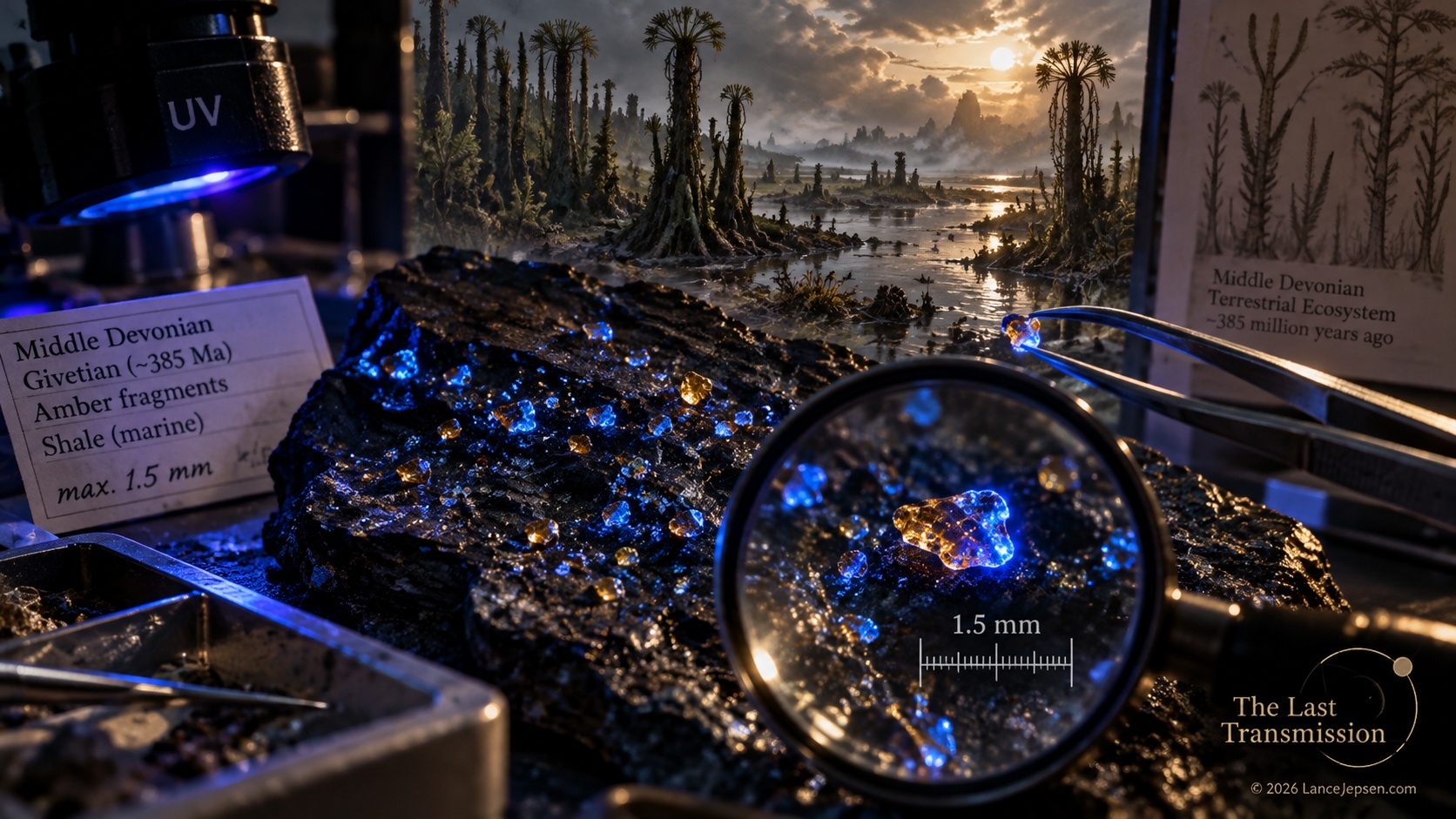
A particular piece of amber may preserve an insect or a tiny fragment of an ecosystem, but its original circumstances can be difficult to reconstruct. Resin is also different from the sap that moves water and sugars through a plant. Treating every golden fossil as a simple snapshot misses the living process that produced it.
Why it matters.
A beautiful object becomes more revealing when we ask why the tree made it. Deep-time resin can carry evidence of ecological pressure, plant defenses, and the accidents of preservation. The fossil is a remnant of a response, not a material created for our display cases.
FOLLOW THE EVIDENCE
Research behind the field note.
WATCH THE RELATED DOCUMENTARY
The story in motion.
VISUAL EVIDENCE
Inside the investigation.
FOLLOW THE THREAD
Related signals.
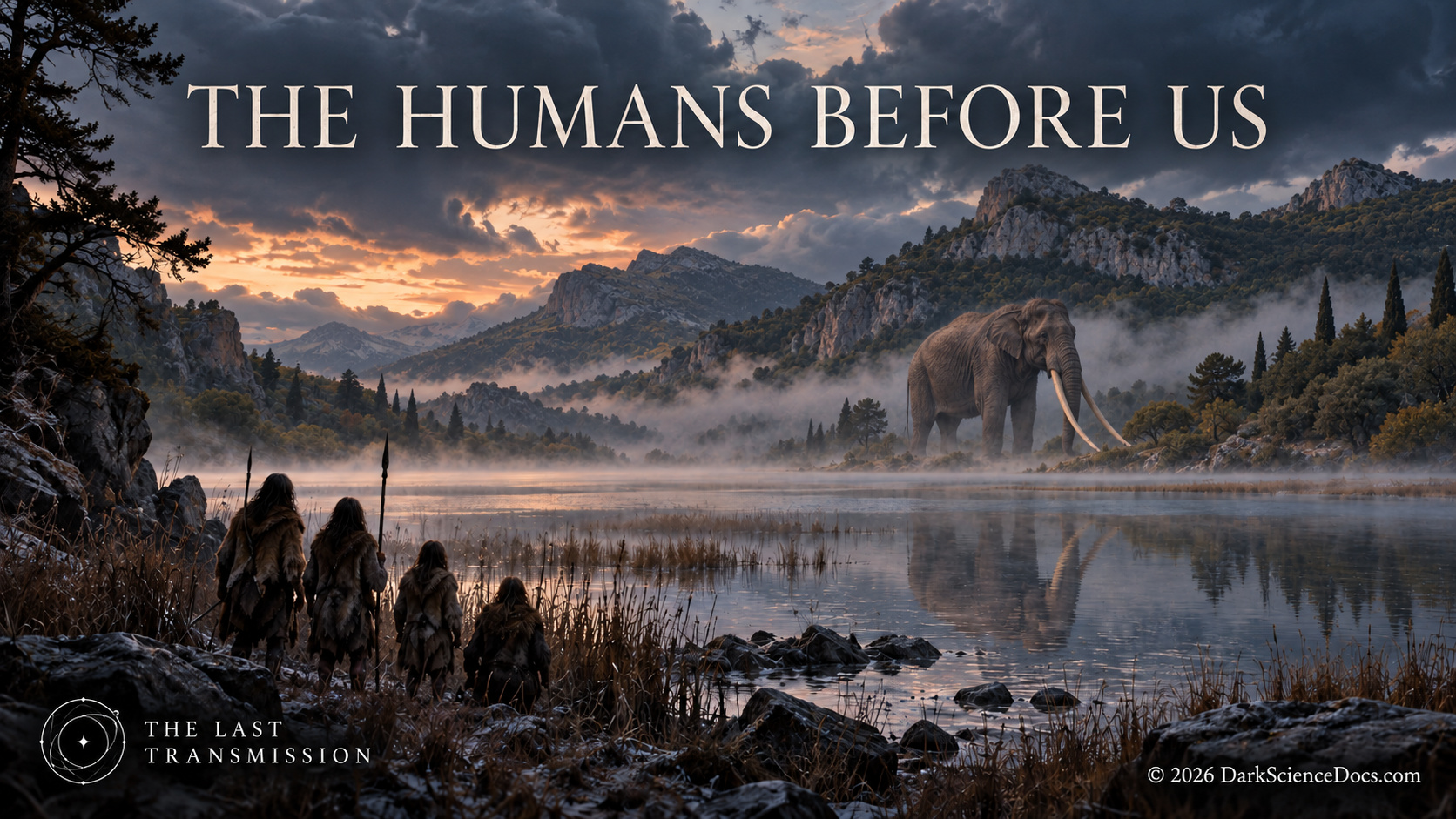
They Survived the Ice Age. We Still Don’t Know Who They Were.
Beneath a Greek coal mine, ancient tools and butchered elephant bones reveal people who endured a brutal world long before us.
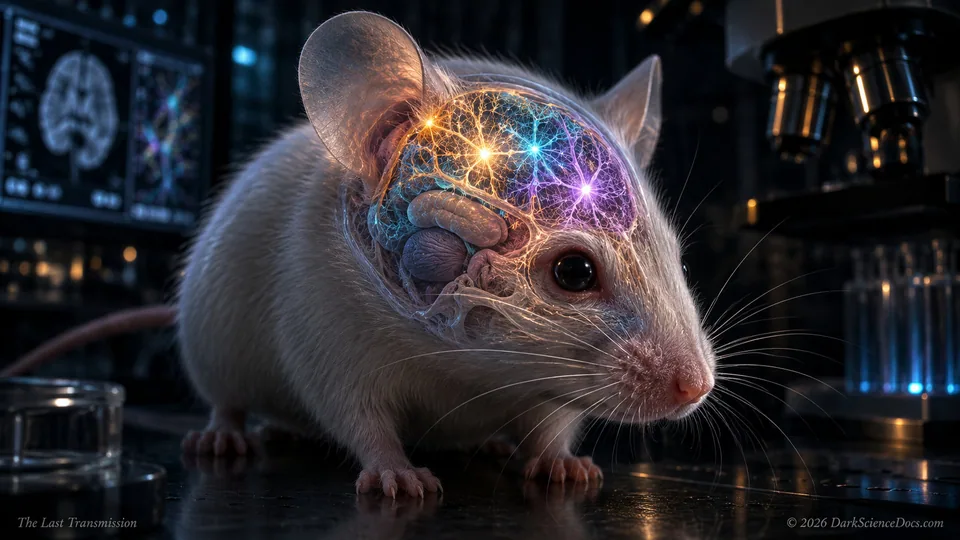
They Grew a Human Cortex Inside a Mouse. Then They Tested Its Memory.
Scientists created mice whose cortical tissue was almost entirely derived from human cells. The tissue grew, formed connections, generated electrical activity, and revealed something extraordinary.
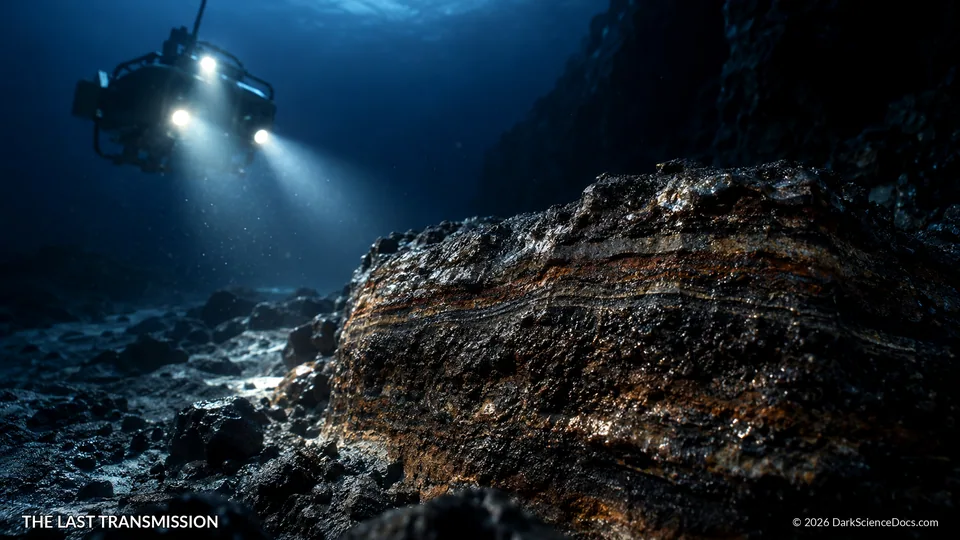
They Found Plutonium at the Bottom of the Pacific. The Explosion That Made It May Be Over 95 Million Years Old.
Deep beneath the ocean, scientists discovered radioactive debris from beyond Earth. The most disturbing clue was an element they could not find.