
VISUAL ARCHIVE / IMAGE STORY
The Environment Behind a Faint Afterglow
A cavity is one way to ask why the later emission did not follow the simplest expectation.
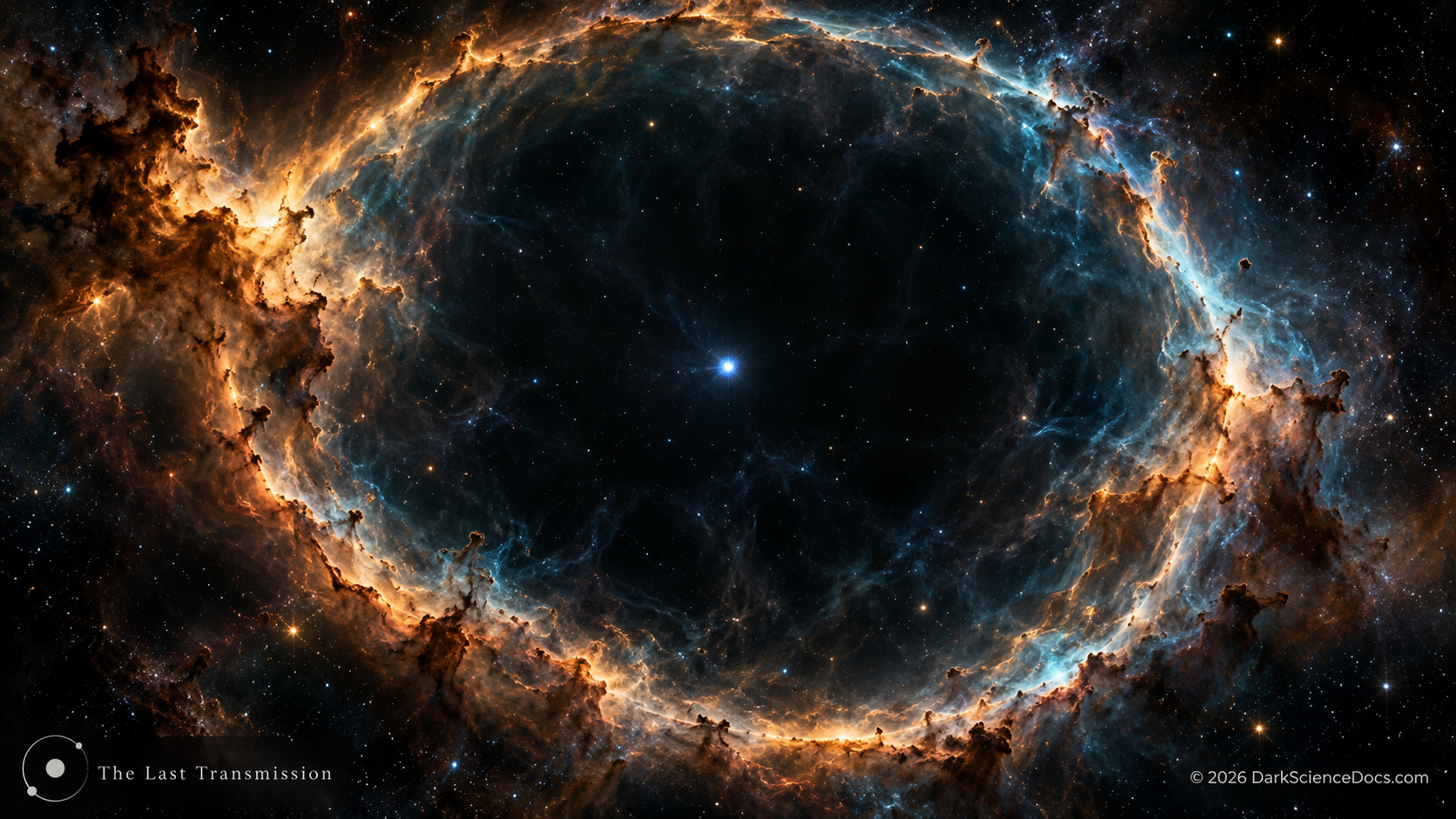
Strong stellar winds could have swept gas away from the progenitor, leaving a sparse cavity inside a denser surrounding shell. AI-generated conceptual illustration of a possible environment, not a measured map of GRB 220101A.
THE OBSERVATION
What we can actually see.
Afterglow modeling depends on ejecta, radiation processes, and the density of the surrounding material. A sparse cavity and outer shell are possible environmental ingredients; the artwork does not supply a measured three-dimensional map of this burst’s surroundings.
THE ILLUSTRATION
What the artwork imagines.
The composition visualizes this idea: A cavity is one way to ask why the later emission did not follow the simplest expectation. Strong stellar winds could have swept gas away from the progenitor, leaving a sparse cavity inside a denser surrounding shell. AI-generated conceptual illustration of a possible environment, not a measured map of GRB 220101A.
FROM THE ILLUSTRATED ARTICLE
The story that inspired it.
The article compares the observed burst and faint afterglow of GRB 220101A with a proposed chain reaction among compact companions. The seconds-apart sequence is a model interpretation, while the radiation measurements are the evidence it must explain. This frame focuses on a cavity is one way to ask why the later emission did not follow the simplest expectation.
Read A Star Exploded. 3.5 Seconds Later, It May Have Taken Another Star With It.CHECK THE RECORD
The image interprets the research below. Follow the original work for the measurements and limits behind the scene.
Research record: arxiv.org/abs/2608.20829v1 Research record: arxiv.org/abs/2602.04660v1 Research record: doi.org/10.1038/s41550-023-02005-w Research record: www.nasa.gov/image-article/into-heart-of-crab-nebula/ Research record: science.nasa.gov/universe/stories/quick-reads/gamma-ray-bursts-black-hole-birth-announcements/OTHER IMAGE STORIES
Keep looking.
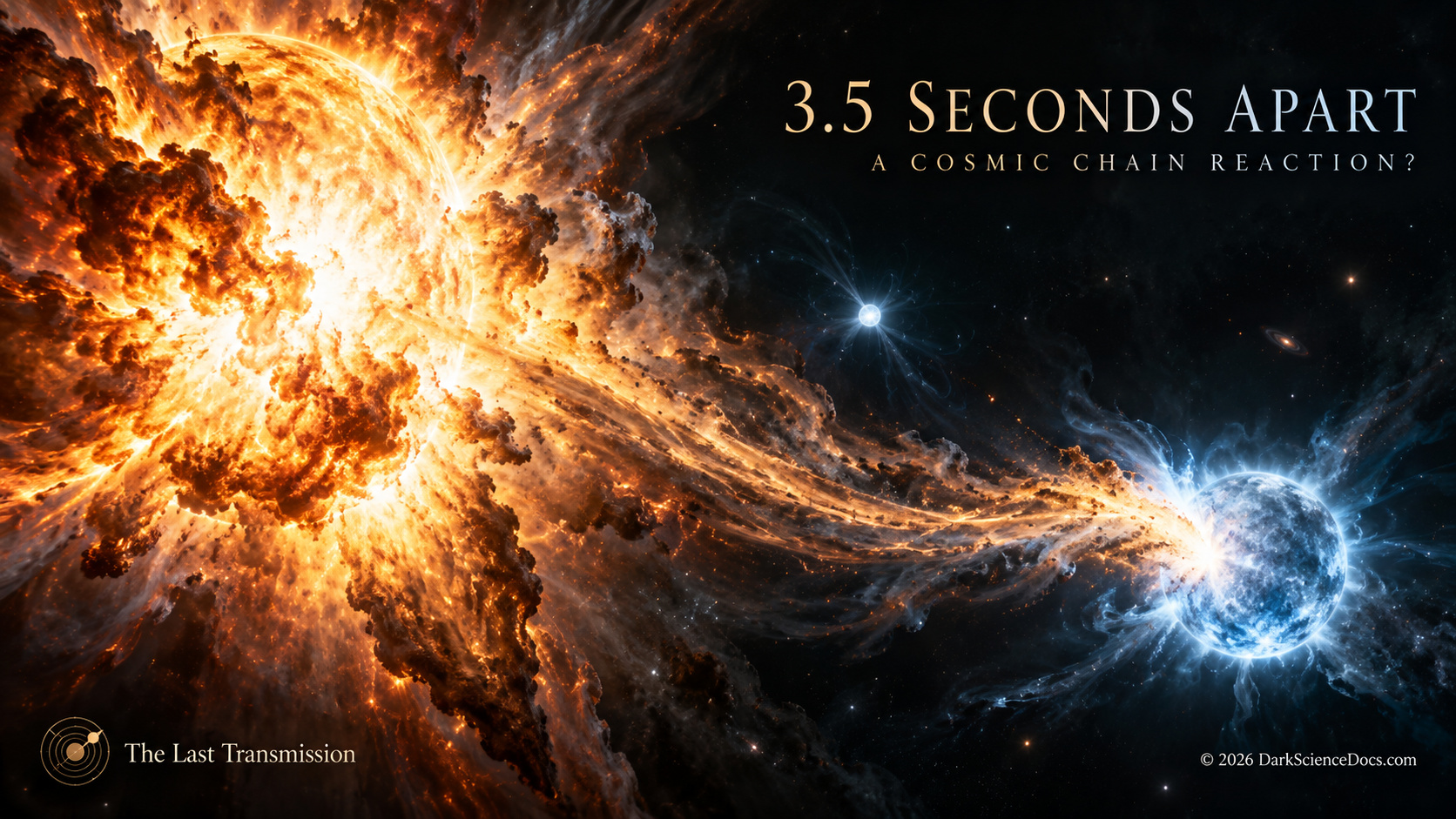 Two Collapses in a Proposed Sequence
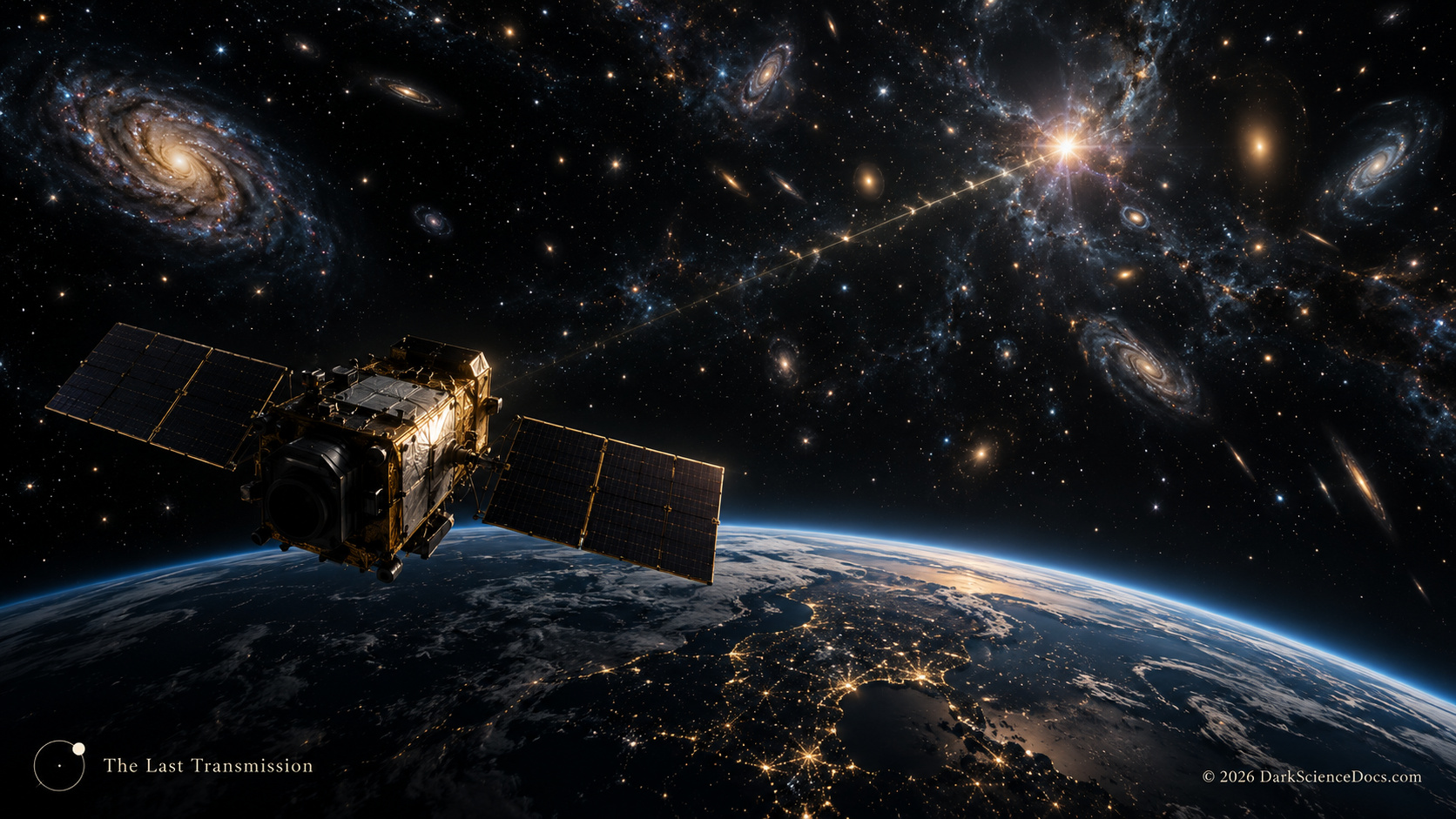 The Flash That Reached Earth
 The Mark Shared by Titan and Pluto
EXPLORE IN 3D / ATLAS S-01
Compare the formation of compact remnants
Compare the evolutionary routes that produce white dwarfs, neutron stars, and black holes. The selected binary stories do not recreate the proposed three-component GRB 220101A progenitor.
Explore Stellar Fates in 3D