
VISUAL ARCHIVE / IMAGE STORY
A World with Enough Light and Too Little Heat
An imagined rocky planet contrasts surface illumination with the uncertain energy deep below.

The habitable zone describes the light a planet receives. It cannot tell us how much life-sustaining activity remains beneath its surface. AI-generated conceptual illustration.
THE OBSERVATION
What we can actually see.
A planet's orbit and its star can constrain incoming radiation. Models of rocky interiors explore how radioactive heating and volcanic outgassing might change with age and affect long-term climate.
THE ILLUSTRATION
What the artwork imagines.
The terrain, atmosphere, interior cross-section, and cold appearance are speculative. No known exoplanet has been photographed from this viewpoint or confirmed to have lost its volcanic carbon supply on the schedule implied by the scene.
FROM THE ILLUSTRATED ARTICLE
The story that inspired it.
The article asks whether a habitable-zone label can outlast the geological processes that help keep a planet's surface environment stable, and why the answer remains model-dependent.
Read The Planets That Go Quiet While Their Stars Still ShineCHECK THE RECORD
The image interprets the research below. Follow the original work for the measurements and limits behind the scene.
Mantle degassing lifetime studyOTHER IMAGE STORIES
 A Planet’s Slow Interior Furnace
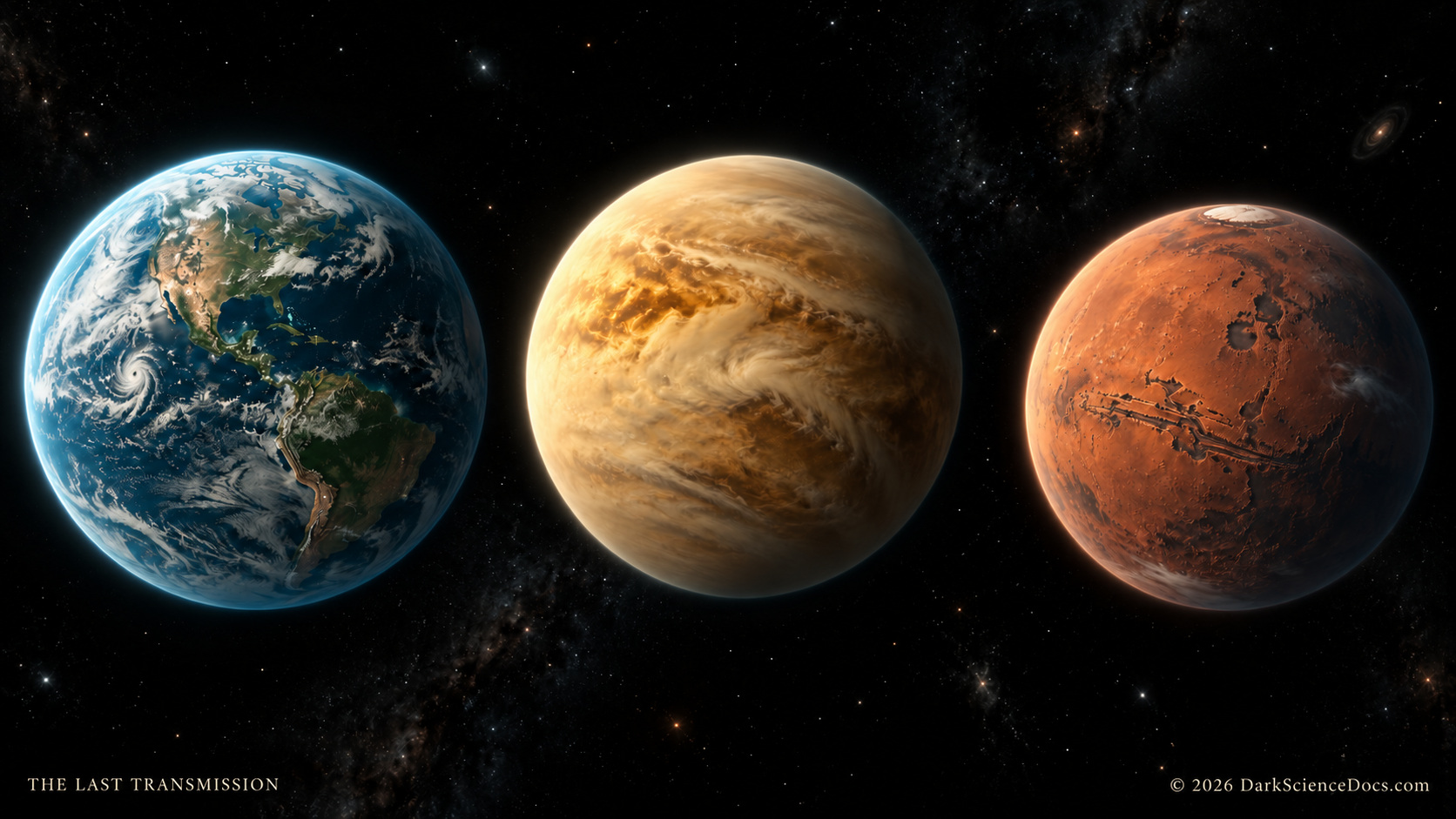 Three Worlds, Different Histories
 The Mark Shared by Titan and Pluto