
VISUAL ARCHIVE / IMAGE STORY
A Planet’s Slow Interior Furnace
Long-lived radioactive isotopes contribute heat over geologic time.
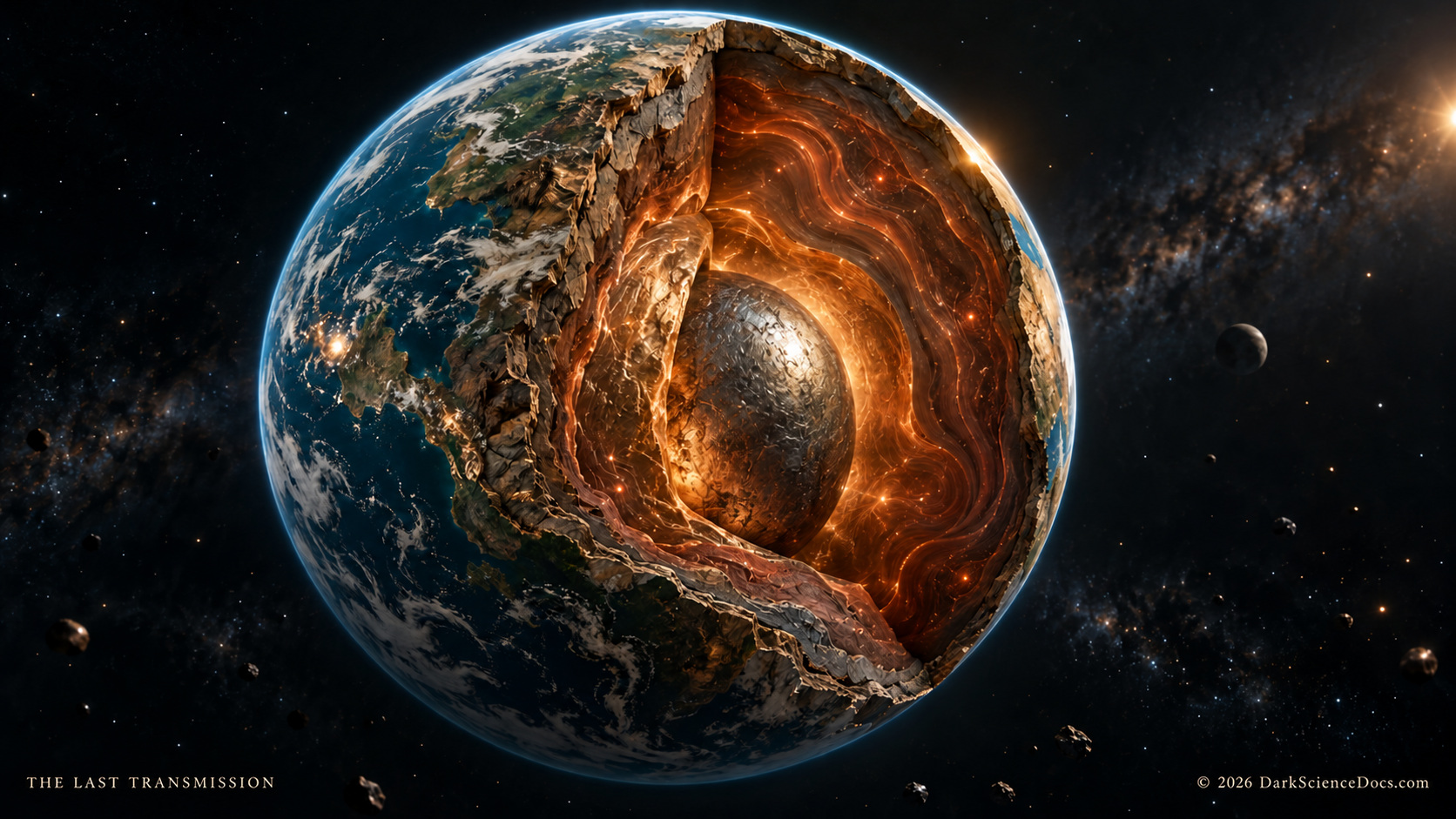
Long-lived radioactive isotopes add heat to a rocky planet's interior. This cutaway is an artistic concept, not a measured view of an exoplanet or a literal map of Earth's mantle.
THE OBSERVATION
What we can actually see.
Potassium, uranium, and thorium can warm a rocky mantle as they decay. Models vary their abundances to explore volcanic and tectonic consequences, which also depend on planet size and many other conditions.
THE ILLUSTRATION
What the artwork imagines.
The glowing cutaway is an AI-generated cross-section. It is not an interior measurement of an exoplanet or a precise heat map of Earth.
FROM THE ILLUSTRATED ARTICLE
The story that inspired it.
The planet article explores how radiogenic heat could affect long-term geology while leaving actual exoplanet interiors unresolved. Long-lived radioactive isotopes contribute heat over geologic time.
Read The Planets That Go Quiet While Their Stars Still ShineCHECK THE RECORD
The image interprets the research below. Follow the original work for the measurements and limits behind the scene.
Rocky-planet radiogenic heating modelOTHER IMAGE STORIES
 A World with Enough Light and Too Little Heat
 Three Worlds, Different Histories
 The Mark Shared by Titan and Pluto