
VISUAL ARCHIVE / IMAGE STORY
Hydrogen Under Crushing Pressure
Models predict conductive hydrogen inside Jupiter; the interior’s colors and boundaries are invented.
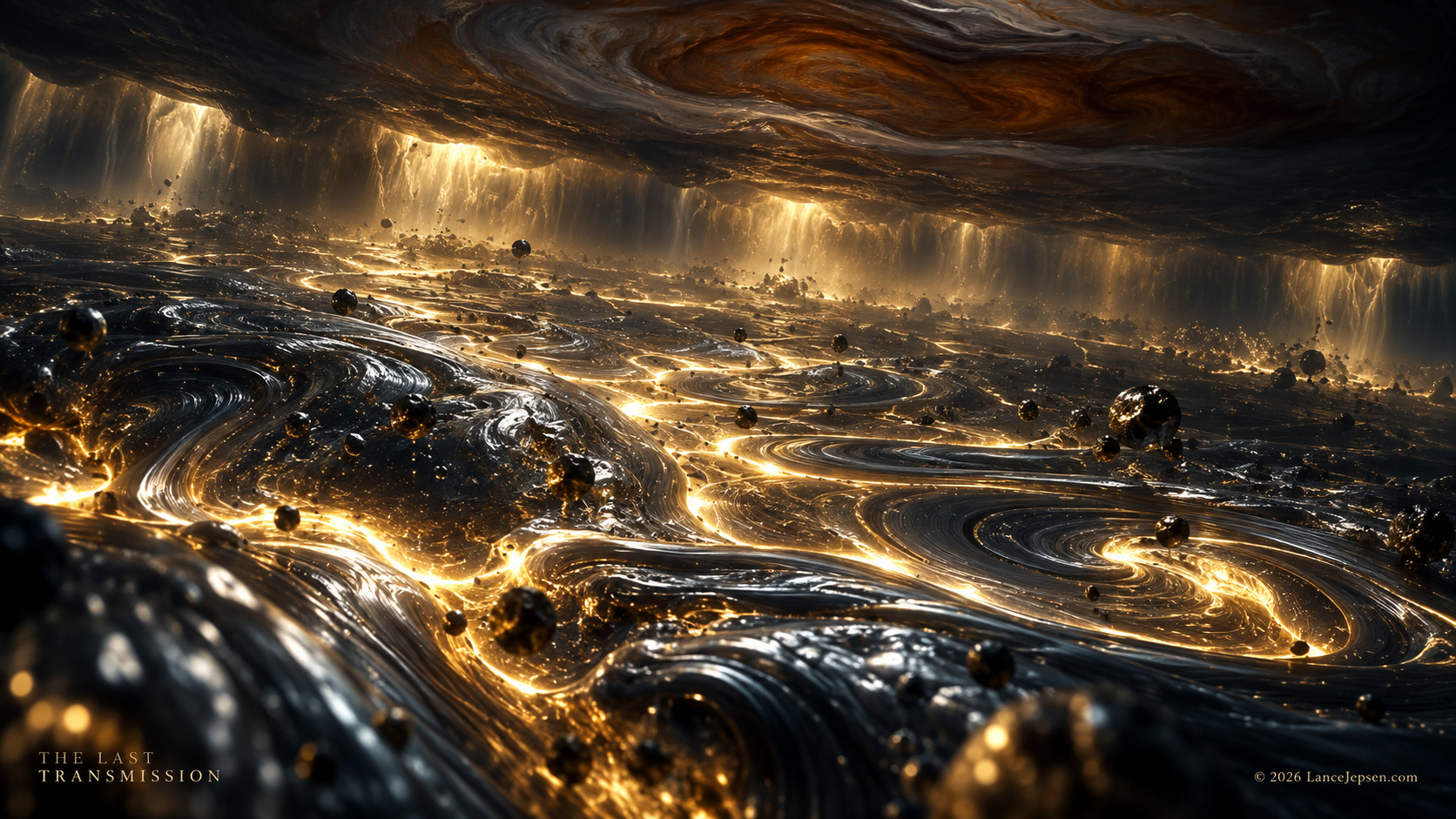
Far below the visible clouds, hydrogen is expected to become an electrically conducting fluid. This is an artistic impression of the deep interior, not a direct view of metallic hydrogen. AI-generated conceptual illustration; The Last Transmission © 2026 DarkScienceDocs.com
THE OBSERVATION
What we can actually see.
Jupiter’s enormous pressures change how hydrogen behaves in its deep interior. Planetary models include an electrically conducting region that helps explain the magnetic field. The transition, temperature, and composition must be inferred; a probe has not captured a view of metallic hydrogen beneath the clouds.
THE ILLUSTRATION
What the artwork imagines.
The luminous layers and clean boundaries offer a visual guide to conditions that cannot be photographed. They should not be read as measured depths or the actual color of high-pressure hydrogen.
FROM THE ILLUSTRATED ARTICLE
The story that inspired it.
The article explains why a gravity-based core model depends on assumptions about matter far below Jupiter’s familiar cloud bands.
Read The Planet That Wouldn’t Keep Its CoreCHECK THE RECORD
The image interprets the research below. Follow the original work for the measurements and limits behind the scene.
NASA Juno mission scienceOTHER IMAGE STORIES
 Jupiter’s Unseen Core
 A Radio Signal Along Jupiter’s Edge
 The Mark Shared by Titan and Pluto