
VISUAL ARCHIVE / IMAGE STORY
Sealed Rooms Beneath Lunar Rock
Sealed habitat modules inside an imagined lunar lava tube illustrate how engineered rooms might use surrounding rock for protection. The cavern’s dimensions and construction are speculative. AI-generated conceptual illustration.
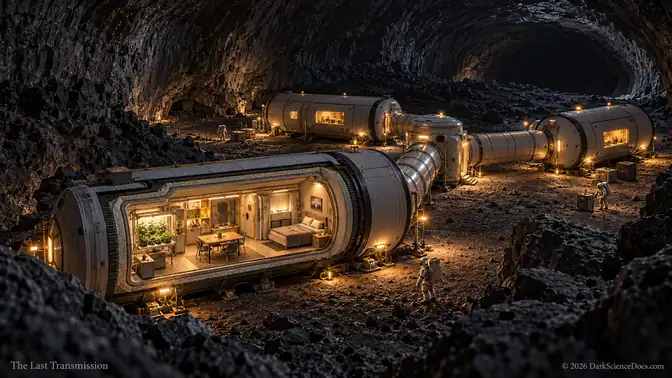
Sealed habitat modules inside an imagined lunar lava tube illustrate how engineered rooms might use surrounding rock for protection. The cavern’s dimensions and construction are speculative. AI-generated conceptual illustration.
THE OBSERVATION
What we can actually see.
Orbital radar supports a cave conduit beneath the Mare Tranquillitatis pit, while thermal observations and modeling suggest stable conditions in particular shaded areas. These findings identify places worth investigating; they do not certify a settlement site.
THE ILLUSTRATION
What the artwork imagines.
Sealed habitat modules inside an imagined lunar lava tube illustrate how engineered rooms might use surrounding rock for protection. The cavern’s dimensions and construction are speculative. AI-generated conceptual illustration. The viewpoint, architecture and scale are invented. The interior cutaway explains a sealed pressure volume; it is not an open wall exposed to vacuum.
FROM THE ILLUSTRATED ARTICLE
The story that inspired it.
Could ancient lunar caves help shelter future explorers, and what would still have to be engineered before anyone could call one home? Follow radar evidence, thermal models and the distinction between a natural shelter and a habitable room.
Read We Won’t Terraform the Moon. We’ll Build Something Better.CHECK THE RECORD
The image interprets the research below. Follow the original work for the measurements and limits behind the scene.
NASA: radar evidence beneath the Mare Tranquillitatis pit NASA: orbital observations and thermal modeling of lunar pits NASA: GIMLI selection and the Marius Hills investigationOTHER IMAGE STORIES
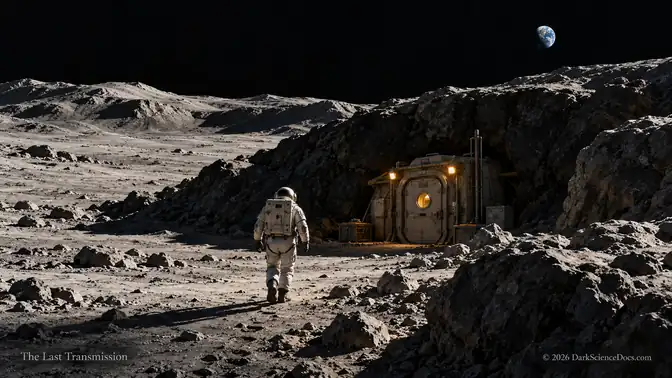 A Light at a Lunar Shelter
 The Mark Shared by Titan and Pluto
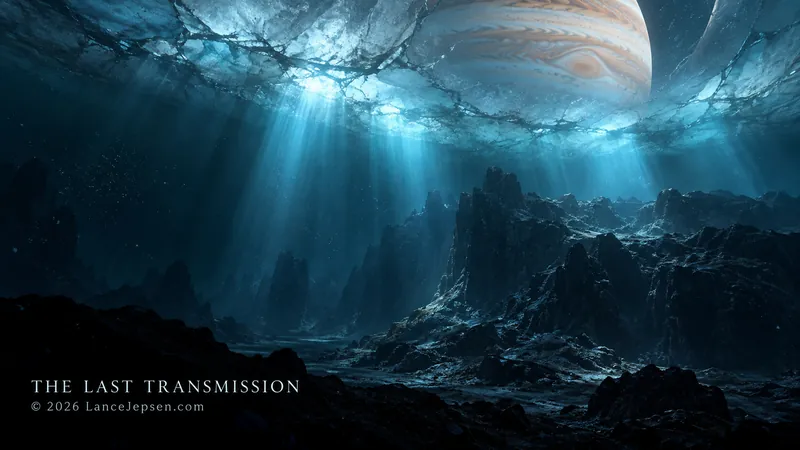 An Ocean We Have Never Seen