
01 / LUNAR EXPLORATION / SHELTER & EVIDENCE
Lunar Caves: What Would It Take to Build a Home?
Could ancient lunar caves help shelter future explorers, and what would still have to be engineered before anyone could call one home? Follow radar evidence, thermal models and the distinction between a natural shelter and a habitable room.
Orbital radar supports a cave conduit beneath the Mare Tranquillitatis pit, while thermal observations and modeling suggest stable conditions in particular shaded areas. These findings identify places worth investigating; they do not certify a settlement site. The full extent, access conditions and structural stability of candidate caves remain unsettled. Marius Hills and Mare Tranquillitatis are different locations. Neither cave evidence nor a sheltered temperature establishes breathable air, usable local ice or a safe inhabited base.
The world outside the door
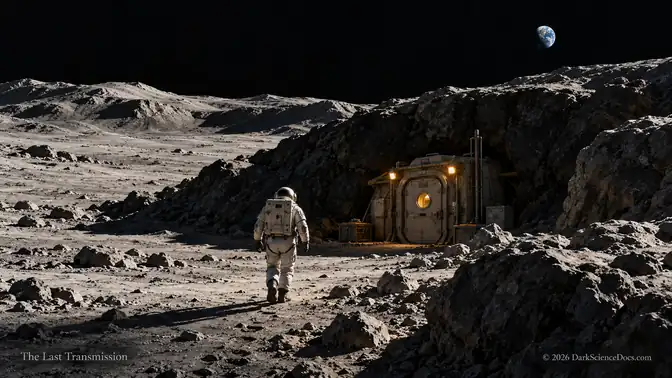
Terraforming means changing a world’s environment until it can support life across its surface. Giving the Moon a breathable sky would require an immense supply of atmospheric gases and ways to address their loss over time. Building smaller, enclosed environments offers a far more manageable starting point, although even a modest lunar habitat would be an extraordinary undertaking. The Moon’s exceedingly thin exosphere provides no air we can breathe. Its surface also lacks the protection supplied by Earth’s thick atmosphere and global magnetic field. Outside a shelter, every breath and every excursion would depend on equipment designed for conditions that the human body cannot endure on its own. Across much of the Moon, daylight and darkness each last roughly two Earth weeks. Surface temperatures can exceed 120 degrees Celsius in sunlight and fall drastically during the night, while some permanently shadowed polar terrain is colder still. A settlement would have to keep people safe through those changes while they repaired equipment, prepared meals, called their families, and slept. From inside such a place, the ordinary freedoms of Earth might acquire a different weight. Opening a window would become a memory. Walking outside without checking anything first would belong to another life. Even the comfort of falling asleep would rest on the knowledge that the air, heat, and electricity would still be there in the morning.
The darkness that could shelter us
Billions of years ago, flowing lava helped shape the lunar plains. Where a flow developed a hardened outer shell and the molten material inside drained away, it could leave a hollow passage. Some pits visible today may open into those ancient underground spaces, offering a reason to look beneath a landscape that appears so exposed. In 2024, researchers analyzing radar data from NASA’s Lunar Reconnaissance Orbiter reported evidence for a cave extending more than 200 feet, or about 60 meters, from the base of a pit in Mare Tranquillitatis. Its full extent remains unknown. That evidence gives scientists a place to investigate, while leaving crucial questions about access, rock stability, and suitability for exploration unanswered. Thermal research offers another intriguing clue. Using orbital observations and computer modeling, scientists found that permanently shaded parts of the Mare Tranquillitatis pit could remain near 17 degrees Celsius, or 63 degrees Fahrenheit. That result concerns particular sheltered conditions; temperatures elsewhere on the Moon vary enormously. A relatively comfortable temperature also leaves the need for breathable air entirely unsolved. For engineers, these possibilities suggest a useful division of work. A suitable thickness of surrounding rock could provide shielding, while purpose-built pressure vessels held the air. A cavern would still require investigation and monitoring, and every inhabited room would need dependable life support. The rock overhead could become one part of a carefully engineered shelter. There is now a concrete investigation aimed at one of these openings. On September 30, 2026, NASA announced its selection of GIMLI, the Geophysical Instruments for Marius Lunar pit Investigation. The planned payload will examine whether the Marius Hills pit leads into a large underground lava tube. Its selection marks an effort to find out what is there; it does not establish that a habitable cavern has already been surveyed. It is easy to let the imagination rush ahead to illuminated corridors and gardens. First, someone must learn what lies beyond the opening, whether the ceiling is stable, and how equipment could reach it. The path toward a future home may begin with instruments asking patient questions in a place no person has entered.
A shelter still needs a sealed home
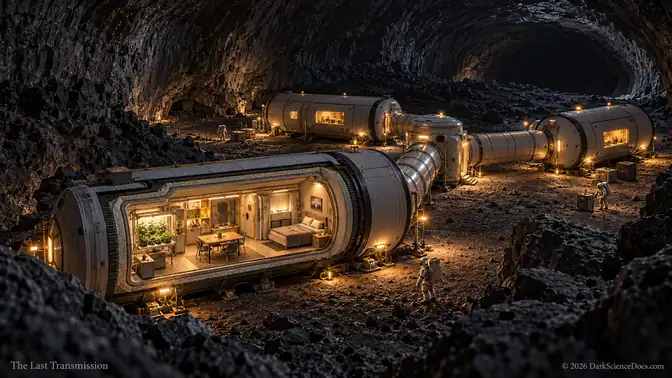
Surrounding rock and an inhabited room perform different jobs. A sufficiently shielded location could reduce some environmental exposure, but people would still need sealed pressure vessels, dependable power, breathable air, water handling and routes for maintenance or evacuation. The painted cutaway in the companion artwork removes a wall only to explain an interior; it is not an open room exposed to lunar vacuum. The cavern and its modules are speculative designs, not a surveyed installation. The same distinction applies to the people and families imagined in the film: their experiences invite reflection on a possible future rather than documenting a community already living on the Moon.
Read the illustrated companion article for the documentary’s human story and scientific source trail.
Continue reading on SubstackTHE EVIDENCE / THE OPEN QUESTION
What we know.
Orbital radar supports a cave conduit beneath the Mare Tranquillitatis pit, while thermal observations and modeling suggest stable conditions in particular shaded areas. These findings identify places worth investigating; they do not certify a settlement site.
What remains open.
The full extent, access conditions and structural stability of candidate caves remain unsettled. Marius Hills and Mare Tranquillitatis are different locations. Neither cave evidence nor a sheltered temperature establishes breathable air, usable local ice or a safe inhabited base.
Why it matters.
A cave can change a habitat design without solving every problem of living away from Earth. Keeping measurements, models and imagined communities distinct helps us ask what a scouting mission would actually need to establish.
GO DEEPER / EVIDENCE FILE
What Does the Evidence for Lunar Caves Establish?
Radar evidence and thermal modeling support targeted lunar cave exploration. They do not yet establish a fully surveyed, stable or habitable settlement site.
COMPARE THE QUESTIONS
Follow what the light reveals.
Follow the cave evidence, compare lunar resources, and explore the teaching models.
FOLLOW THE EVIDENCE
Research behind the field note.
WATCH THE RELATED DOCUMENTARY
The story in motion.
VISUAL EVIDENCE
Inside the investigation.
FOLLOW THE THREAD
Related signals.
The Moon’s Darkest Places Could Decide Whether We Stay
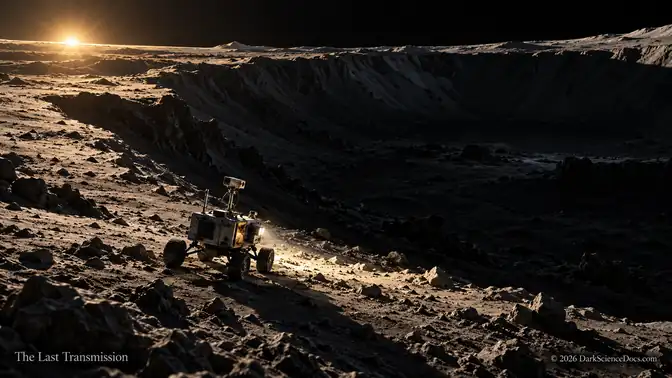
NASA’s next lunar rovers must test whether ancient ice, dangerous terrain, and machines sent ahead of us can support something Apollo never attempted: a lasting human presence.
SpaceX Was Built to Reach Mars. Its Next Great Customer May Be AI.
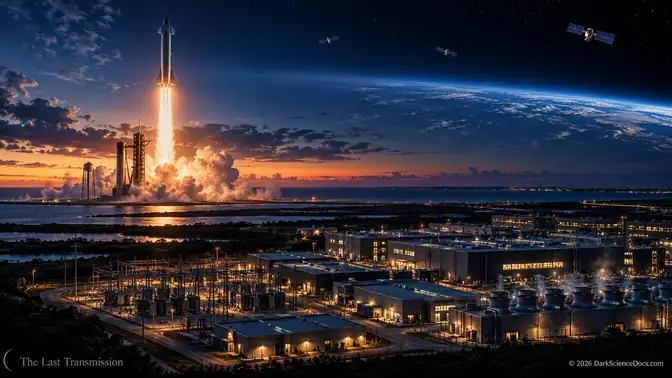
Elon Musk’s selected update connects reusable rockets, a vastly larger Starlink network, and enormous computing campuses.
The First Humans on Mars Will Be Beyond Rescue
We are preparing to send people to another planet. But the greatest danger may arrive when someone calls Earth for help—and discovers that the answer cannot arrive in time.