
VISUAL ARCHIVE / IMAGE STORY
An Elephant in the Archaeological Record
Cut marks on bones are evidence of ancient butchery at Marathousa 1.
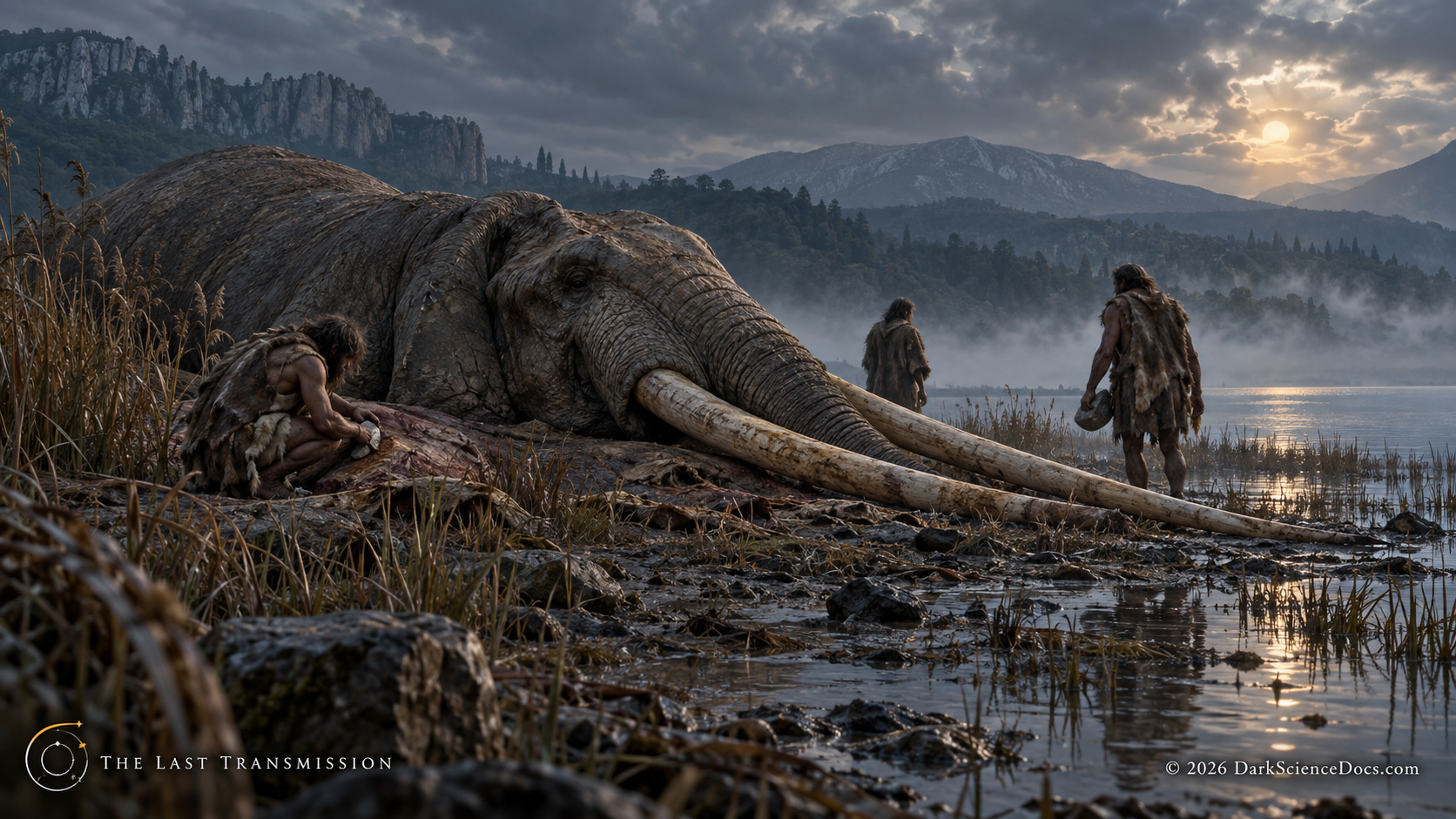
At Marathousa 1, cut-marked elephant bones record ancient butchery. The discovery reveals access to an immense food resource, while the circumstances of the animal’s death remain uncertain. AI-generated reconstruction.
THE OBSERVATION
What we can actually see.
Researchers examined an elephant assemblage associated with stone artifacts and marks consistent with human processing. Those observations support butchery; they do not alone establish whether the animal was hunted or scavenged.
THE ILLUSTRATION
What the artwork imagines.
The people and intact animal are an AI-generated reconstruction of an encounter. The exact participants, tools in hand, and moment of death are not directly preserved.
FROM THE ILLUSTRATED ARTICLE
The story that inspired it.
The article assembles several discoveries in Greece while keeping their ages, sites, and interpretations separate. Cut marks on bones are evidence of ancient butchery at Marathousa 1.
Read They Survived the Ice Age. We Still Don’t Know Who They Were.CHECK THE RECORD
The image interprets the research below. Follow the original work for the measurements and limits behind the scene.
Marathousa 1 archaeological studyOTHER IMAGE STORIES
 The Lives the Ground Cannot Name
 Excavating a Buried Greek Landscape
 The Mark Shared by Titan and Pluto