
VISUAL ARCHIVE / IMAGE STORY
Excavating a Buried Greek Landscape
Excavations in the Megalopolis basin expose traces of a much older environment.
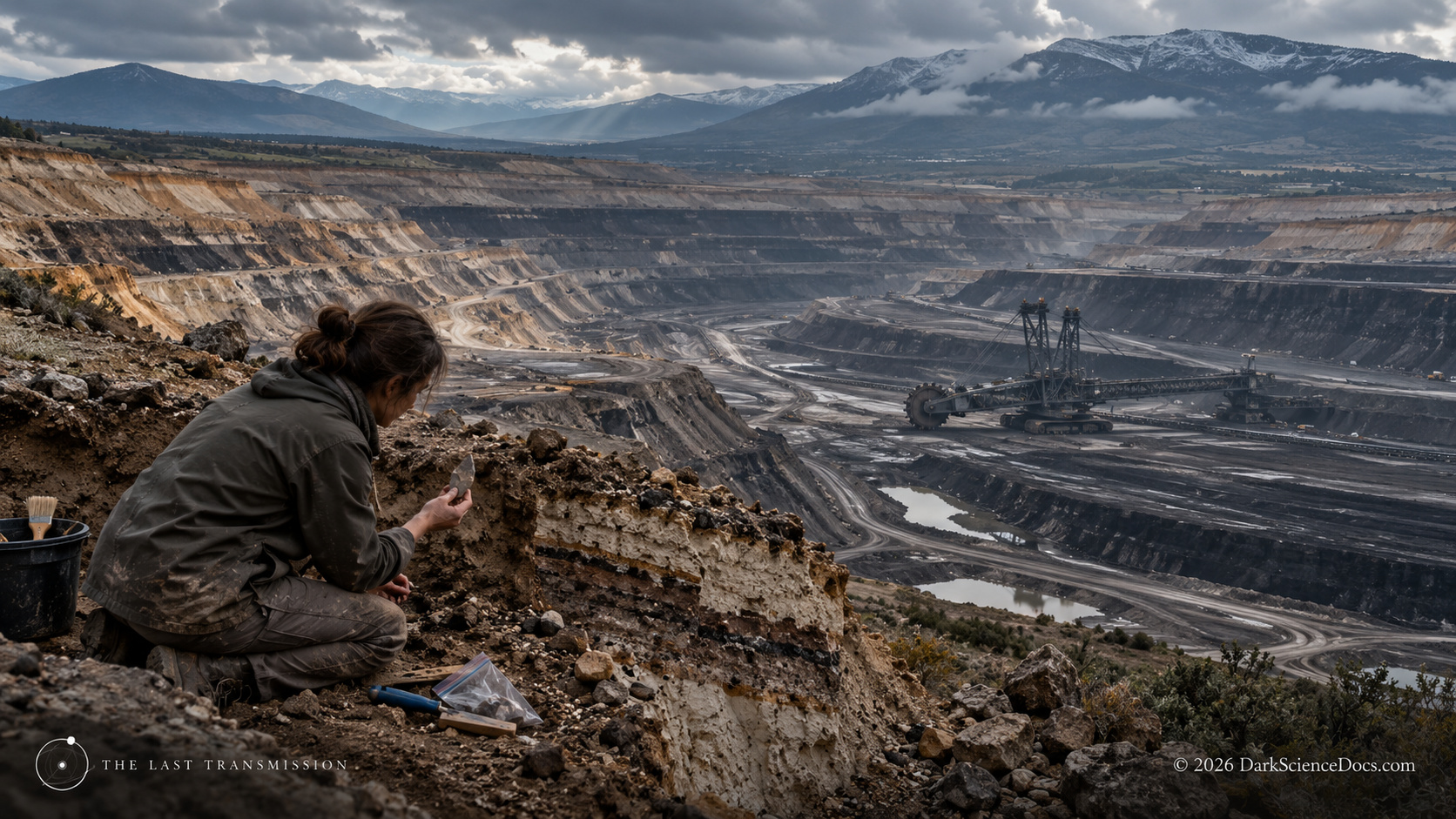
Modern excavation in the Megalopolis basin has exposed sediments containing traces of human activity roughly 700,000 years old. An industrial landscape has become an opening into a much older world. AI-generated illustration.
THE OBSERVATION
What we can actually see.
The basin preserves Pleistocene deposits and evidence of hominin activity at multiple localities. Sediments and archaeology help reconstruct conditions, but a single landscape picture cannot identify all the people who passed through.
THE ILLUSTRATION
What the artwork imagines.
The industrial foreground and ancient background are an AI-generated time bridge. No one photographed a 700,000-year-old scene, and the illustration should not be mistaken for a site plan.
FROM THE ILLUSTRATED ARTICLE
The story that inspired it.
The article assembles several discoveries in Greece while keeping their ages, sites, and interpretations separate. Excavations in the Megalopolis basin expose traces of a much older environment.
Read They Survived the Ice Age. We Still Don’t Know Who They Were.CHECK THE RECORD
The image interprets the research below. Follow the original work for the measurements and limits behind the scene.
Marathousa 1 archaeological studyOTHER IMAGE STORIES
 The Lives the Ground Cannot Name
 An Elephant in the Archaeological Record
 The Mark Shared by Titan and Pluto