
VISUAL ARCHIVE / IMAGE STORY
The Dark That Spread Across Utopia Planitia
Viking and Mars Express images show a change in the extent of dark material; the scene here is a visualization.
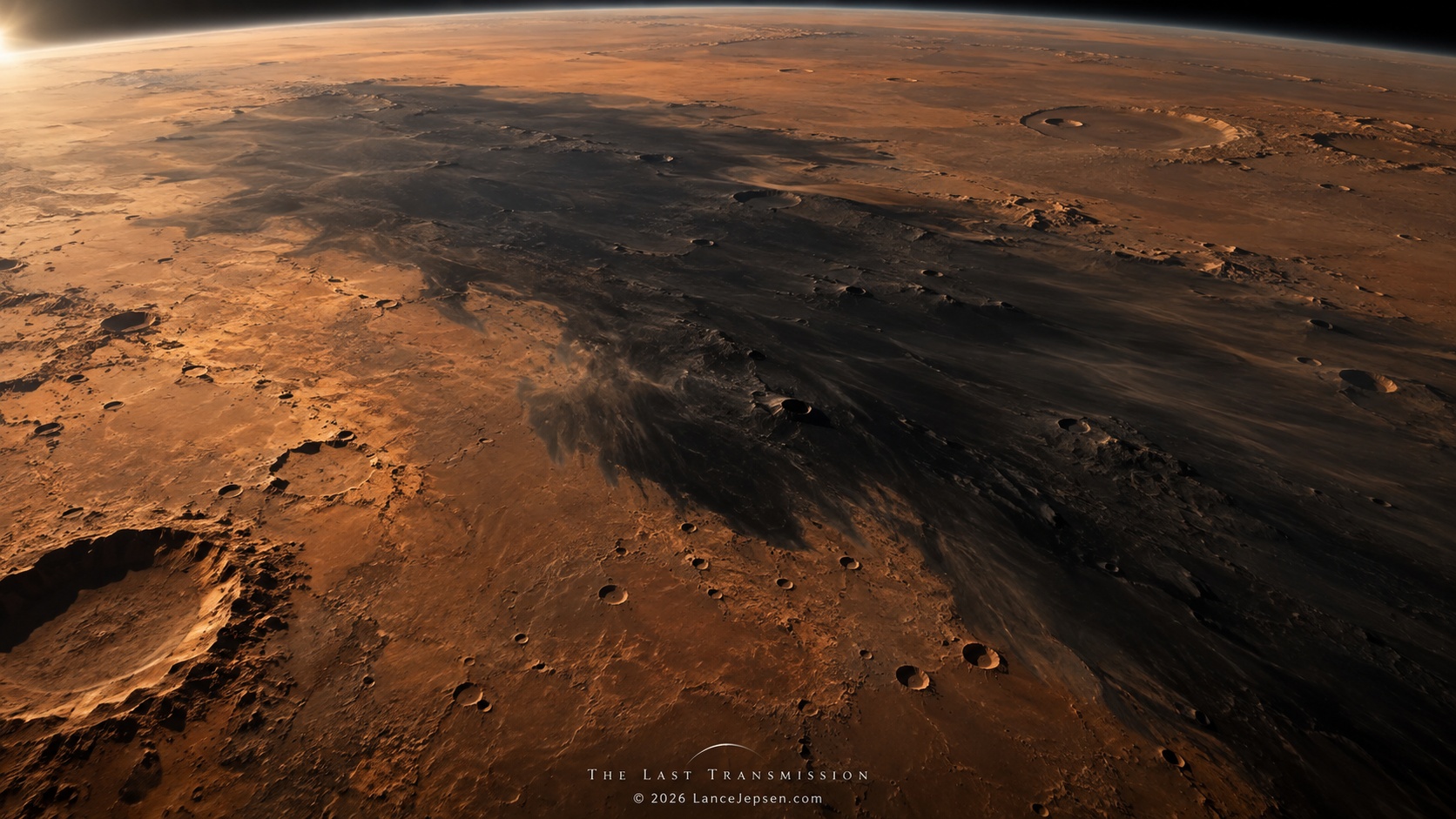
A dark deposit in Utopia Planitia has spread dramatically across the Martian landscape since the Viking era. ESA observations indicate that winds are redistributing or exposing ancient volcanic material on a world once assumed to change only on geological timescales. AI-generated visualization by The Last Transmission.
THE OBSERVATION
What we can actually see.
Images of a region in Utopia Planitia taken by Viking in 1976 and Mars Express decades later show that dark material covers a larger area in the later view. ESA describes the material as likely volcanic in origin. The change might reflect winds moving dark material or winds stripping away lighter dust to expose it. The comparison records a surface change; it does not by itself establish which process dominated.
THE ILLUSTRATION
What the artwork imagines.
This is a reconstructed Martian scene, not one of the two spacecraft comparison frames. Its lighting, perspective, and the look of the moving deposit make a decades-long change readable in one image. The exact path and timing of individual grains were not observed.
FROM THE ILLUSTRATED ARTICLE
The story that inspired it.
The article gathers several ways Mars can alter or obscure its own record, from moving surface material to the fate of preserved organics. This picture focuses on a particularly concrete comparison across spacecraft eras.
Read Mars Is Erasing Its Own Past While We WatchCHECK THE RECORD
The image interprets the research below. Follow the original work for the measurements and limits behind the scene.
ESA Mars Express: Ash creeps across MarsOTHER IMAGE STORIES
 A Planet That Refuses to Stay Still
 Chemistry That Survived in Martian Rock
 The Mark Shared by Titan and Pluto