
VISUAL ARCHIVE / IMAGE STORY
The Multiverse as a Question, Not a Picture
A selection-effect argument is conditional on other universes existing.
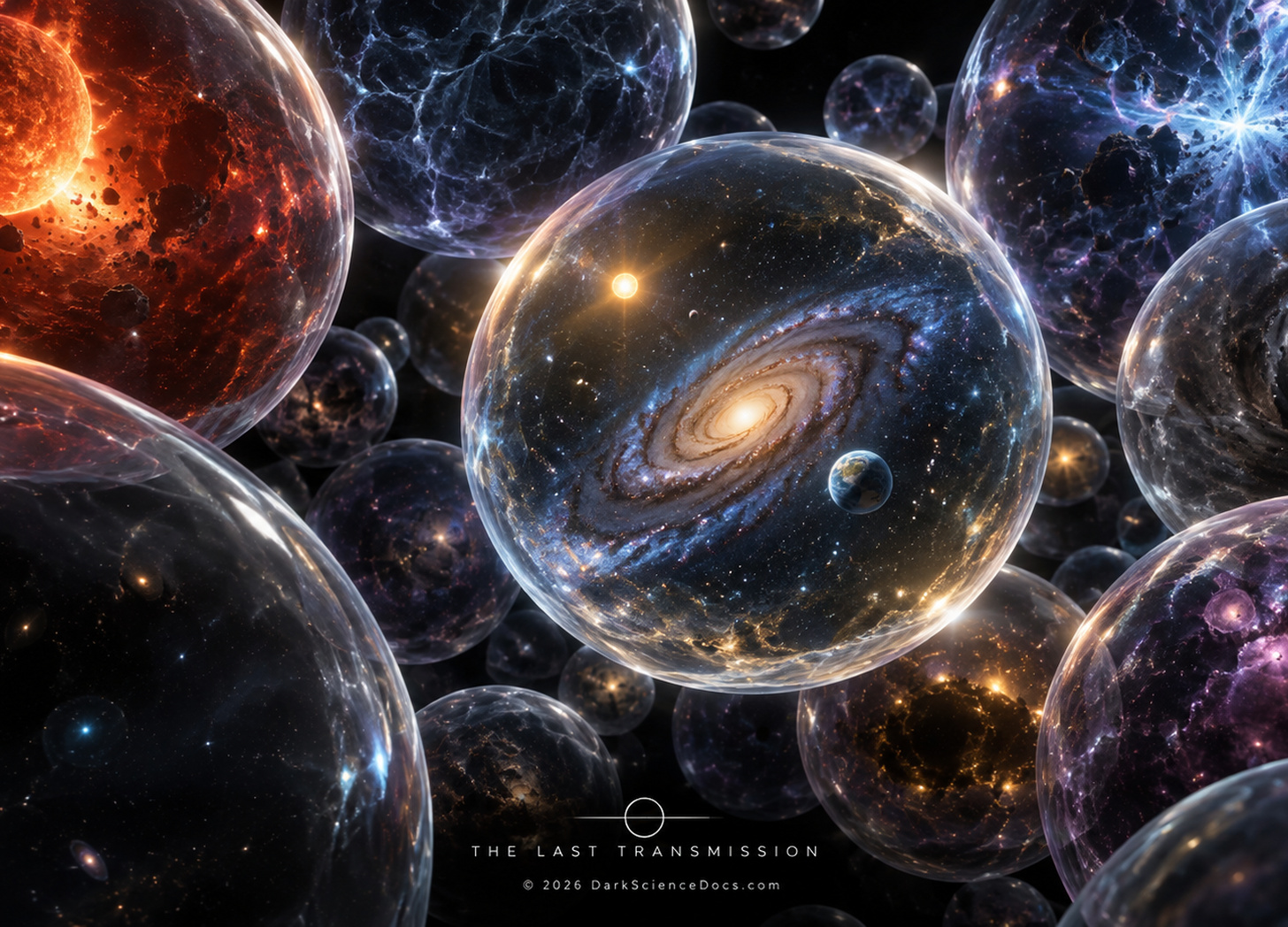
A multiverse could turn apparent fine-tuning into a selection effect, because observers could arise only in universes compatible with complex structure. Whether such a multiverse can ultimately be tested remains an active debate. Conceptual illustration by The Last Transmission.
THE OBSERVATION
What we can actually see.
We measure our own universe and can model how different constants might affect complex structures. Some multiverse proposals would change the interpretation of those observations, but their domains and probability measures are unsettled.
THE ILLUSTRATION
What the artwork imagines.
The neighboring universes and their varied colors are imagined possibilities. No telescope has photographed them, and a visually appealing mosaic does not establish a testable ensemble beyond our observable cosmos.
FROM THE ILLUSTRATED ARTICLE
The story that inspired it.
The article moves from the predictive success of equations to questions about physical constants and interpretation. A selection-effect argument is conditional on other universes existing.
Read The Universe Looks Written in Mathematics. Physics Still Can’t Explain Why.CHECK THE RECORD
The image interprets the research below. Follow the original work for the measurements and limits behind the scene.
Stanford Encyclopedia: fine-tuningOTHER IMAGE STORIES
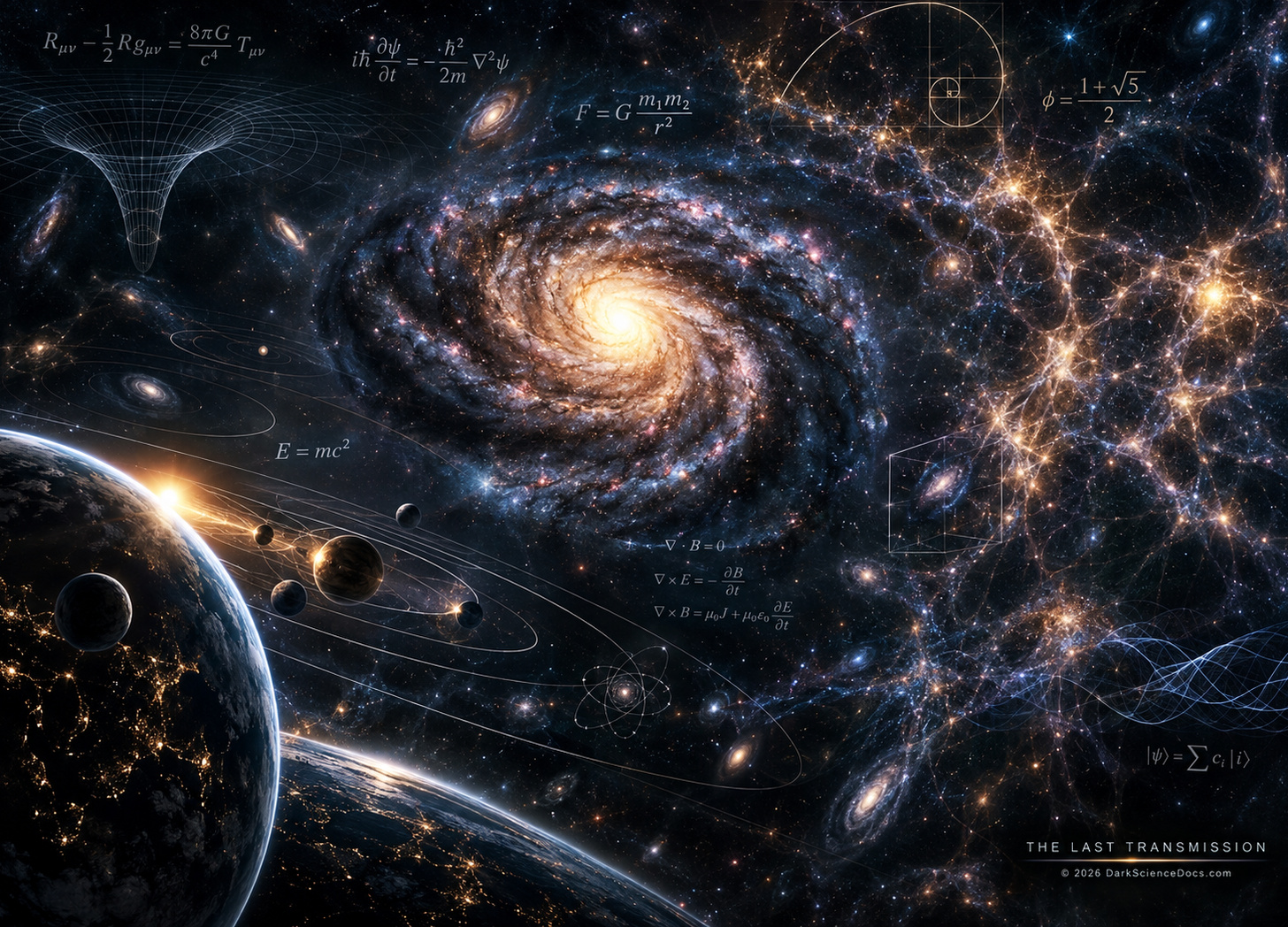 The Universe in an Equation
 A Constant and the Fate of Galaxies
 The Mark Shared by Titan and Pluto