
DOCUMENTARIES / THE LAST TRANSMISSION
The Dark Forest Theory: The Terrifying Answer to the Fermi Paradox
If the galaxy has room for many civilizations, why have we found no confirmed extraterrestrial signal? A fictional thought experiment offers one unsettling answer.
On YouTube: The Dark Forest Theory vs The Fermi Paradox: The Complete Analysis #fermiparadox #DarkForestTheory
If the player is unavailable, watch directly on YouTube ↗
THE QUESTION BEHIND THE FILM
Would a civilization hide if it could not know another’s intentions?
ORIGINAL VIEWING GUIDE
Look closer.
Begin with the observation
There is no confirmed evidence of extraterrestrial intelligence. The gap between an enormous galaxy and our limited search motivates questions, but it does not select one explanation.
The dark forest is a scenario
The hypothesis imagines civilizations concealing themselves because contact could be dangerous. It is a compelling strategy story, not a measurement of how alien civilizations actually behave.
What would change our minds?
A repeatable, independently verified signal or other technosignature would transform the discussion. Until then, each proposed answer says as much about assumptions as it does about the sky.
THE EVIDENCE TRAIL / RESEARCH COMPANION
What the record says.
The dark forest is a powerful story about caution under uncertainty. Its starting observation is our lack of confirmed contact, which places far fewer limits on alien motives than the story suggests.
CHOOSE A CLUE / FOLLOW THE RECORD
These are research waypoints, not video timestamps. Explore them in any order, then return to the film.
The search is incomplete
Observed or documented
SETI surveys cover particular targets, frequencies, sensitivity levels, times, and kinds of signal. A quantitative “cosmic haystack” study models the enormous space of possibilities relative to searches carried out.
What it suggests
A nondetection constrains the kinds of broadcasts that the actual equipment could have found. It cannot establish a universal rule that every civilization chooses silence.
Where the claim stops
The study describes search coverage, not the number of existing civilizations. Selection of a signal model strongly affects what can be excluded.
Concealment is a behavioral premise
Observed or documented
Dark-forest reasoning assumes that civilizations perceive unfamiliar others as possible threats and respond by hiding or attacking. We have no extraterrestrial case in which that behavior has been observed.
What it suggests
The scenario is useful for testing how assumptions about information and trust affect predictions. A different account of incentives could produce openness or indifference.
Where the claim stops
An appealing strategic narrative is not an astronomical signature. The absence of a message does not distinguish fear from distance, timing, technology, or rarity.
The search can use more than radio
Observed or documented
NASA includes candidate technosignatures such as unusual atmospheric chemistry and excess infrared emission, alongside radio signals. Each has an ordinary physical background that researchers must model.
What it suggests
A civilization might leave detectable effects without intentionally broadcasting; that gives the dark-forest story possible tests beyond whether anyone speaks to us.
Where the claim stops
No confirmed technosignature has established a hidden civilization. Proposed excesses or spectra require independent checks and natural alternatives.
A positive result would change the question
Observed or documented
A repeatable, localized signal or other verified technological trace could establish that a technology exists without immediately revealing its creator’s intentions or history.
What it suggests
The finding would constrain one part of cosmic silence: something was detectable at a particular place and time under a particular search method.
Where the claim stops
Even a detection would not prove that everyone else is dangerous or hiding. Motive requires evidence beyond the physical existence of a signal.
What observation could separate deliberate concealment from a search that has simply missed the relevant place, time, or signal?
FOLLOW THE EVIDENCE
Keep the question open.
Watch the documentary, check the research, and continue into the illustrated archive.
MORE DOCUMENTARIES
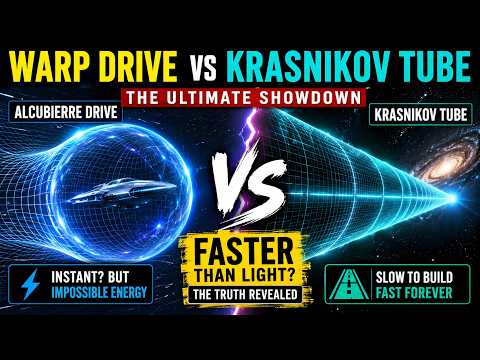 The Complete Guide to Spacetime Shortcuts: The Krasnikov Tube vs Alcubierre Drive
 Solar Storms vs. the Power Grid
 Can We Stop an Asteroid Impact? The Real Planetary Defense Protocol