DOCUMENTARIES / THE LAST TRANSMISSION
Can We Stop an Asteroid Impact? The Real Planetary Defense Protocol
Defending Earth begins with finding an object early, measuring its orbit, and choosing a response matched to the warning time.
If the player is unavailable, watch directly on YouTube ↗
THE QUESTION BEHIND THE FILM
What would a real asteroid warning set in motion?
ORIGINAL VIEWING GUIDE
Look closer.
Detection comes first
Surveys find potentially hazardous objects and repeated observations refine their paths. A possible impact often changes as additional measurements reduce uncertainty, so early warnings require careful communication.
DART proved one method
NASA’s DART spacecraft struck Dimorphos and measurably changed its orbit around Didymos. That demonstration supports kinetic-impact deflection, but a future mission would depend on target size, composition, and lead time.
A protocol is more than a spacecraft
Characterization, international coordination, public communication, and possible ground response all matter. The documentary follows the decisions between a telescope detection and a physical intervention.
THE EVIDENCE TRAIL / RESEARCH COMPANION
What the record says.
Planetary defense begins with detection and orbit refinement, then turns to characterization and decisions about lead time. DART showed that one type of intervention can alter a small body’s motion.
CHOOSE A CLUE / FOLLOW THE RECORD
These are research waypoints, not video timestamps. Explore them in any order, then return to the film.
An early impact probability can change
Observed or documented
NASA’s CNEOS tracks near-Earth objects and evaluates their orbits using repeated observations. Early measurements have uncertainties that shrink as astronomers obtain a longer observing arc.
What it suggests
A possible impact corridor is a probability calculation, not a confirmed future collision. Additional data can raise or lower the estimate.
Where the claim stops
A dramatic initial probability should be reported with its uncertainties and updates; a single early orbital solution is not a final verdict.
DART struck Dimorphos
Observed or documented
NASA’s DART spacecraft collided with the moonlet Dimorphos in 2022. Follow-up observations measured a change in its orbit around the larger asteroid Didymos.
What it suggests
The demonstration established that a kinetic impact can deflect an asteroid under the tested conditions. Ejected material contributed additional momentum to the change.
Where the claim stops
One target and impact do not specify the exact outcome for another object with a different size, composition, spin, or amount of advance warning.
Characterization determines options
Observed or documented
An approaching object’s size, mass, shape, composition, and possible satellite system affect the outcome of a proposed deflection. Ground and space observations can refine those properties.
What it suggests
The earlier a genuine threat is found, the smaller an orbital change may be needed to make Earth and the object miss one another.
Where the claim stops
A projected deflection is a model until the relevant body and mission geometry are measured. A last-minute response has very different choices.
Response extends beyond a spacecraft
Observed or documented
NASA’s planetary-defense work involves detection, analysis, mission preparation, and coordination. Decision-makers would also need to communicate uncertainty and consider possible ground consequences.
What it suggests
A useful protocol is a chain of updates and decisions as evidence improves, with different actions for different lead times and confidence levels.
Where the claim stops
DART was a test against a harmless object. It does not mean humanity currently has a ready-made solution for every hazardous asteroid.
How early must a particular asteroid be found for a small, testable trajectory change to prevent an impact?
EXPLORE IN 3D / MAP 06
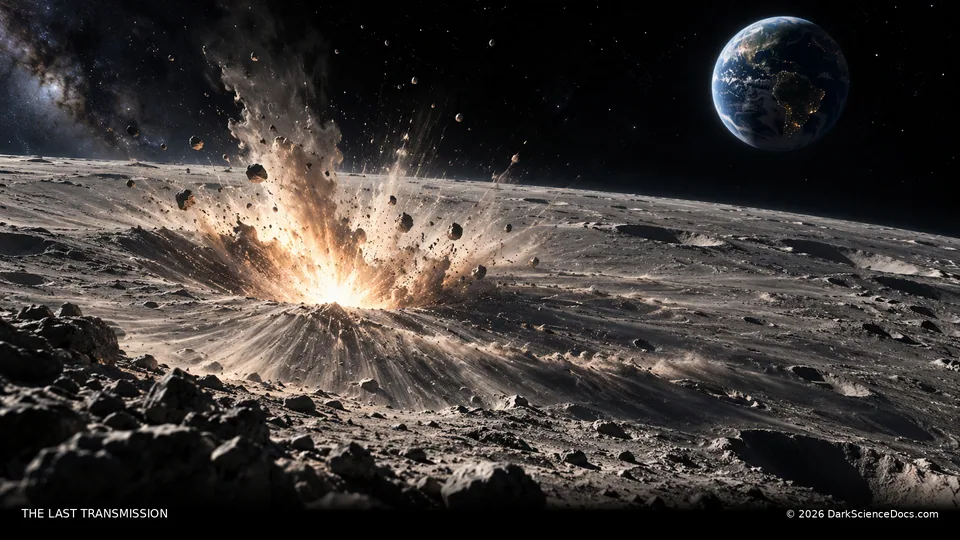
See the planet planetary defense protects
Explore Earth and the Moon’s impact-marked history, then return to the modern detection and response protocol.
Open Earth & Moon mapFOLLOW THE EVIDENCE
Keep the question open.
Watch the documentary, check the research, and continue into the illustrated archive.
MORE DOCUMENTARIES
 The Ocean Current That Keeps Europe Alive Is Weakening Faster Than Expected
 Physics Breakdown: What Happens If An Antimatter Mining Ship Drops Its Containment Field?
 The Ultimate Guide to The Physics of Greg Egan's Orthogonal Trilogy