DOCUMENTARIES / THE LAST TRANSMISSION
Solar Storms vs. the Power Grid
A storm from the Sun can induce currents in long conductors on Earth. The risk depends on the storm, the grid, and the protections in place.
On YouTube: The Complete Physics of Transformer Saturation Kinetics During Solar Storms
If the player is unavailable, watch directly on YouTube ↗
THE QUESTION BEHIND THE FILM
How can activity in space affect equipment on the ground?
ORIGINAL VIEWING GUIDE
Look closer.
The path from Sun to transformer
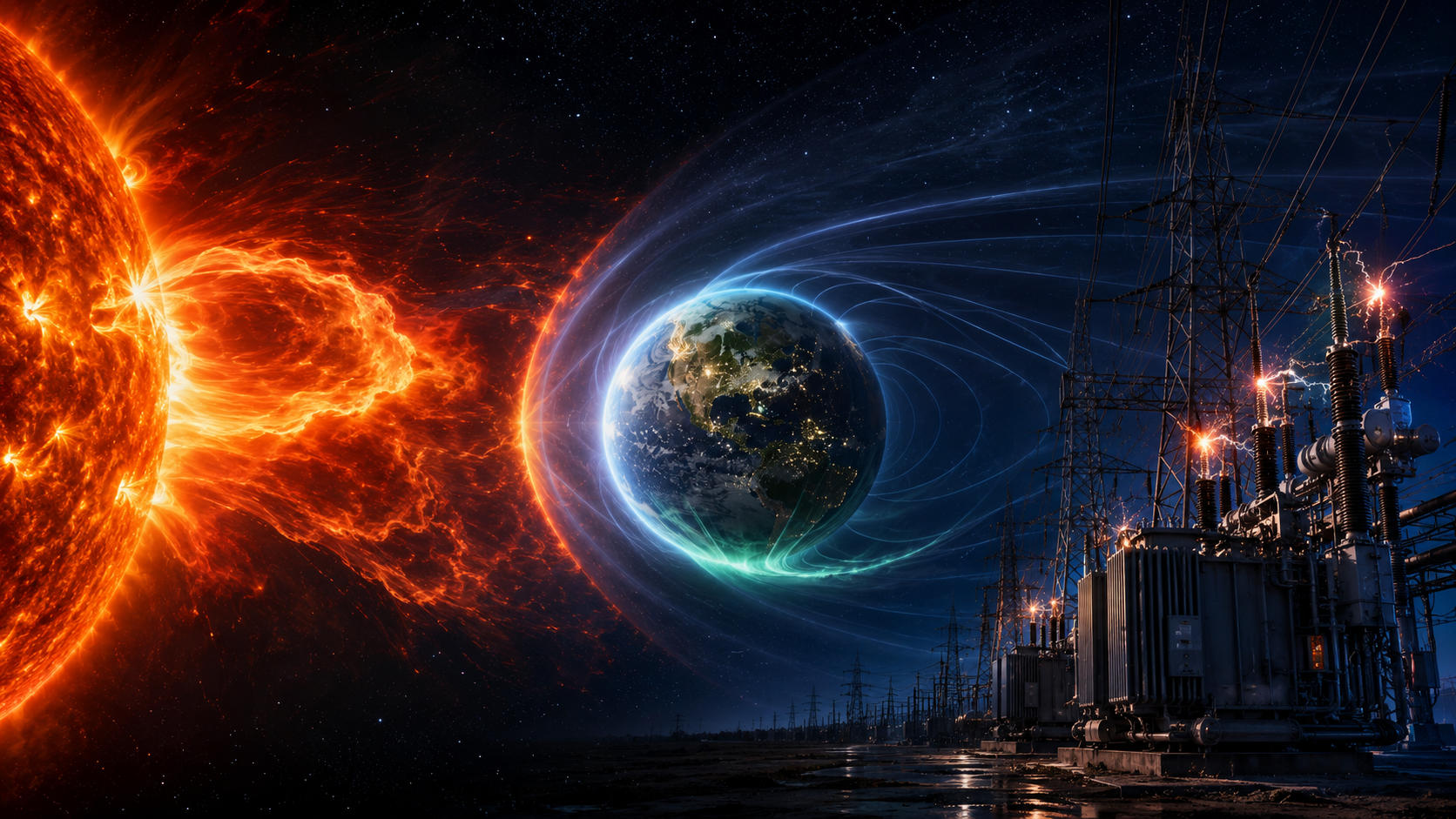
A geomagnetic storm changes Earth’s magnetic field. Those changes can drive currents through transmission networks, pushing transformers outside their normal operating conditions.
Not every flare is a blackout
Space weather events vary in strength and geometry. Grid impacts depend on latitude, local geology, network design, and operator response, so one dramatic historical event is not a forecast for every storm.
Forecasts create time to act
Space-weather monitoring can warn operators of a heightened threat. The film is a reminder that physical systems and human decisions both shape whether a hazard becomes a lasting outage.
THE EVIDENCE TRAIL / RESEARCH COMPANION
What the record says.
A solar storm can reach infrastructure through a chain of magnetic changes and induced currents. Its effect on a particular grid depends on the storm and the network it meets.
CHOOSE A CLUE / FOLLOW THE RECORD
These are research waypoints, not video timestamps. Explore them in any order, then return to the film.
The Sun disturbs Earth’s magnetic field
Observed or documented
Solar activity can produce geomagnetic storms that alter Earth’s field over time. NOAA monitors space weather and describes the ground effects of these changes.
What it suggests
A changing magnetic field drives electric fields across long conductors, making extended power lines and grounded equipment relevant even though the storm begins far above them.
Where the claim stops
A flare, a coronal mass ejection, and a geomagnetic storm are related but distinct events. Not every bright solar eruption produces a severe local ground impact.
A transformer can be pushed outside its design
Observed or documented
NOAA explains that geomagnetically induced currents can enter transmission systems and saturate transformer cores. Historical storms have been associated with voltage problems and blackouts.
What it suggests
The physical path from magnetosphere to induced current to equipment behavior is measured and modeled, giving grid operators a specific hazard to manage.
Where the claim stops
Latitude, subsurface conductivity, line length, equipment, and grid configuration matter. One famous blackout is not a universal outcome for each storm.
Forecasts support operational choices
Observed or documented
NOAA’s Space Weather Prediction Center issues observations and forecasts for conditions that may affect electric power transmission. Operators can consider system state and protective steps.
What it suggests
Advance warning may reduce consequences if the affected network can change its operations or increase readiness for disturbances.
Where the claim stops
Forecast confidence and impact maps are imperfect. A warning signals elevated risk, not a promise that a transformer will fail at a particular hour.
An outage follows the system, not only the sky
Observed or documented
When power interruptions occur, restoration still depends on equipment damage, available generation, communications, and blackstart resources. Regulators examine those dependencies separately from storm forecasting.
What it suggests
Resilience comes from both space-weather information and terrestrial engineering. The same solar driver can lead to different outcomes in different networks.
Where the claim stops
A worst-case narrative should identify which links are assumed to fail and for how long; otherwise it substitutes atmosphere for an engineering assessment.
Which measurements of the storm and of the grid would tell operators whether a forecast threat is becoming an actual transformer problem?
EXPLORE IN 3D / MAP 03
Follow the storm back to the Sun
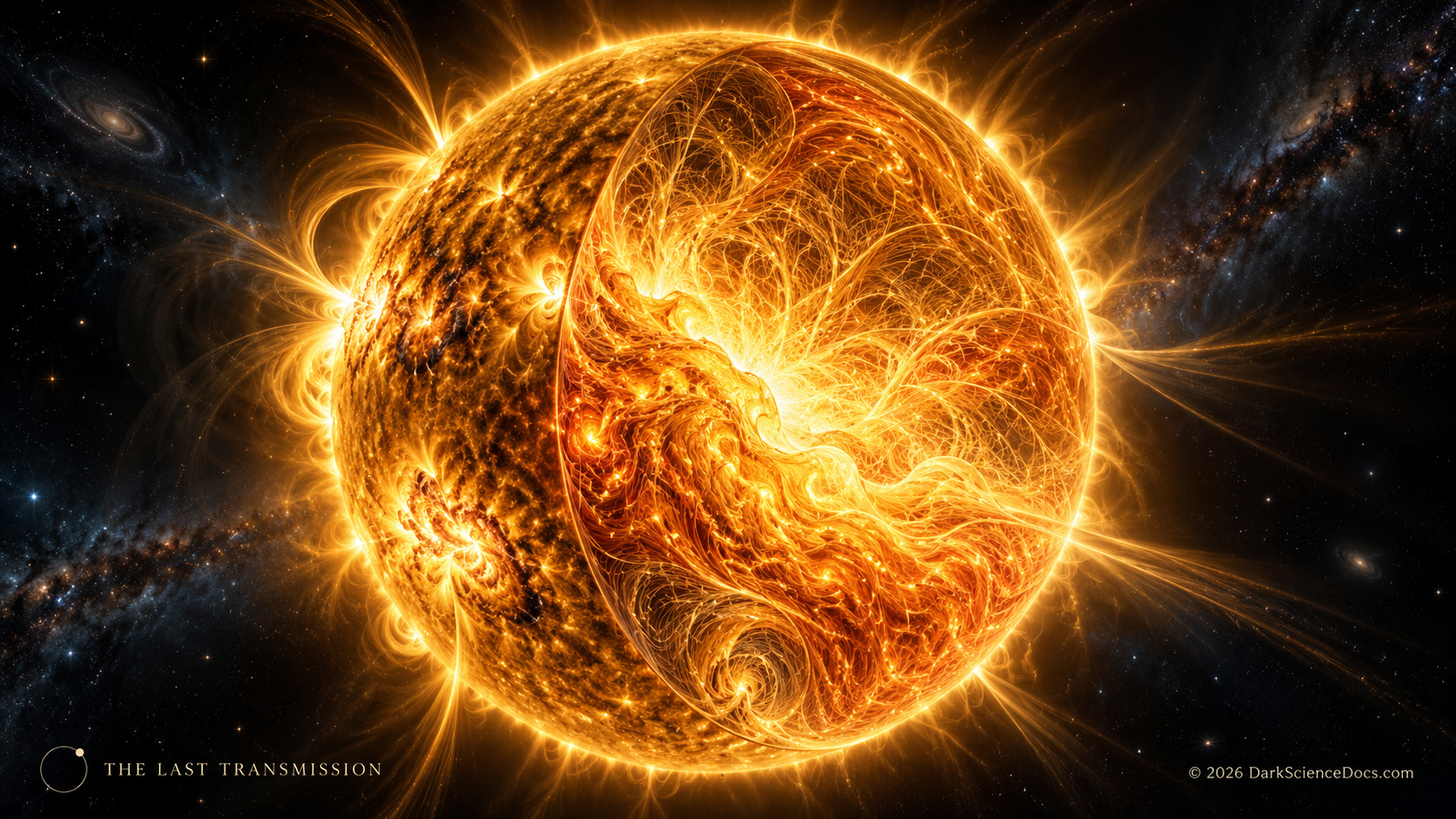
Explore the photosphere, corona, and solar-storm file to connect the film’s grid effects with their source.
Open Sun mapFOLLOW THE EVIDENCE
Keep the question open.
Watch the documentary, check the research, and continue into the illustrated archive.
MORE DOCUMENTARIES
 Can We Stop an Asteroid Impact? The Real Planetary Defense Protocol
 The Ocean Current That Keeps Europe Alive Is Weakening Faster Than Expected
 Physics Breakdown: What Happens If An Antimatter Mining Ship Drops Its Containment Field?