
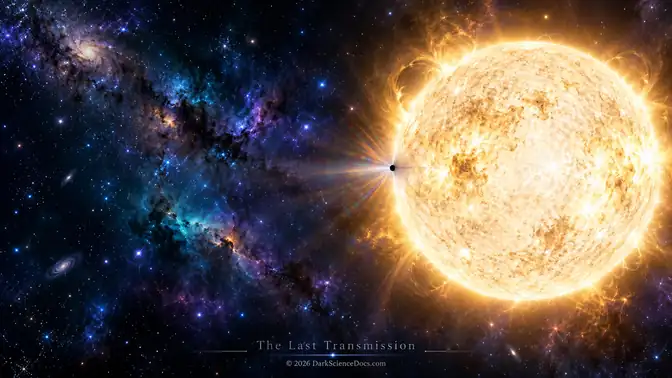
EVIDENCE FILE 25 / DOUBLE OPTICAL PULSES
What Do HD 89389’s Double Pulses Actually Establish?
Did the star change, or did something alter its light before it reached the telescope?
All Evidence FilesTHE SHORT ANSWER
The observations establish unusual paired changes in detected starlight. They do not yet identify a foreground object, an artificial signal or gravitational lensing as their cause.
THE EVIDENCE MAP / DOUBLE OPTICAL PULSES
How do two optical disturbances become a testable foreground hypothesis?
Trace the paired optical disturbances from a measured light curve to a foreground hypothesis and a proposed synchronized-telescope test.
- 01Measurement
Describe the recorded pair
A telescope recorded two rapid, closely resembling disturbances in HD 89389’s arriving light. Their shape and 4.4-second separation constrain an explanation without locating its cause.
- 02Interpretation
Consider what the light crossed
An occulting structure and diffraction could alter normal starlight along the way. This is a candidate physical mechanism; the existing record does not identify such an object.
- 03Competing explanation
Check the observing environment
Atmospheric and instrumental alternatives must be compared with the same timing and structure. Several unsuccessful explanations do not eliminate every unknown natural or observing-system cause.
- 04Open test
Time a future event across an array
Three synchronized telescopes could test for a moving pattern and constrain its direction and transverse speed under a specified geometry. A speed estimate would not by itself determine distance.
OBSERVATION / INFERENCE / LIMIT
Read the signal.
4.4 seconds
Separation of the two HD 89389 disturbances on May 14, 2023; not a confirmed gravitational-lensing delay.
About 0.3 second
Approximate bright–faint–bright duration described for each disturbance; the star did not vanish.
Three synchronized telescopes
A proposed array with roughly 40-meter separations could test a moving-pattern hypothesis. It is not a completed measurement.
INSIDE THE EVIDENCE
The chain of reasoning.
Each step has a different level of certainty. Follow the measured result into the explanation, then see where the trail ends.
Start with the arriving light
The central record is a fast variation in detected starlight, not a photograph of an object crossing HD 89389. In the May 14, 2023 observation, a rapid brightening, attenuation and brightening was followed by a similar disturbance 4.4 seconds later. The star did not disappear completely. Keeping that description close to the instrument record leaves several locations for the cause open: the source, the intervening path, the atmosphere and the observing system. A persuasive explanation must account for the measured structure and observing conditions together.
Resemblance is a constraint, not an identification
The second disturbance closely resembled the first, which gives a proposed mechanism more to explain than a single unexplained fluctuation. Stanton also compared a September 30, 2019 record of HD 217014, better known as 51 Pegasi, and discussed a January 18, 2025 event involving HD 12051 in the conference paper. These are observations of different stars on different dates. Their similarities invite a shared physical explanation, but they do not establish one traveling object, a repeated extraterrestrial message or independent confirmation of the same event by another observatory.
A foreground obstruction is a hypothesis
An obstruction can change the amount of light reaching a telescope, while diffraction around its edges can produce alternating bright and faint structure. That makes an intervening process a physical possibility worth testing. The artwork imagines this possibility; it supplies no measurement of an object’s shape, distance or orbit. Atmospheric effects and unrecognized observing-system behavior still require scrutiny. A failure to match several familiar explanations narrows a discussion without exhausting every natural or instrumental alternative. The source’s great distance does not automatically locate the disturbance at that distance.
Measure a moving pattern at several positions
The conference proposal uses three synchronized telescopes separated by roughly 40 meters to observe the same star. If a moving optical pattern reaches them at different times, their positions and timing differences could constrain its motion. Under the appropriate crossing geometry, 40 meters traversed in one millisecond corresponds to 40 kilometers per second. The ground separation must be related to the pattern’s direction; a single pair of telescopes leaves that geometry ambiguous. This is a proposed measurement for a future event, not an array detection already reported in the article.
Keep speed, distance and lensing separate
Measuring a pattern’s transverse speed could help compare atmospheric and orbital explanations under their assumptions. Speed alone does not determine a unique distance or identify the responsible material. Nor would the test measure the travel-time difference between multiple gravitationally lensed images. Light Lab calculates that different phenomenon using a stated lens model: gravity bends light and produces images with relative arrival times. The optical double pulses have not been identified as gravitational lensing. Their visual resemblance to imagined light paths is a reason to ask better questions, not evidence that the mechanisms are the same.
THE EASY MISREADING
A pair of similar pulses is not proof of aliens, a nearby object or two gravitationally delayed images. The cause and its distance remain unresolved.
PRIMARY RESEARCH & MISSION RECORDS
Check the source.
These are the studies and mission records behind this explainer. The illustrated article and related research pages continue the investigation.
FOLLOW THE THREAD
Stay with the question.
Read the complete illustrated article, compare its observed pulses with the separate lensing model, or follow a different unexplained signal through the Wow! documentary. These routes do not establish a common cause.
MORE EVIDENCE FILES
Keep looking.
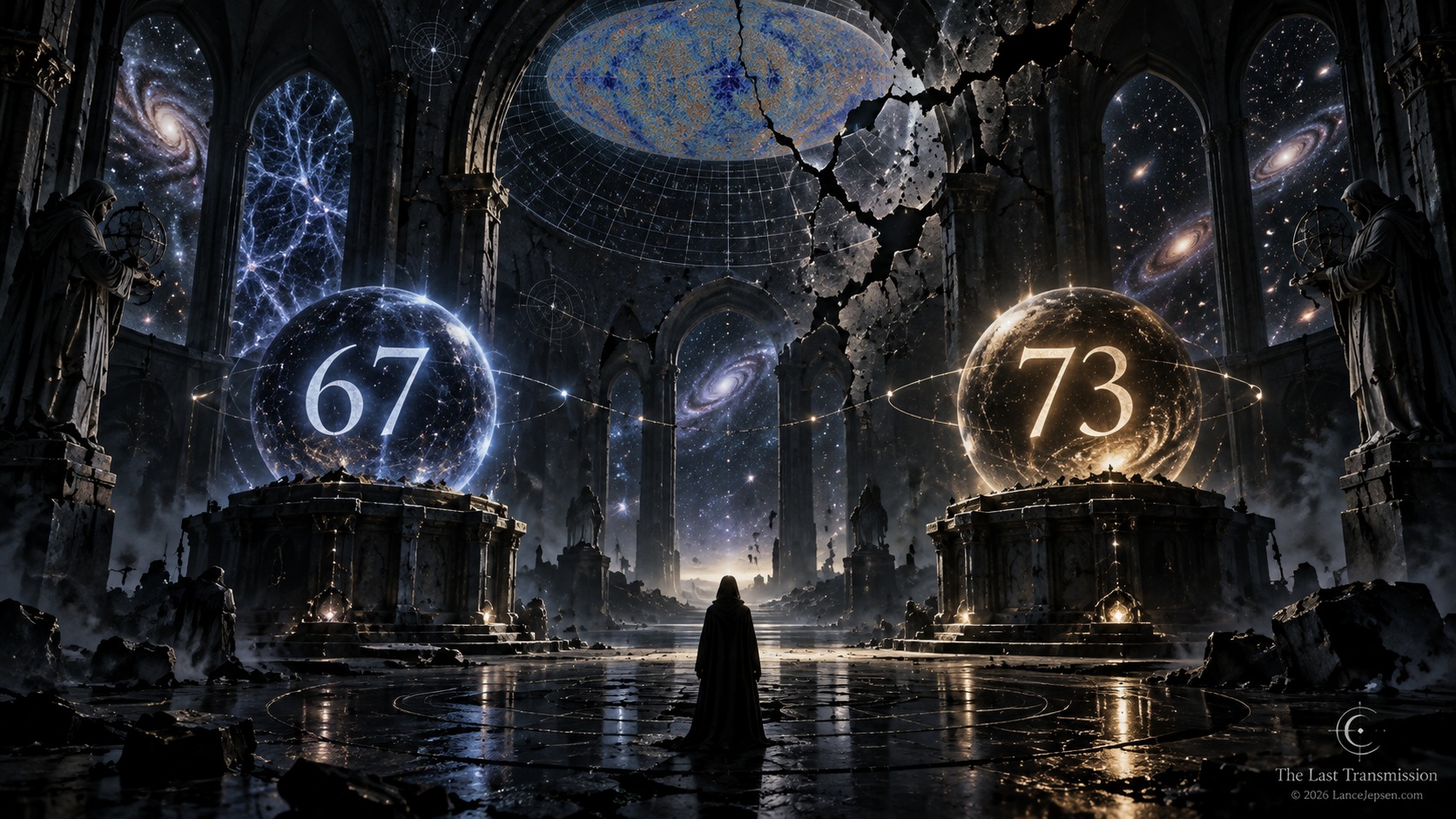
EVIDENCE FILE 05 / COSMOLOGY
Why Do Two Measurements of Cosmic Expansion Disagree?
Planck's early-universe data imply an expansion rate near 67.4 under the standard cosmological model; the SH0ES distance ladder finds about 73.0. The discrepancy is real in those analyses, but its cause is unresolved.
Inside the Data →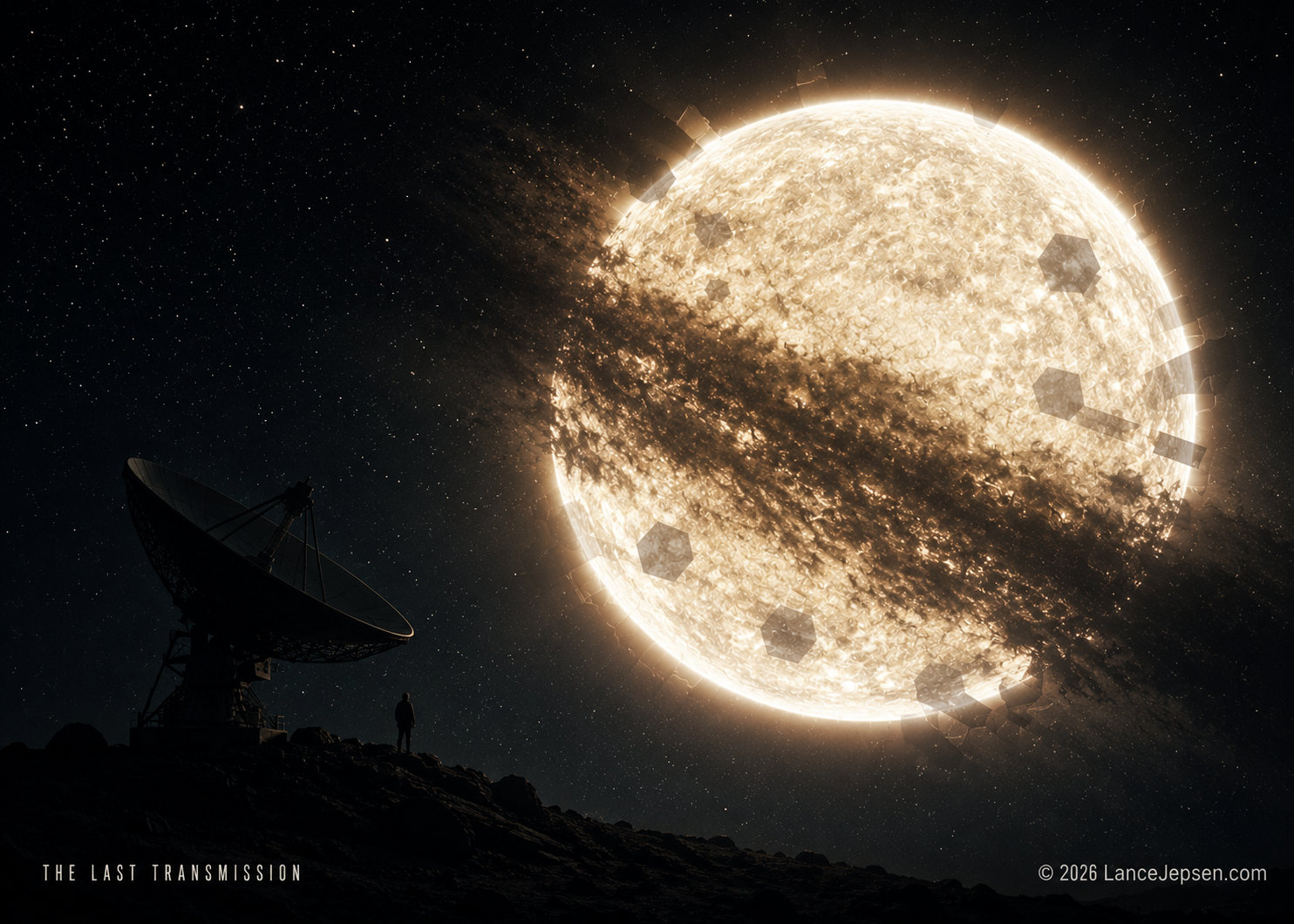
EVIDENCE FILE 18 / STELLAR LIGHT
What Does Tabby’s Star’s Light Curve Actually Reveal?
Inspect actual Kepler samples from two dimming episodes, then follow the separate color measurements that helped test explanations for KIC 8462852.
Inside the Data →