
04 / Optical SETI / a foreground question
Two Pulses, One Unanswered Question
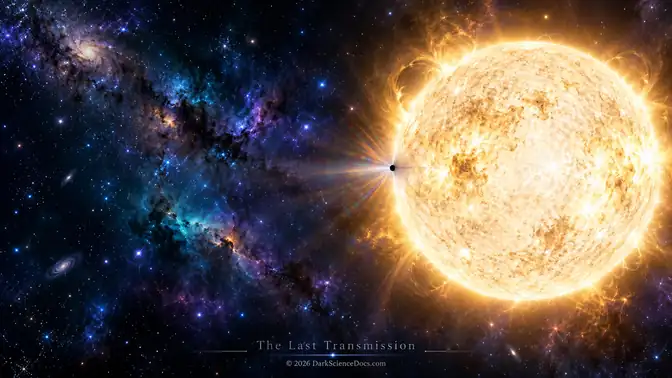
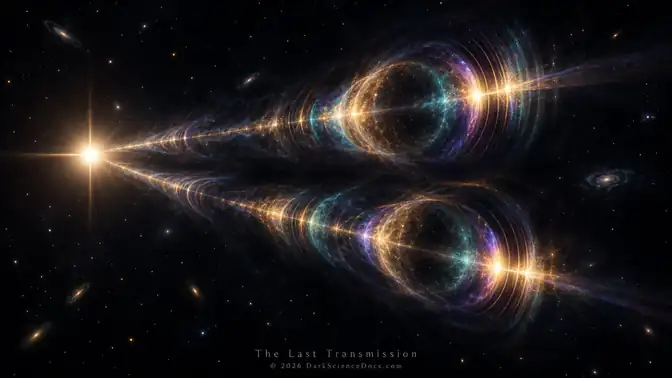
HD 89389’s light changed twice, 4.4 seconds apart. The striking resemblance is an observation to explain, while a nearby obstruction remains a hypothesis that additional measurements could test.
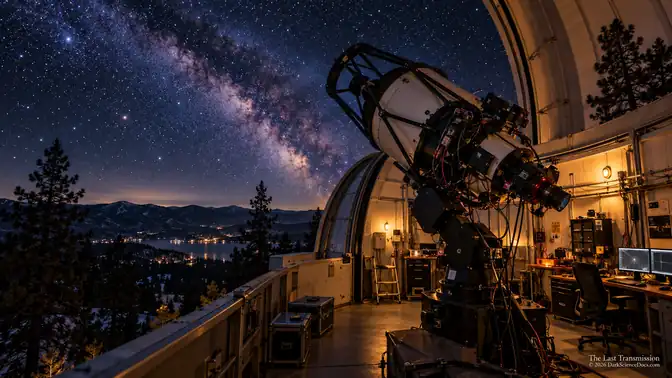
On May 14, 2023, Richard Stanton’s optical search recorded a bright–faint–bright disturbance in the light of HD 89389, followed by a closely resembling second disturbance. A telescope measures the light that reaches its detector. That record does not by itself locate the cause at the star, in intervening space, in Earth’s atmosphere or in the instrument. The article follows this distinction through an older observation of 51 Pegasi, a later event involving HD 12051, and a proposed way to measure the motion of a future disturbance across several observing positions.
The full investigation continues with the evidence, illustrations, and sources at The Last Transmission on Substack.
Continue reading on SubstackTHE EVIDENCE / THE OPEN QUESTION
What we know.
The 2025 journal paper reports the HD 89389 pair and a comparison with an earlier record. A subsequent conference paper discusses three paired events in different stars and proposes synchronized telescopes. The 4.4-second separation belongs to the two observed disturbances in HD 89389’s light; it is not a measured gravitational-lensing delay.
What remains open.
No foreground object, transmitter or common cause has been identified. Occultation with diffraction and atmospheric alternatives remain interpretations to test, rather than discoveries established by the images. Similar structure within a record is not independent confirmation from a separate observatory.
Why it matters.
A synchronized array could look for a pattern sweeping across the ground and estimate its transverse motion under a specified geometry. That offers a testable next step while keeping the cause unresolved. Light Lab provides a separate, established example of light changing en route: gravitational lensing. Its model does not explain or reproduce these pulses.
GO DEEPER / EVIDENCE FILE
What Do HD 89389’s Double Pulses Actually Establish?
Trace the paired optical disturbances from a measured light curve to a foreground hypothesis and a proposed synchronized-telescope test.
COMPARE THE QUESTIONS
Follow what the light reveals.
These related routes explain different phenomena. They do not establish a common cause for the optical pulses.
FOLLOW THE EVIDENCE
Research behind the field note.
VISUAL EVIDENCE
Inside the investigation.
FOLLOW THE THREAD
Related signals.
What If the Universe Is Accelerating Because Stars Die?
For nearly three decades, scientists have struggled to identify the mysterious force accelerating the expansion of the universe. Now a radical theory suggests the answer.
A Star Died 6.5 Billion Years Ago. Its Explosion Is About to Arrive Again.
NASA is watching for a supernova we have already seen. When that light finally reaches Earth, it could help answer one of the most troubling questions in modern cosmology.
The Black Hole That Couldn’t Stop the Stars
An enormous black hole is blasting energy into the Phoenix Cluster, yet its central galaxy is producing stars at an extraordinary rate.