
A SCIENCE EXPEDITION / 3 CHAPTERS / 8 STOPS
A Planet Hidden in Starlight
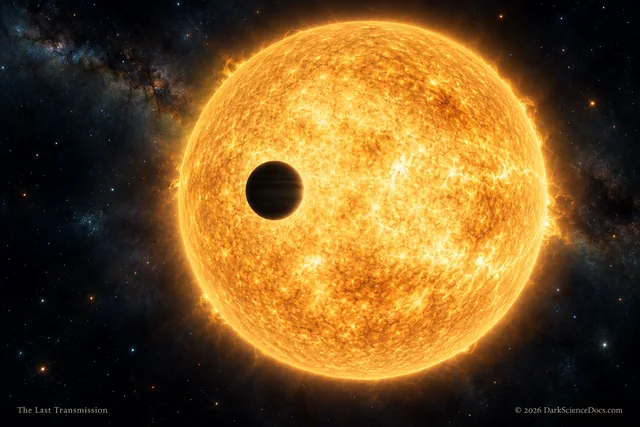
When does a dip in a star’s light become evidence for a planet?
Start with a recurring dip, work with real Kepler observations, and follow the additional measurements that turn an attractive explanation into a stronger scientific case.
90–150 minutes, across several visits. No deadline; each chapter is a natural place to pause.
Your next step
0 of 8 stops completed
Use “Mark this stop complete & continue” when you are ready to move on. Visiting a page alone never marks it complete.
EXPEDITION COMPLETE
You followed the evidence.
What extra evidence would you ask for before moving from a recurring dip, or a chemical clue, to a confident planet claim?
Your completion marks record your journey, not a qualification or a test score. Revisit any stop below, or choose another expedition.
Choose another expedition →Chapter 1 · Catch the recurring dip
- 01
Science mystery
Make your first explanation
Ready to exploreFollow the three clues and compare your initial explanation with the discussion. What observation makes a transit plausible?
- 02
Interactive lab
Measure real Kepler starlight
Ready to exploreInspect a dip, compare successive times and stack the observations. Use the optional worksheet, then distinguish your rough estimates from independent confirmation.
Chapter 2 · Ask light a second question
- 03
Interactive lab
Read a spectral fingerprint
Ready to exploreExplore how spectral lines carry information. These line profiles are teaching models, so do not treat them as new observations of TrES-2.
- 04
Interactive lab
Measure motion in shifted light
Ready to exploreExplore wavelength shifts and consider how stellar motion can support a planet interpretation. A single shift alone does not establish an orbit.
- 05
Investigation
Question the habitable-zone shortcut
Ready to exploreFind what a habitable-zone estimate includes and what it leaves out. Does being in the zone establish surface water or life?
Chapter 3 · Separate discovery from possibility
- 06
Investigation
Follow the planet’s history
Ready to exploreCompare water, atmosphere and planetary history. Which additional evidence would change a claim about habitability?
- 07
Evidence File
Examine a possible planet’s evidence
Ready to exploreTrace the chemical evidence at HS 0209+0832. Which observations are established, and where does the possible planet interpretation enter?
- 08
Investigation
Make a careful final judgment
Ready to exploreWeigh the possible second-generation planet interpretation and its alternatives. Contrast this inference with the confirmed TrES-2b system you explored earlier.
Manage saved progress
Clear this expedition’s progress in this browser. Your science mystery casebook stays separate.
Clear these completion marks? This cannot be undone.
All stops are available now. Calendar reminders help you return; they do not unlock new content. Progress is saved in this browser when storage is available.