
16 / RESEARCH / OBSERVATION & INTERPRETATION
Water on Other Worlds: The Habitability Gap
Water ice, ancient lakes and a potentially habitable environment are distinct findings. Comparing rocky planets shows why one familiar ingredient does not establish another Earth or a detection of life.
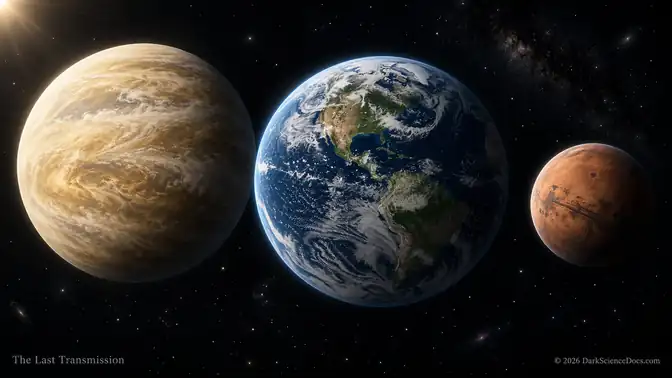
Mars preserves evidence of past water and contains ice, while observations support polar ice on Mercury. Venus demonstrates how a rocky planet can have surface conditions very different from Earth’s despite superficial similarities in size. A mineral, organic compound or possible biosignature needs evaluation against nonbiological explanations. The presence of water does not establish persistent surface habitability, and habitability does not establish that organisms existed.
Venus challenges the easy Earth analogy
Venus offers perhaps the most effective correction to the idea that an Earth-sized planet should be Earthlike. It is only slightly smaller than our world, and its bright clouds make it one of the most conspicuous objects in our sky. Beneath those clouds, however, the surface is roughly 465 degrees Celsius, and atmospheric pressure is more than 90 times the pressure at sea level on Earth. Its dense, predominantly carbon dioxide atmosphere sustains an extreme greenhouse climate. The Soviet Venera missions turned those conditions from distant measurements into an engineering ordeal. In 1970, Venera 7 returned about 23 minutes of data from the surface.
Mars records a changing environment
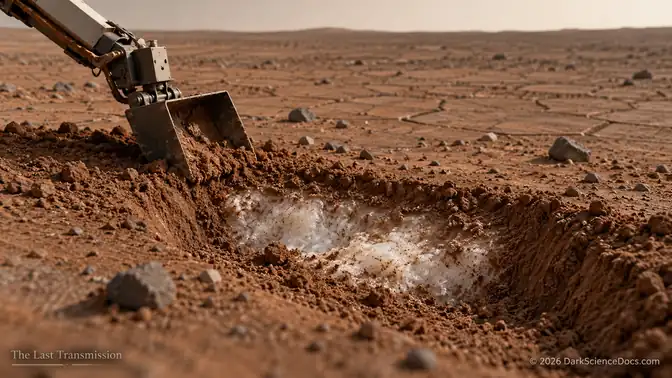
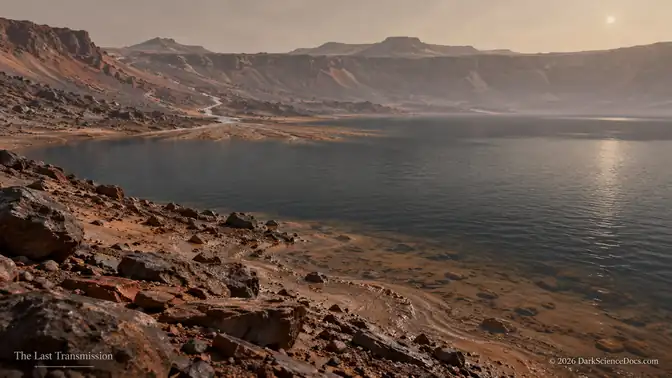
Mars presents a different kind of unease because its watery past has left physical evidence in the rocks. River channels, sedimentary layers, and water-altered minerals reveal environments very different from the cold desert visible today. At Gale Crater, NASA’s Curiosity rover found chemical and mineral evidence that ancient environments could have supported microbial life. That conclusion is remarkable, but it contains a boundary worth respecting. A habitable environment is one in which life could have existed. Establishing that organisms actually inhabited it requires another kind of evidence. A lakebed can preserve the setting of a possible biological story without telling us whether that story ever began.
A chemical clue needs competing explanations
The instruments we send to Mars repeatedly bring us to the edge of that distinction. The Viking landers carried biology experiments to the surface in 1976, but their results did not establish the presence of life. Decades later, Curiosity’s measurements of methane raised fresh questions. Methane can be produced by organisms, but geological processes can also produce it, and differences between surface measurements and orbital observations have complicated its interpretation. More recently, a study announced by NASA in 2025 identified a potential biosignature in a sample collected by Perseverance from the rock nicknamed Cheyava Falls. The word “potential” carries the scientific weight: the features might have a biological explanation, but additional evidence is needed to distinguish that possibility from nonbiological alternatives.
Read the illustrated companion article for the full narrative and its source trail. The selected passages above follow that article’s investigation.
Continue reading on SubstackTHE EVIDENCE / THE OPEN QUESTION
What we know.
Mars preserves evidence of past water and contains ice, while observations support polar ice on Mercury. Venus demonstrates how a rocky planet can have surface conditions very different from Earth’s despite superficial similarities in size.
What remains open.
A mineral, organic compound or possible biosignature needs evaluation against nonbiological explanations. The presence of water does not establish persistent surface habitability, and habitability does not establish that organisms existed.
Why it matters.
The comparison makes planetary history as important as location. Atmospheric loss, temperature, pressure and geological context determine what a water-related clue can support and which measurements would be needed for a stronger claim.
COMPARE THE QUESTIONS
Follow what the light reveals.
Follow the relevant evidence and teaching models. Each model explains a mechanism and retains its own stated assumptions and limits.
FOLLOW THE EVIDENCE
Research behind the field note.
EXPLORE IN 3D / MAP 04
Explore the related science model
The comparison makes planetary history as important as location. Atmospheric loss, temperature, pressure and geological context determine what a water-related clue can support and which measurements would be needed for a stronger claim.
Open Mars mapVISUAL EVIDENCE
Inside the investigation.
FOLLOW THE THREAD
Related signals.
We Found Water on Other Worlds. We Still Haven’t Found Another Earth.
Venus can destroy a lander in hours, while Mars preserves the remains of ancient lakes. Our neighbors reveal why finding the ingredients for life is only the beginning.
What If the Silence Means They Didn’t Survive?
The Great Filter raises an unsettling possibility: a civilization might learn to command enormous power before it learns how to live with it.
What If Every Civilization Goes Silent Just Before It Reaches the Stars?
The universe has had billions of years to produce intelligent life. Yet we have found no confirmed evidence of anyone else.
Read the illustrated article