
27 / An orbiter beyond its deadline
Juno's Second Life at Jupiter
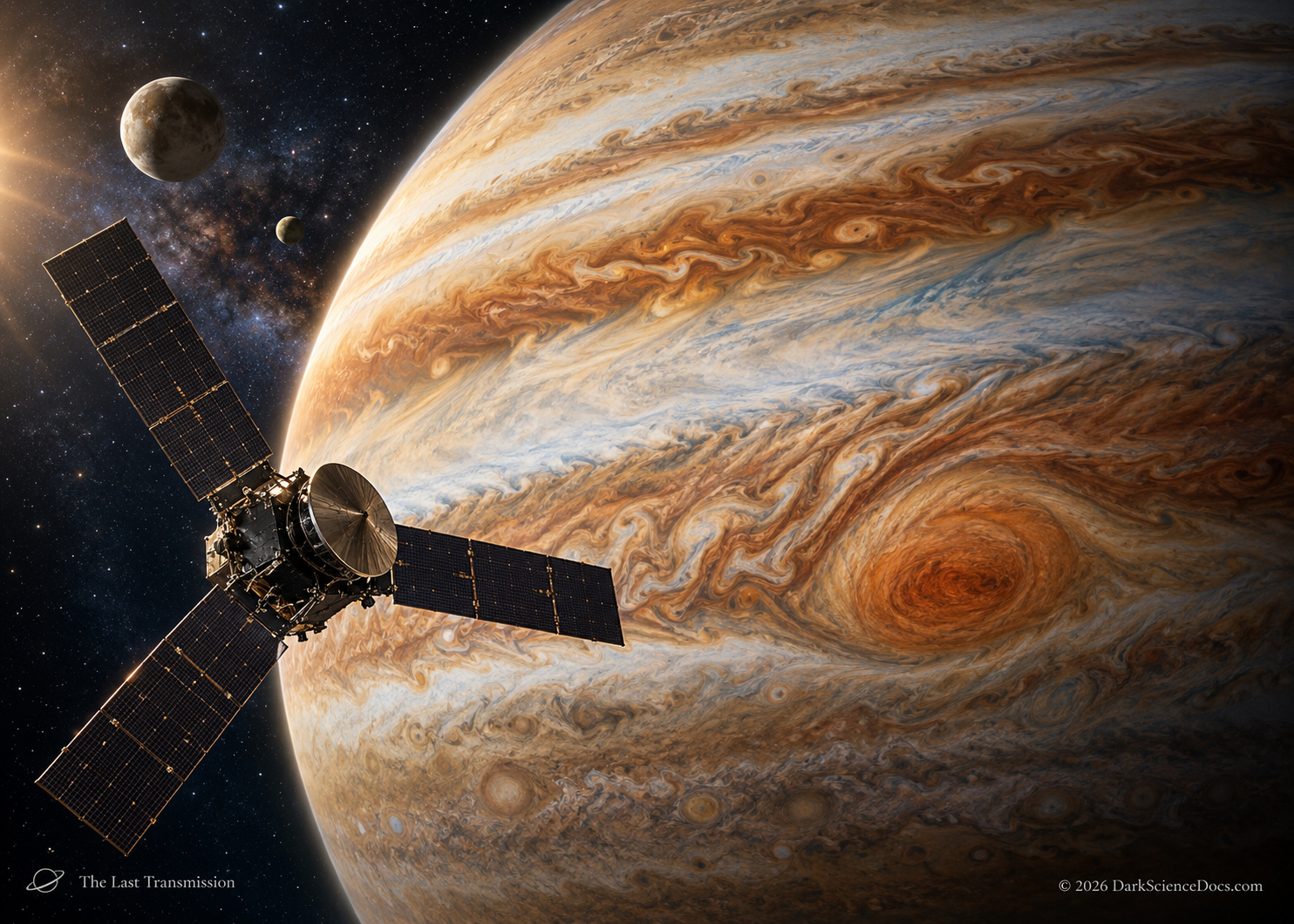
The orbiter reached Jupiter in 2016 to look beneath its clouds. Years beyond its original science plan, it is still returning measurements of a planet and moons that refuse simple descriptions.
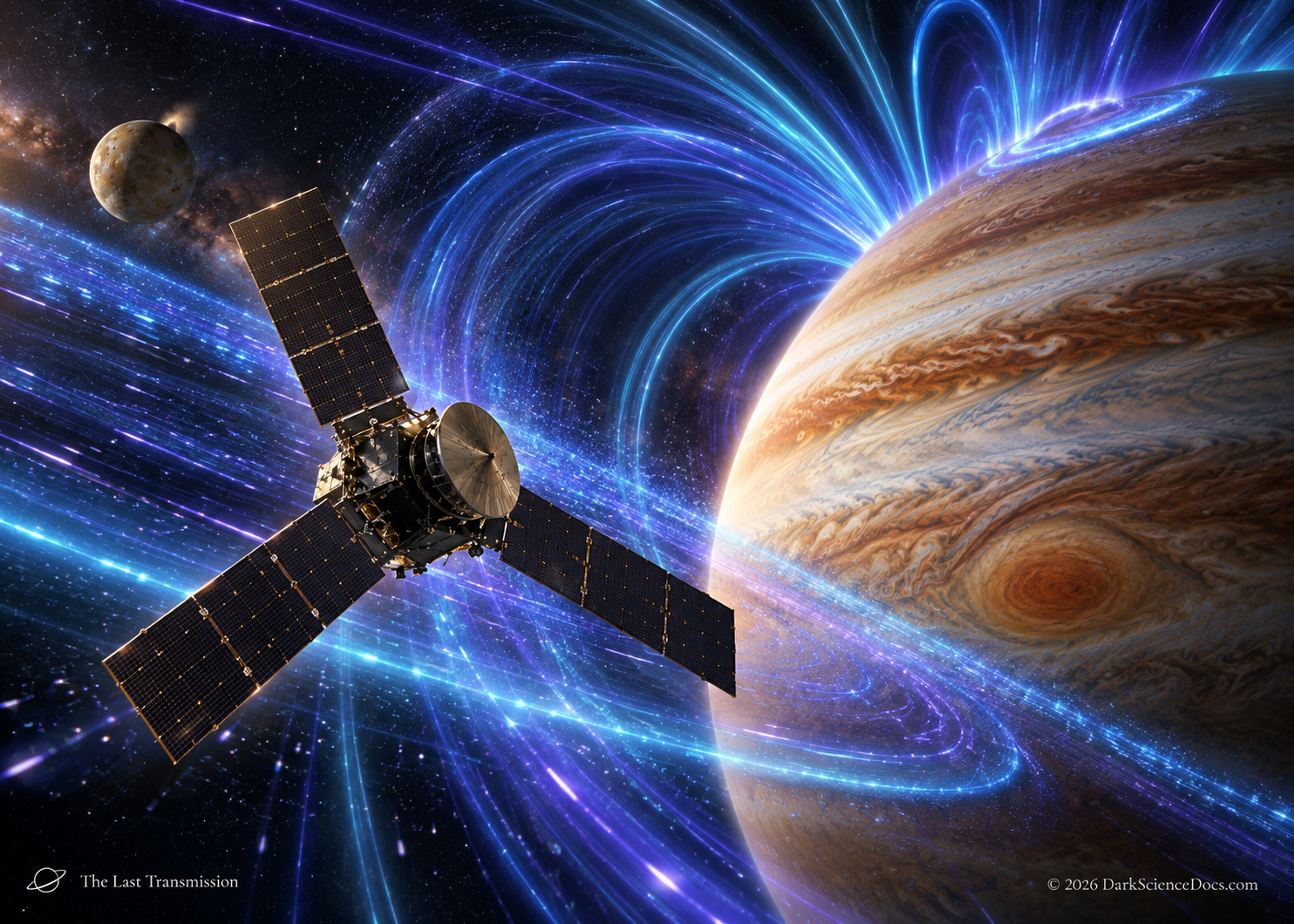
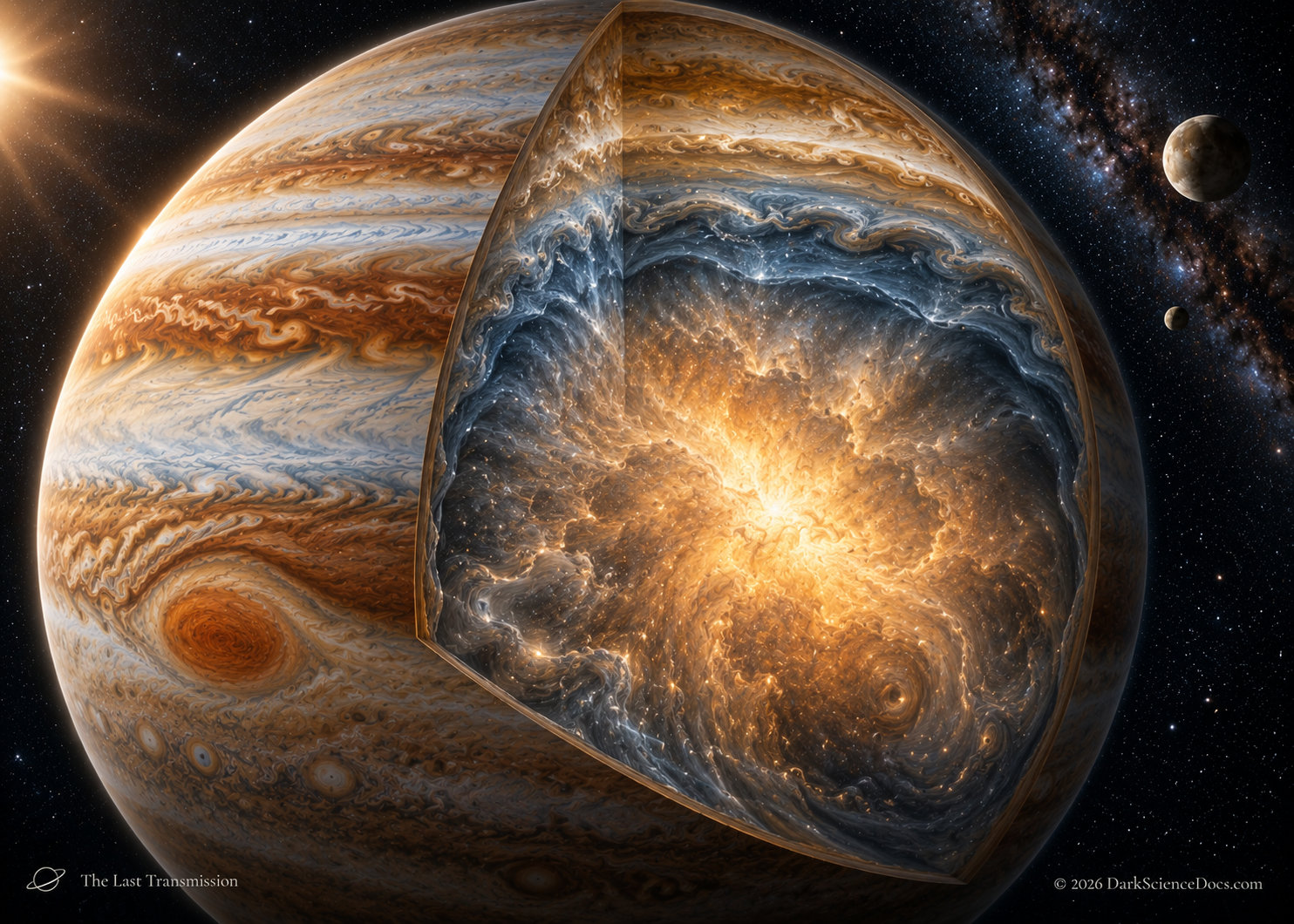
Jupiter was expected to have an interior story that could be drawn in cleaner layers. Juno's gravity measurements instead helped reveal a diffuse central region, while close polar passes exposed cyclones and deep atmospheric structure. A spacecraft built to endure enormous radiation has also turned its instruments toward Europa and Io. These encounters broaden the mission, but each measurement asks a different question: gravity probes the planet's mass distribution, microwaves sample emission from depth, and flyby geometry shapes what can be inferred about a moon.
The full investigation continues with the evidence, illustrations, and sources at The Last Transmission on Substack.
Continue reading on SubstackTHE EVIDENCE / THE OPEN QUESTION
What we know.
NASA describes Juno as an active mission. Its polar orbit has provided close views of Jupiter's storms and measurements relevant to its interior. Juno's Europa flyby supplied data used to estimate aspects of the moon's icy shell.
What remains open.
A fuzzy core is a model of distributed heavy material, not a photograph of the center. Juno has not sampled Europa's ocean or discovered life, and the continuing mission has no fixed public end date suitable for a precise countdown.
Why it matters.
The endurance of a machine can change the questions scientists get to ask. Juno's longer record lets observations of Jupiter's interior, atmosphere, and moons challenge one another instead of standing as isolated discoveries.
FOLLOW THE EVIDENCE
Research behind the field note.
EXPLORE IN 3D / MAP 02
Follow Juno around Jupiter
Explore Jupiter and four moons while tracing what the spacecraft’s gravity and close-pass measurements reveal.
Open Jupiter system mapWATCH THE RELATED DOCUMENTARY
The story in motion.
VISUAL EVIDENCE
Inside the investigation.
FOLLOW THE THREAD
Related signals.
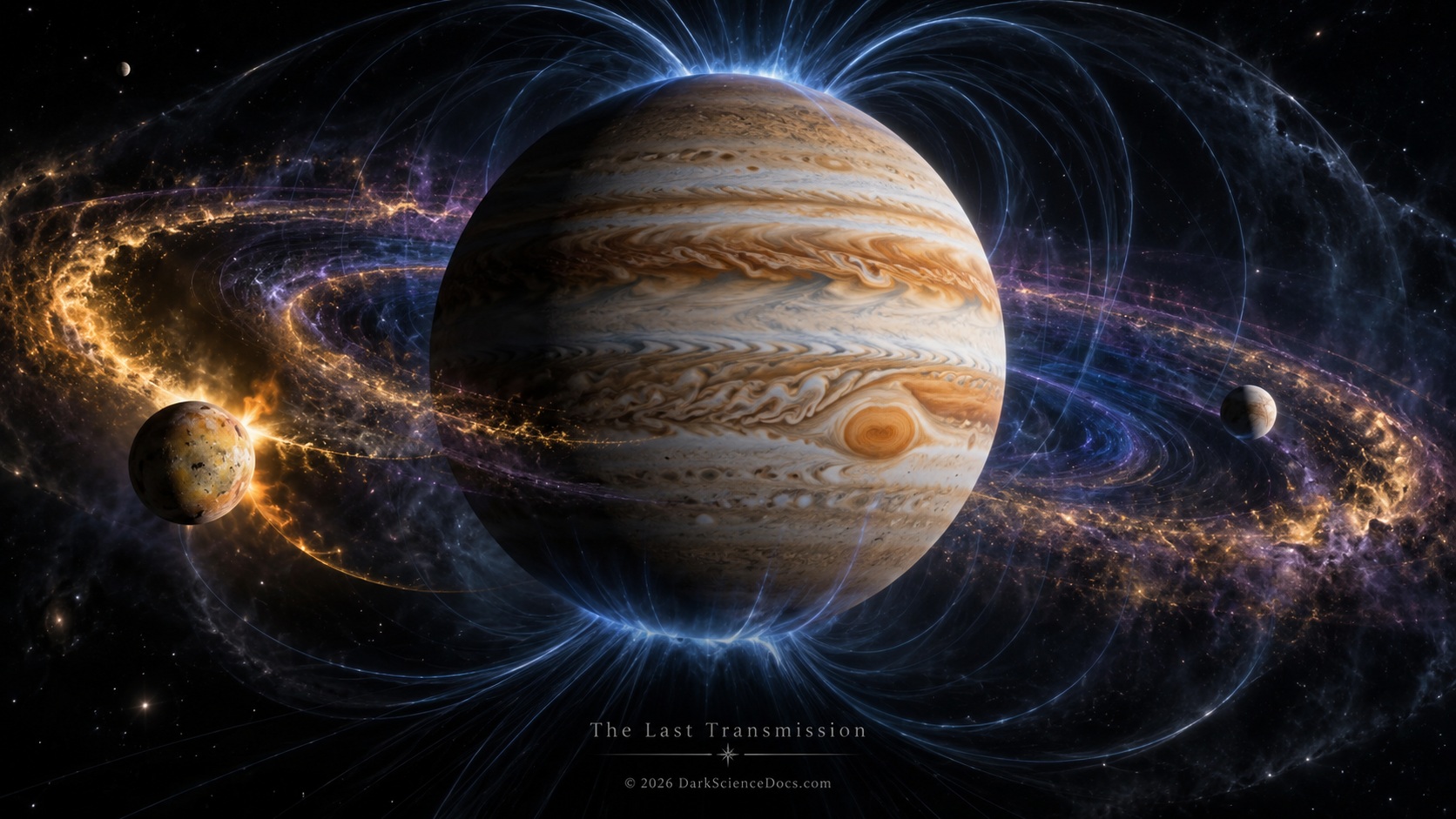
Jupiter Is a Machine Wearing the Face of a Planet
The prettiest giant in the night sky powers a self-reinforcing system of gravity, metallic hydrogen, volcanic plasma, radiation, and storms that destroy everything.
Read the illustrated article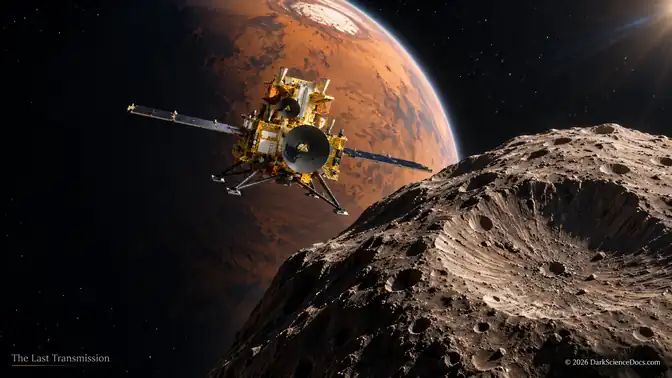
Phobos: The Moon That May Preserve Mars’s Past
MMX will investigate how Phobos formed and whether its dust contains fragments ejected from Mars. Follow the mission, the sample-return plan, and the limits of the evidence.

The People Who Cared for Laika Knew She Would Never Come Home
Before her one-way flight, a doctor brought her home to play with his children. That small kindness leaves us with a harder question about what it means to care.