
VISUAL ARCHIVE / IMAGE STORY
A Signal That Outlived Its Source
Stored measurements can reveal more when laboratory comparisons and analysis improve.
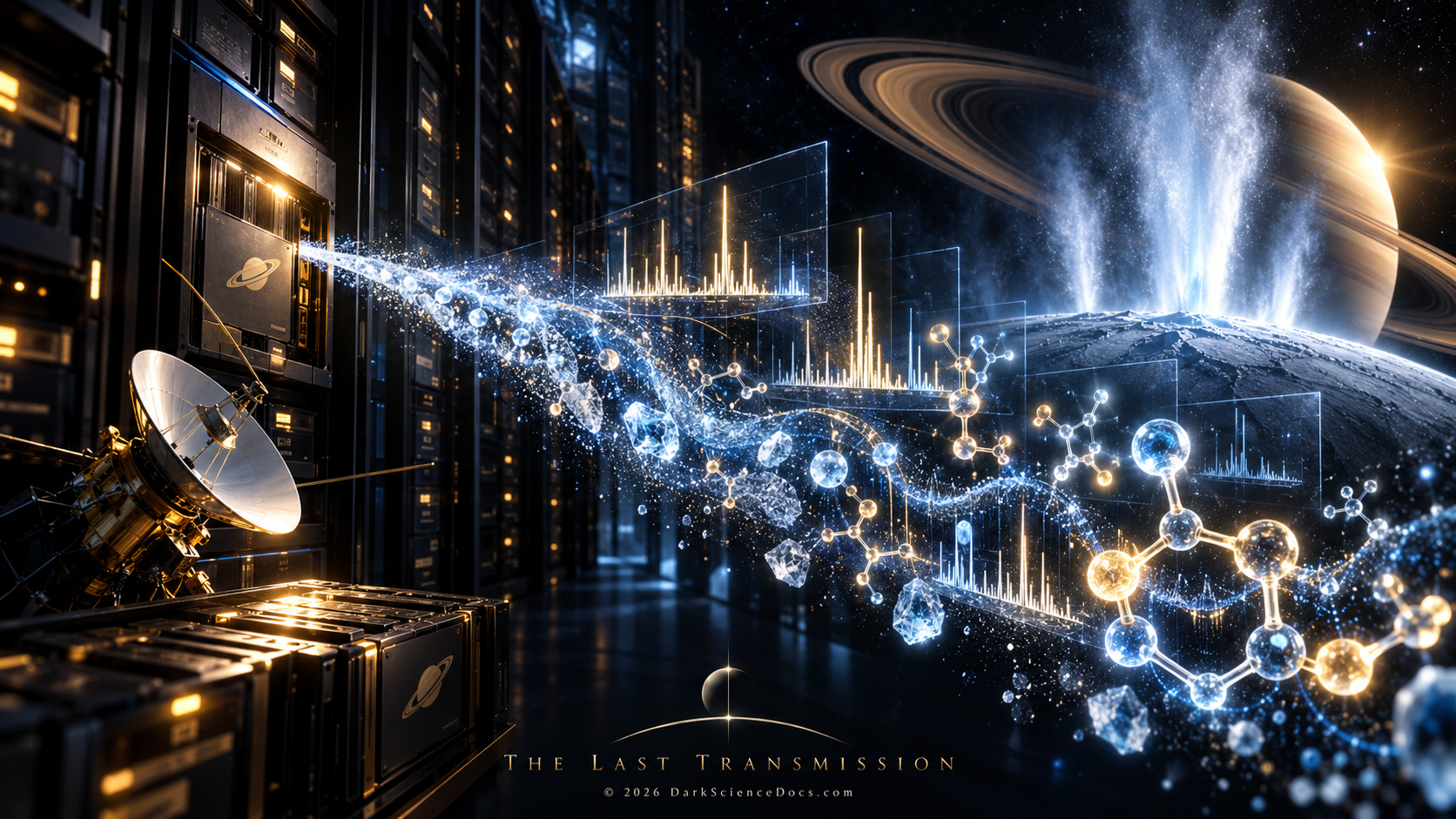
Cassini stopped transmitting in 2017, but its measurements did not stop producing discoveries. Laboratory comparisons and analytical techniques can reveal chemical information that was difficult to recognize when the data first arrived. Conceptual illustration.
THE OBSERVATION
What we can actually see.
Mission archives retain measurements after a spacecraft stops operating. Reanalysis can refine chemical interpretation using improved reference experiments; it does not mean Cassini is transmitting again or collecting samples today.
THE ILLUSTRATION
What the artwork imagines.
The composition visualizes this idea: Stored measurements can reveal more when laboratory comparisons and analysis improve. Cassini stopped transmitting in 2017, but its measurements did not stop producing discoveries. Laboratory comparisons and analytical techniques can reveal chemical information that was difficult to recognize when the data first arrived. Conceptual illustration.
FROM THE ILLUSTRATED ARTICLE
The story that inspired it.
The article returns to Cassini’s stored plume measurements and the newer chemical interpretation they make possible. It connects Enceladus’ ocean, water-rock reactions, and organic inventory with a habitability question that remains short of a detection of life. This frame focuses on stored measurements can reveal more when laboratory comparisons and analysis improve.
Read Cassini Died Nine Years Ago. Enceladus’ Ocean Is Still Talking.CHECK THE RECORD
The image interprets the research below. Follow the original work for the measurements and limits behind the scene.
NASA Science: Cassini at Enceladus Nature Astronomy: Detection of organic compounds in freshly ejected ice grains from Enceladus’s ocean NASA JPL: Cassini Study Finds Organics “Fresh” From Ocean of Enceladus Oxford: Saturn’s icy moon may host a stable ocean fit for life NASA JPL: Building Block for Life in Enceladus’ Ocean NASA JPL: Life-Sparking Energy Source and Molecule at Enceladus NASA: Webb Maps Surprisingly Large Plume Jetting From EnceladusOTHER IMAGE STORIES
Keep looking.
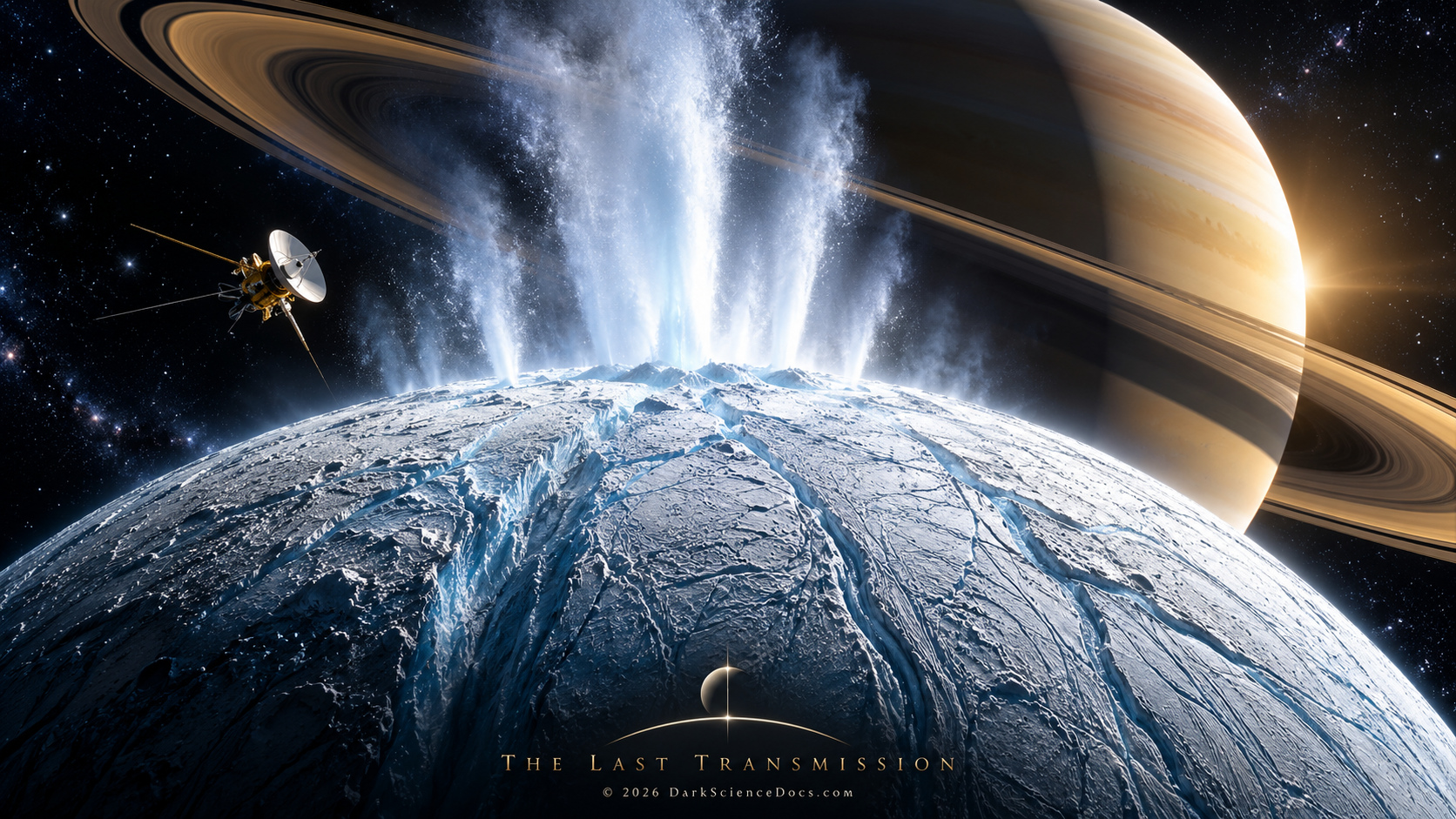 An Ocean Reaching Out
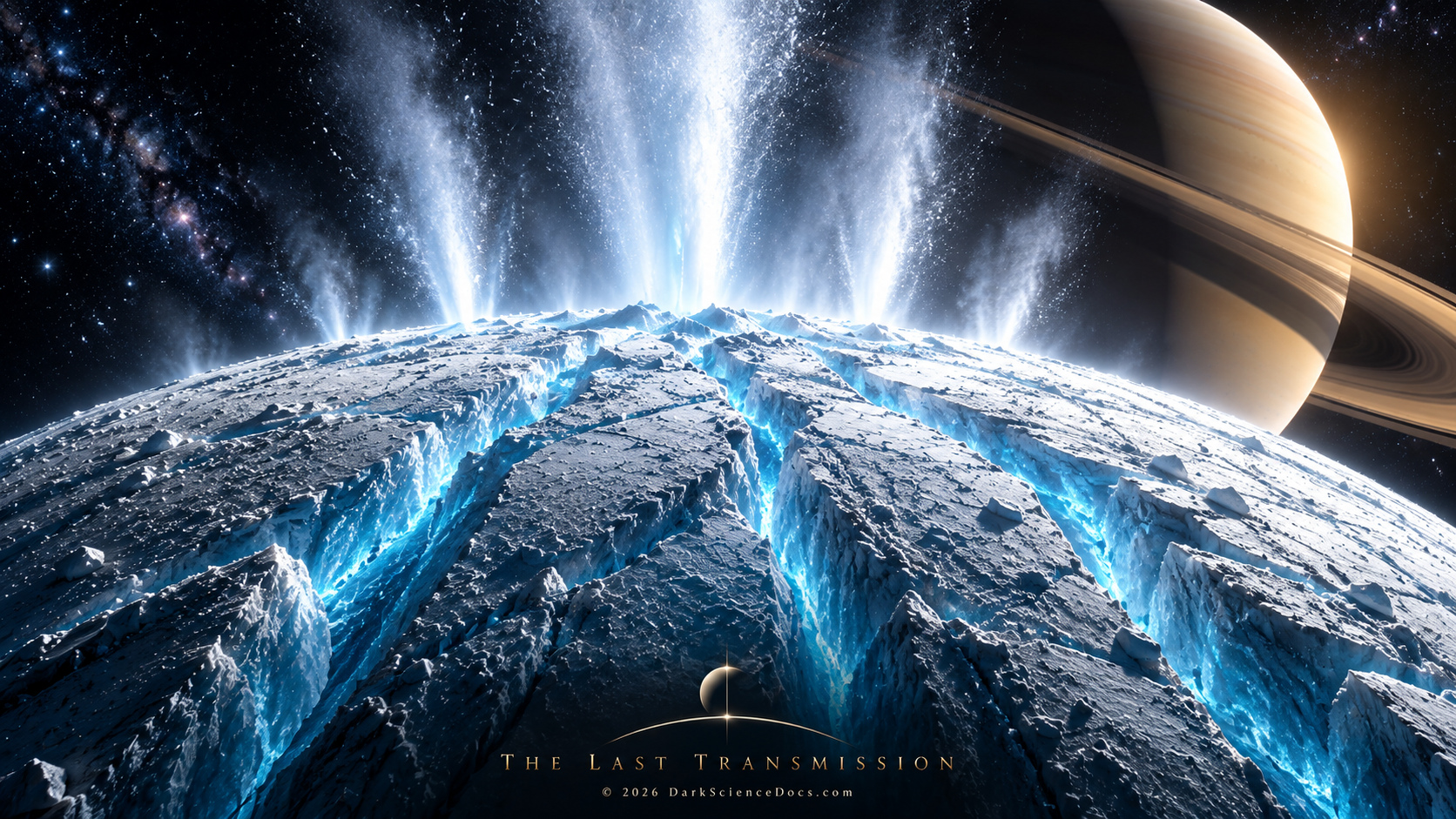 The Fractures That Let Water Escape
 The Mark Shared by Titan and Pluto
EXPLORE IN 3D / MAP 01
Explore Enceladus and its plumes
Choose Enceladus in the Saturn explorer, inspect the icy moon, and move through illustrated plumes. The visualization connects with Cassini’s ocean clues while making no claim that life has been detected.
Open Saturn system map