
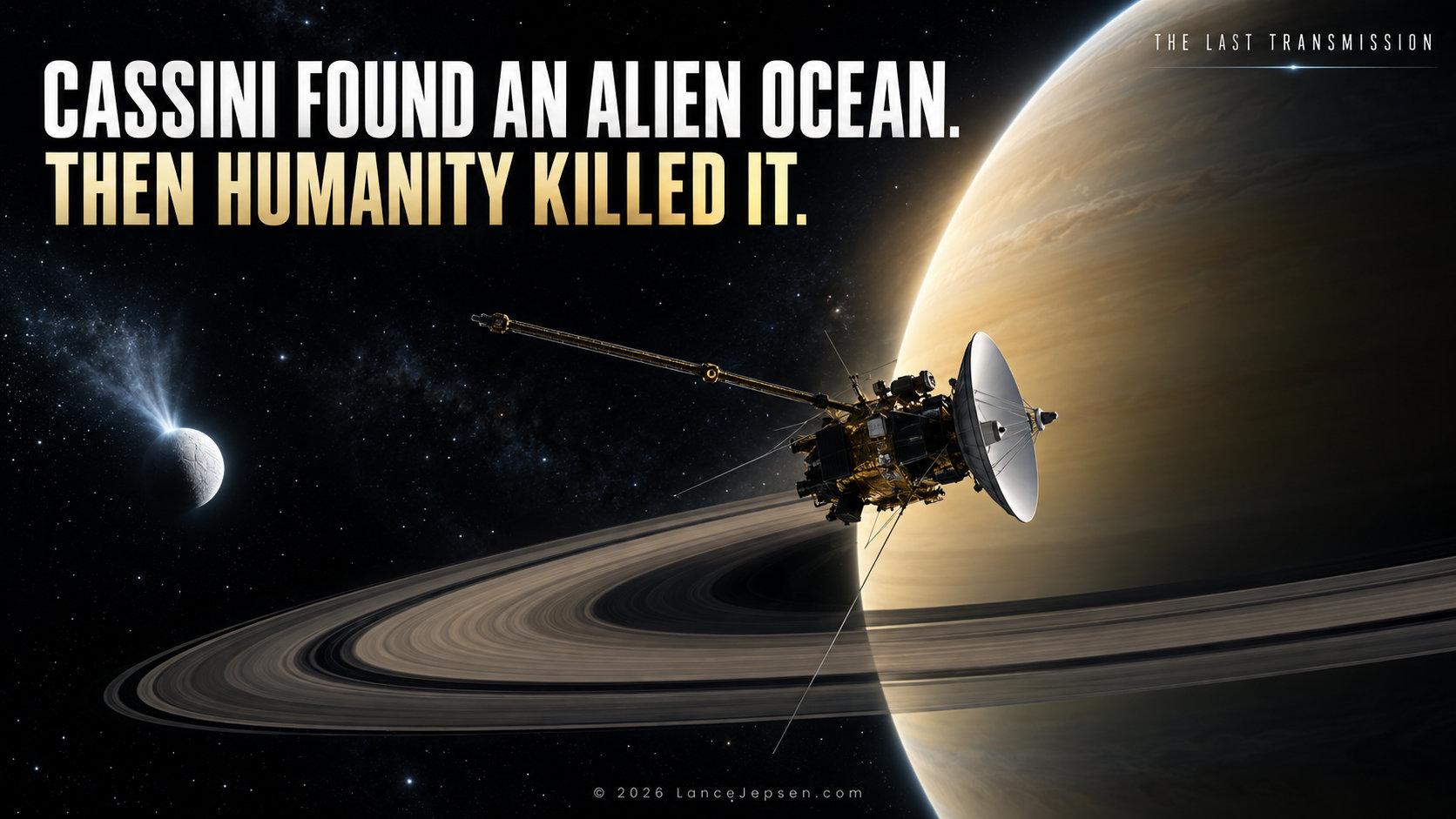
51 / A mission's last obligation
The Discovery That Set Cassini's End Date
Cassini's evidence for an ocean beneath Enceladus made an uncontrolled future encounter harder to accept. Its final dive into Saturn was part of the scientific duty to protect what it had revealed.
An orbiter that had spent years crossing Saturn's system could no longer count on a limitless supply of maneuvering propellant. Enceladus, meanwhile, was no longer merely a bright moon: its plumes offered samples of a subsurface environment worth investigating again. Controllers chose a Saturn impact that would prevent an eventual accidental collision with Enceladus or Titan. The final ring-gap orbits gathered science before the signal stopped. This was neither proof of life nor a response to a discovered organism. It was a precaution built around the value of future measurements.
The full investigation continues with the evidence, illustrations, and sources at The Last Transmission on Substack.
Continue reading on SubstackTHE EVIDENCE / THE OPEN QUESTION
What we know.
NASA says the Grand Finale was designed to keep Cassini from contaminating ocean-bearing Enceladus and chemically interesting Titan after its propellant ran low. The spacecraft made final close passes and entered Saturn's atmosphere in September 2017.
What remains open.
Cassini did not identify living organisms in the plumes, and the exact future path of a derelict, uncontrolled spacecraft was not a witnessed collision. Planetary protection addresses a preventable risk before it becomes a measurement ruined by terrestrial contamination.
Why it matters.
A scientist may eventually ask whether a chemical signal in Enceladus's ocean belongs there. Cassini's ending protected the chance that a future mission can trust the answer.
FOLLOW THE EVIDENCE
Research behind the field note.
EXPLORE IN 3D / MAP 01
Revisit Cassini’s final system
Move between Saturn and Enceladus to see why an ocean-bearing moon changed the spacecraft’s ending.
Open Saturn system mapFOLLOW THE THREAD
Related signals.
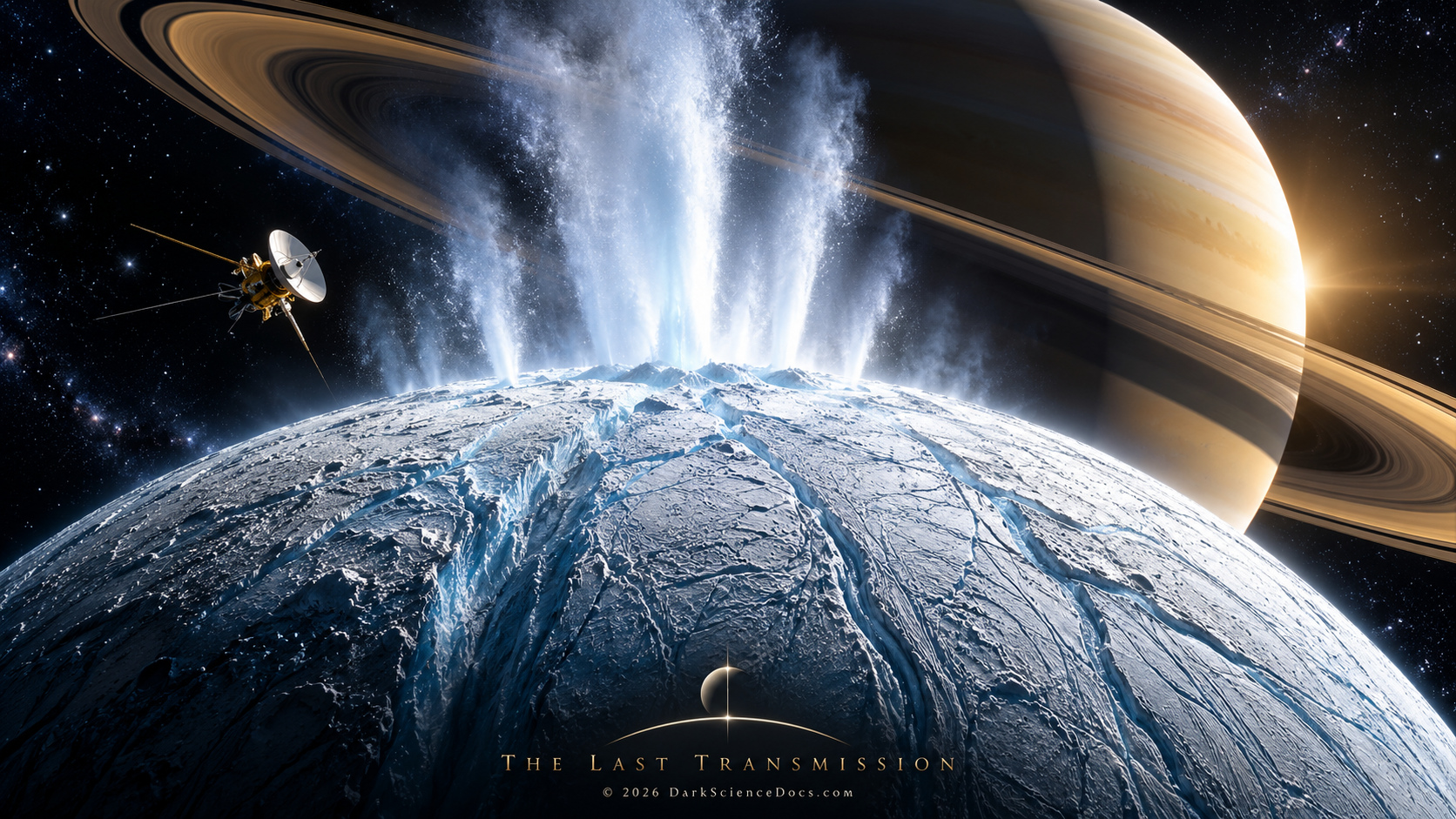
Cassini Died Nine Years Ago. Enceladus’ Ocean Is Still Talking.
The spacecraft was destroyed in Saturn’s atmosphere in 2017. Now scientists are finding richer organic chemistry in samples it collected from an alien ocean years before it died.
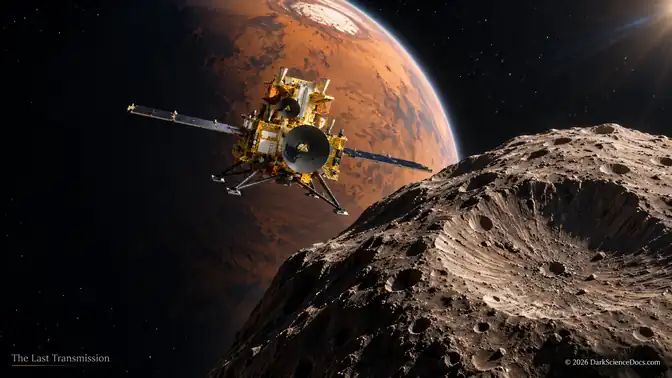
Phobos: The Moon That May Preserve Mars’s Past
MMX will investigate how Phobos formed and whether its dust contains fragments ejected from Mars. Follow the mission, the sample-return plan, and the limits of the evidence.

The People Who Cared for Laika Knew She Would Never Come Home
Before her one-way flight, a doctor brought her home to play with his children. That small kindness leaves us with a harder question about what it means to care.