EVIDENCE FILE 13 / ENCELADUS OCEAN CHEMISTRY
What Do Enceladus’ Ice Grains Reveal About Its Ocean?
Cassini destroyed the grains to measure them. How can their fragments tell us what escaped from a hidden ocean?
All Evidence FilesTHE SHORT ANSWER
Cassini’s Cosmic Dust Analyzer recorded impact-generated mass spectra from plume ice grains. Laboratory comparisons help interpret the fragments as evidence of organic chemical groups. The results strengthen the case for diverse ocean-related chemistry; they do not identify living organisms or photograph a seafloor ecosystem.
THE EVIDENCE MAP / ENCELADUS OCEAN CHEMISTRY
From a shattered grain to an ocean-chemistry claim
The sample, the impact signal, and a possible biological origin answer different questions.
- 01Measurement
Record plume-grain impact spectra
Cassini’s detector recorded ions and fragments as fresh plume grains struck it during the E5 flyby. Encounter speed affects the fragmentation patterns that require interpretation.
- 02Interpretation
Compare the signal with laboratory chemistry
Analogue measurements help associate the spectral patterns with organic chemical groups. They constrain a chemical inventory rather than revealing a photographed organism or intact ocean sample.
- 03Competing explanation
Nonbiological chemistry can supply organics
Different mixtures, fragmentation routes, and nonbiological ocean reactions can produce organic signals. Transport through ice and exposure in space also affect what reaches the detector.
- 04Open test
Seek more specific and repeatable signatures
Improved sampling could compare molecular identifications across grains and plume conditions, then test whether biological and nonbiological pathways make distinguishable predictions.
OBSERVATION / INFERENCE / LIMIT
Read the signal.
Fresh plume grains
The E5 encounter sampled recently ejected ice in 2008, rather than only older particles circulating in Saturn’s E ring.
Nearly 18 km/s
The encounter speed matters because a grain’s violent impact changes the fragmentation and ionization recorded by the detector.
Chemistry before biology
Organic functional groups and other habitability ingredients require an additional test before any claim of life.
INSIDE THE EVIDENCE
The chain of reasoning.
Each step has a different level of certainty. Follow the measured result into the explanation, then see where the trail ends.
The ocean sends material beyond the ice
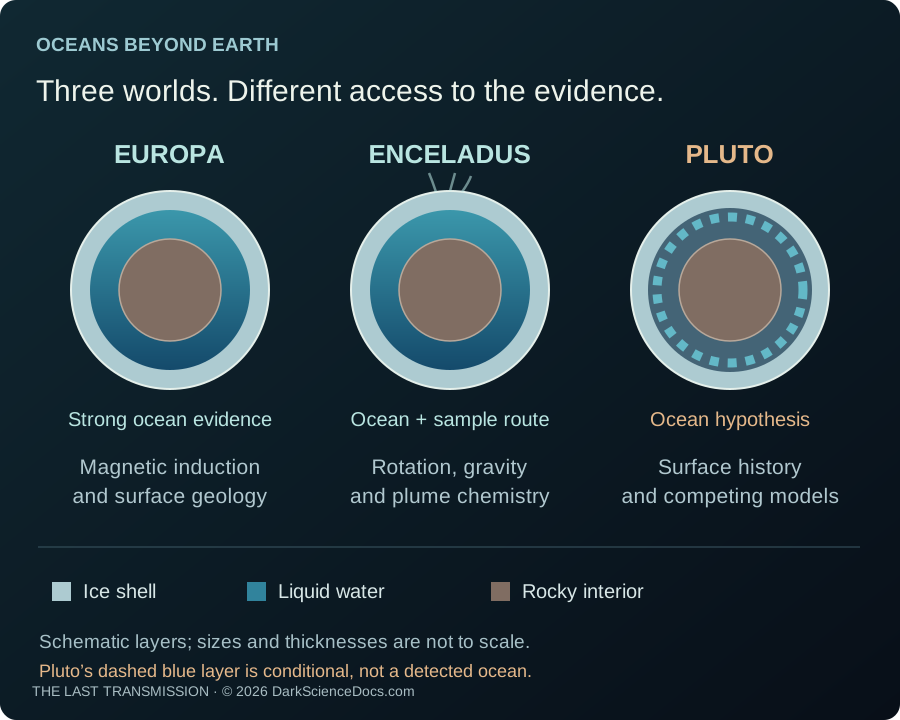
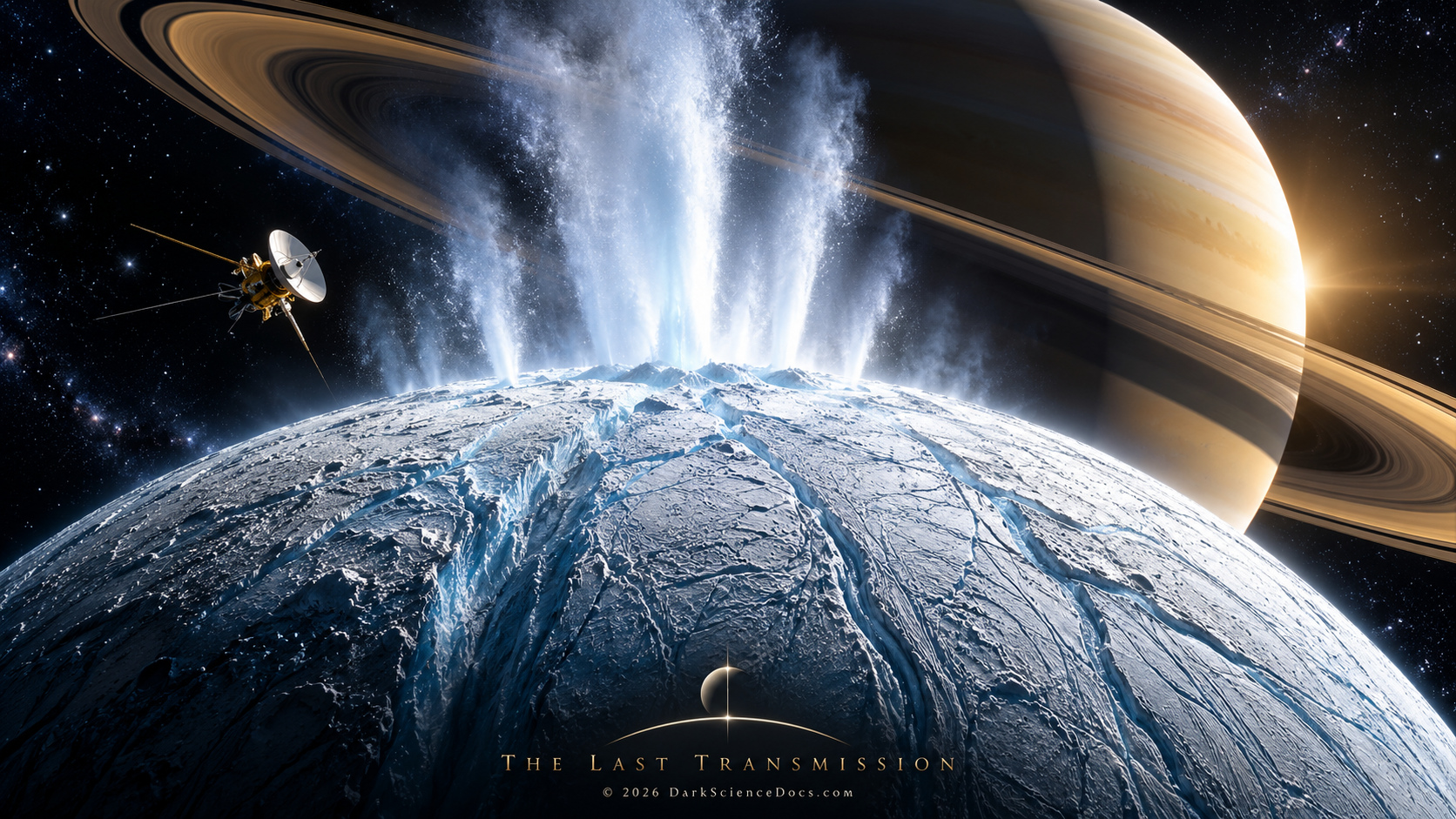
Enceladus’ south-polar fractures emit water vapor and ice particles, giving a spacecraft access to material associated with its interior. Cassini combined observations of the moon and plume with measurements that support a salty subsurface ocean. That connection makes a passing grain scientifically valuable, but its route still matters. Freezing, transport through a fracture, and ejection can affect which ingredients reach the instrument. A plume sample is a window into ocean chemistry whose selection effects must be understood.
NASA: Cassini evidence for Enceladus’ ocean and plumesThe collision becomes the measurement
A grain striking Cassini’s Cosmic Dust Analyzer at high speed did not arrive as a bottle of intact ocean water. The impact produced ions and fragments whose arrival pattern supplied a mass spectrum. Those fragments carry clues to the original material, while the violence of the measurement can alter the recognizable pattern. The central question is therefore what a given mixture would produce under comparable impact conditions. A peak on the instrument’s record needs a physical explanation before it becomes a molecular claim.
Khawaja et al. (2025): organic compounds in freshly ejected Enceladus ice grainsWhy the fresh grains changed the question
The 2025 analysis revisited measurements from the E5 flyby, when the spacecraft encountered plume grains at nearly 18 kilometers per second relative to Enceladus. Older E-ring particles had spent longer in space, where their histories could differ from newly emitted material. Fresh grains narrow that part of the uncertainty. They still do not reveal every compound in the ocean, because the plume selects and transports material and the detector records impact products. Sample age improves the interpretation without removing the instrument problem.
NASA / Cassini: what the fresh ice-grain analysis revealedLaboratory patterns turn fragments into chemical clues
Researchers compared Cassini’s spectra with laboratory analogues to investigate the chemical groups consistent with the signal. The paper reports a richer set of organic signatures in the fresh grains, including nitrogen- and oxygen-bearing features. This reasoning joins an observation to a tested fragmentation interpretation. It does not mean that a single detector peak names a unique organism or records a living cell. Alternative mixtures and fragmentation routes remain relevant when assessing how specific a chemical identification can be.
Khawaja et al. (2025): organic compounds in freshly ejected Enceladus ice grainsA promising inventory still leaves the decisive test open
Phosphorus measurements and the wider Cassini record add independent reasons to investigate habitability. A place can have useful ingredients while its chemistry remains entirely nonbiological. The next strong result would connect an identified signal with a process that competing chemical explanations struggle to reproduce. Future sampling could improve molecular specificity, characterize plume variation, and test how faithfully different grains represent the ocean. Those are proposed directions for resolving the question, rather than evidence that a mission has already found organisms.
THE EASY MISREADING
Organic means carbon-related chemistry, not automatically biological origin. Fresh plume grains, a salty ocean, and habitability ingredients make Enceladus a compelling target; Cassini did not detect life or observe a vent ecosystem.
PRIMARY RESEARCH & MISSION RECORDS
Check the source.
These are the studies and mission records behind this explainer. The illustrated article and related research pages continue the investigation.
EXPLORE IN 3D / MAP 01
Explore the plume that carries the samples
Choose Enceladus in the Saturn explorer and move through its illustrated water-vapor plumes. The visible jets provide a teaching view of the sampling route; they do not identify molecules or show detected organisms.
Open Saturn system mapFOLLOW THE THREAD
Stay with the question.
Return to the illustrated article for Cassini’s afterlife in the data archive, explore Enceladus’ plumes in the Saturn map, or watch the documentary about why planetary protection shaped the mission’s ending.
MORE EVIDENCE FILES
Keep looking.
EVIDENCE FILE 01 / EUROPA
How Do We Know Europa Has an Ocean?
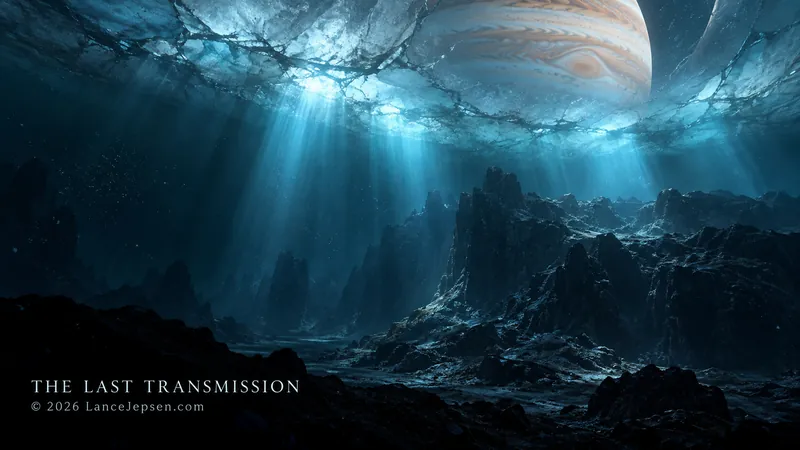
Galileo's magnetic measurements point to a conducting layer beneath Europa's ice. A salty ocean is the leading explanation. Its chemistry and seafloor activity remain open questions.
Read the evidence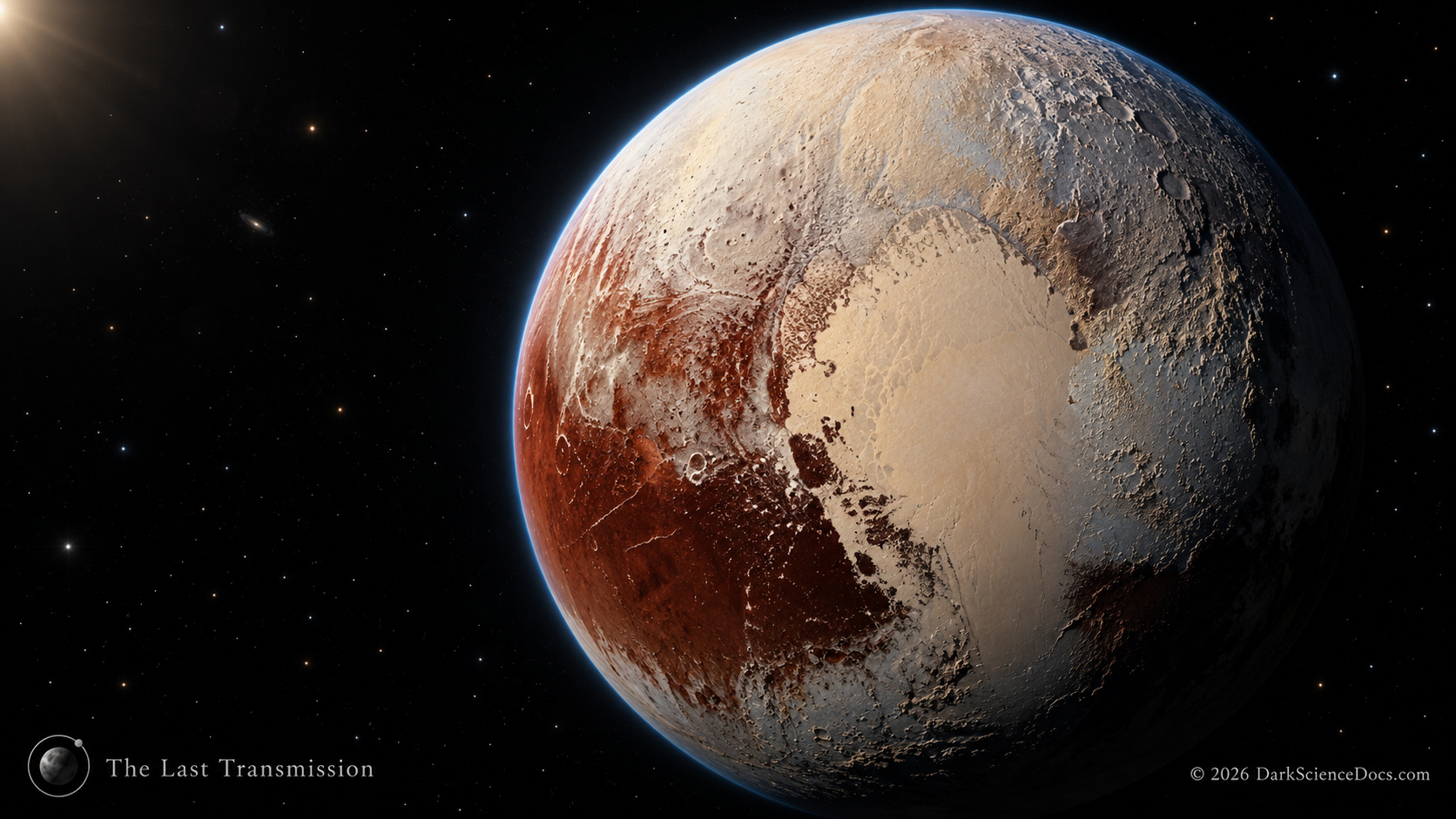
EVIDENCE FILE 15 / PLUTO’S UNRESOLVED INTERIOR
Does Pluto Have an Ocean? The Evidence and the Alternative
Separate Pluto’s renewing nitrogen ice from the liquid-water ocean hypothesis, then compare basin reorientation, surface extension, and an oceanless impact model.
Read the evidence