
VISUAL ARCHIVE / IMAGE STORY
A Possible Beginning in Gas
A heavy seed is one proposed way to build a large black hole early.
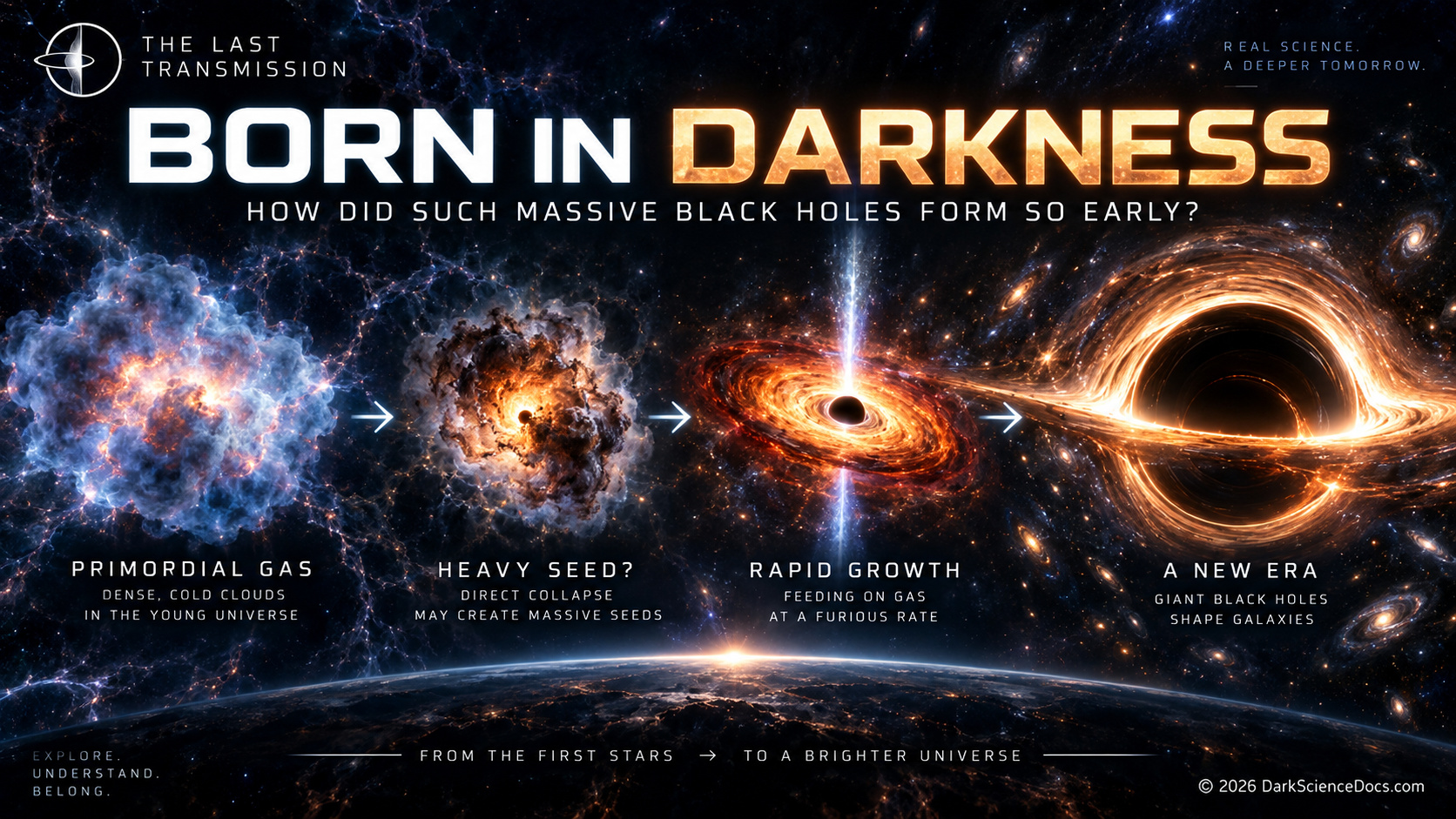
This illustrated sequence traces a possible pathway from primordial gas to a massive black-hole seed, followed by rapid accretion and the development of an enormous central object. Heavy-seed formation is one proposed explanation for the surprisingly massive black holes discovered in the early universe, although the exact origins of individual objects remain uncertain. AI-generated scientific concept.
THE OBSERVATION
What we can actually see.
Rapid early black-hole growth can be explored through different seed and accretion scenarios. Present observations constrain those possibilities but do not record the birth of this particular object; the illustrated sequence is a proposed pathway.
THE ILLUSTRATION
What the artwork imagines.
The composition visualizes this idea: A heavy seed is one proposed way to build a large black hole early. This illustrated sequence traces a possible pathway from primordial gas to a massive black-hole seed, followed by rapid accretion and the development of an enormous central object. Heavy-seed formation is one proposed explanation for the surprisingly massive black holes discovered in the early universe, although the exact origins of individual objects remain uncertain. AI-generated scientific concept.
FROM THE ILLUSTRATED ARTICLE
The story that inspired it.
The article follows Webb evidence for an unusually massive early black hole relative to its inferred host stars, then considers seed formation and gas-enveloped little red dots. Different observed objects provide related questions rather than one interchangeable dataset. This frame focuses on a heavy seed is one proposed way to build a large black hole early.
Read The Black Hole That Grew Before Its GalaxyCHECK THE RECORD
The image interprets the research below. Follow the original work for the measurements and limits behind the scene.
Research record: doi.org/10.1038/s41586-026-10579-4 Research record: esawebb.org/images/weic2609b/ Research record: doi.org/10.1038/s41550-023-02111-9 Research record: science.nasa.gov/missions/webb/nasa-webb-finds-strongest-evidence-yet-for-black-hole-stars/ Research record: science.nasa.gov/asset/webb/evidence-of-a-black-hole-star/OTHER IMAGE STORIES
Keep looking.
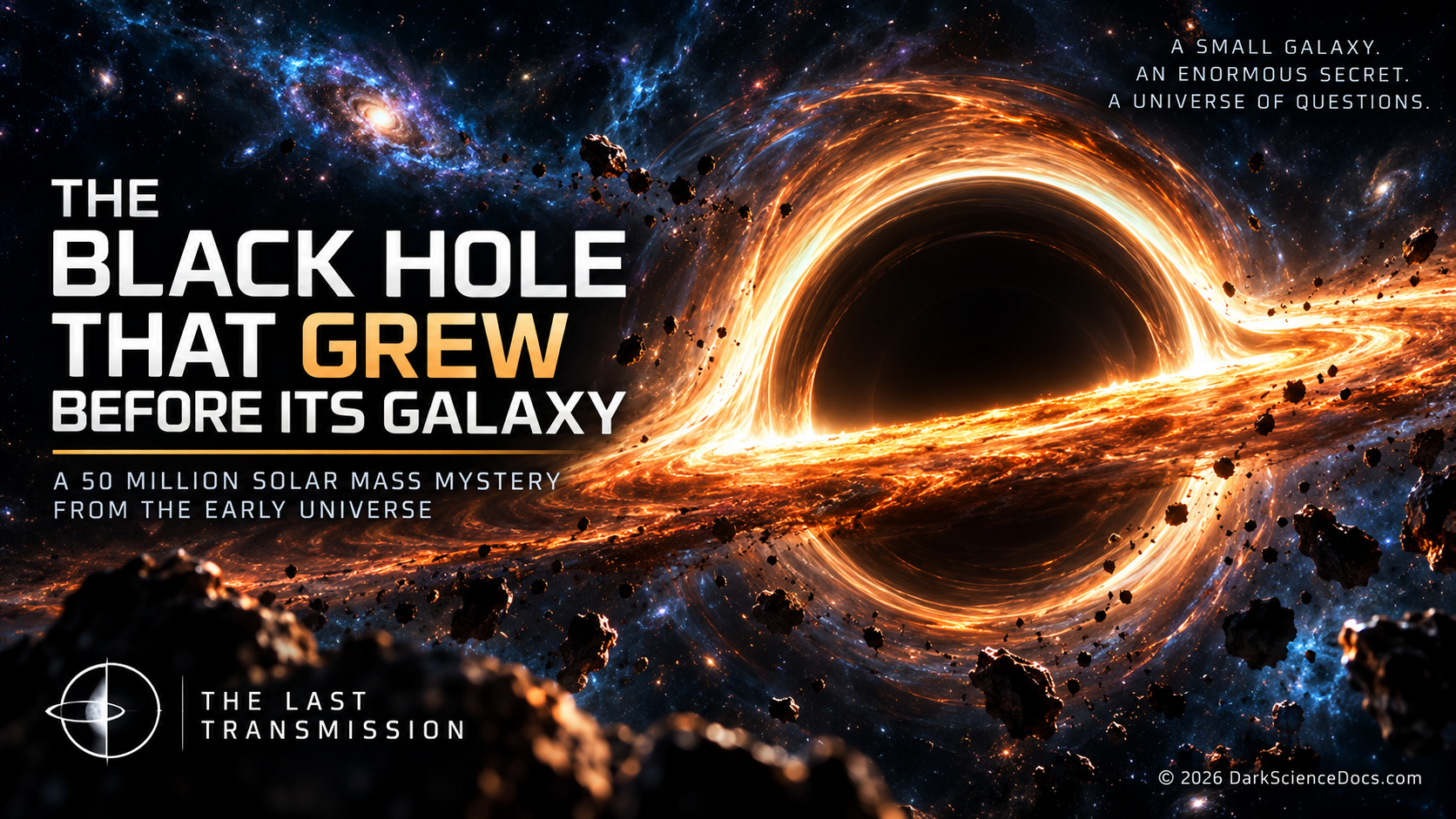 Too Much Darkness for Its Starlight
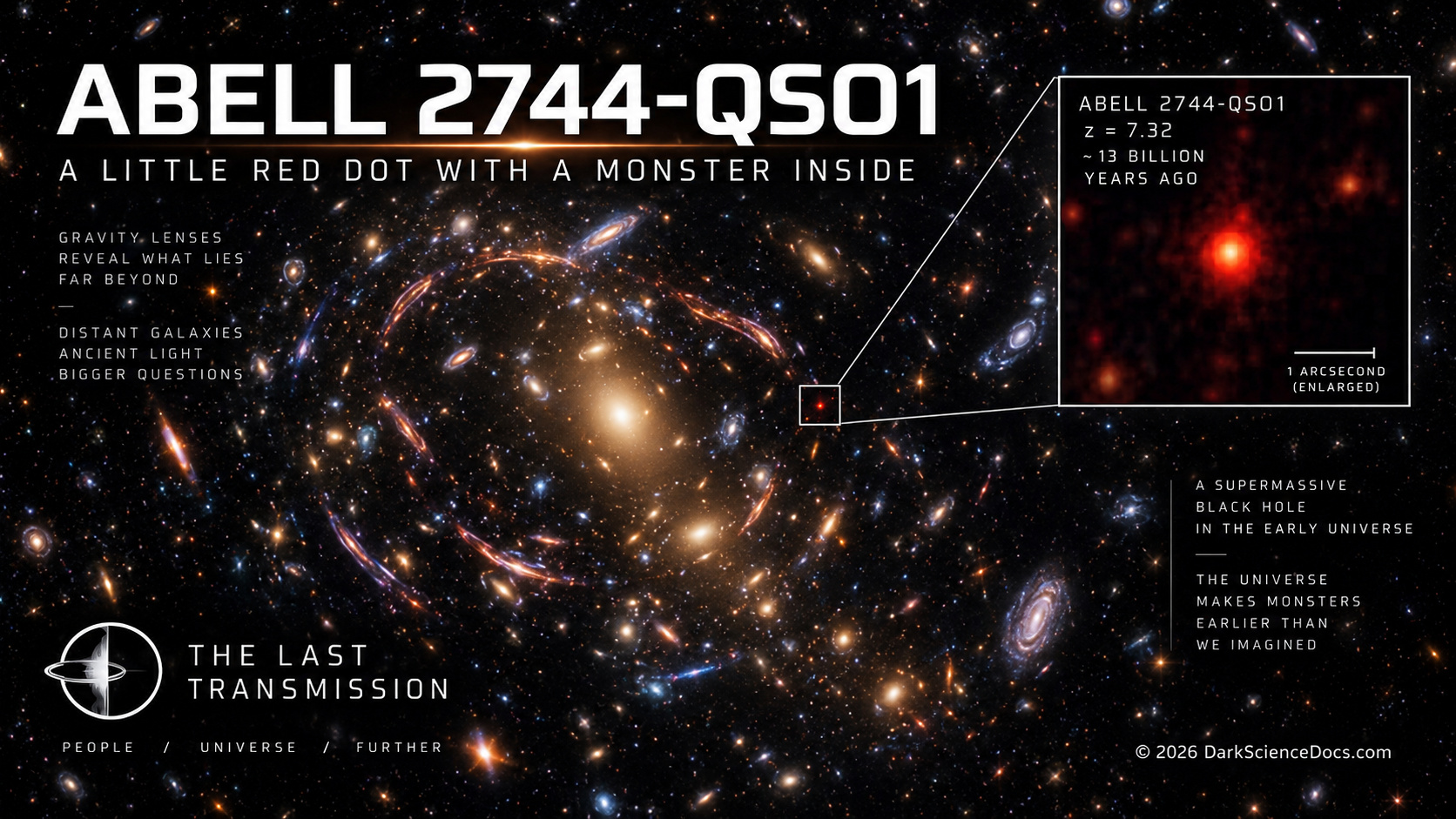 The Small Red Source
 The Mark Shared by Titan and Pluto
EXPLORE IN 3D / MAP 13
Put the early-universe question in context
Explore galaxies and large-scale structure before returning to the distant spectra. The atlas is a scale guide, not a lens model or a resolved reconstruction of Abell 2744-QSO1.
Open Universe map