
23 / When light found a path
The Dawn That Did Not Arrive Everywhere
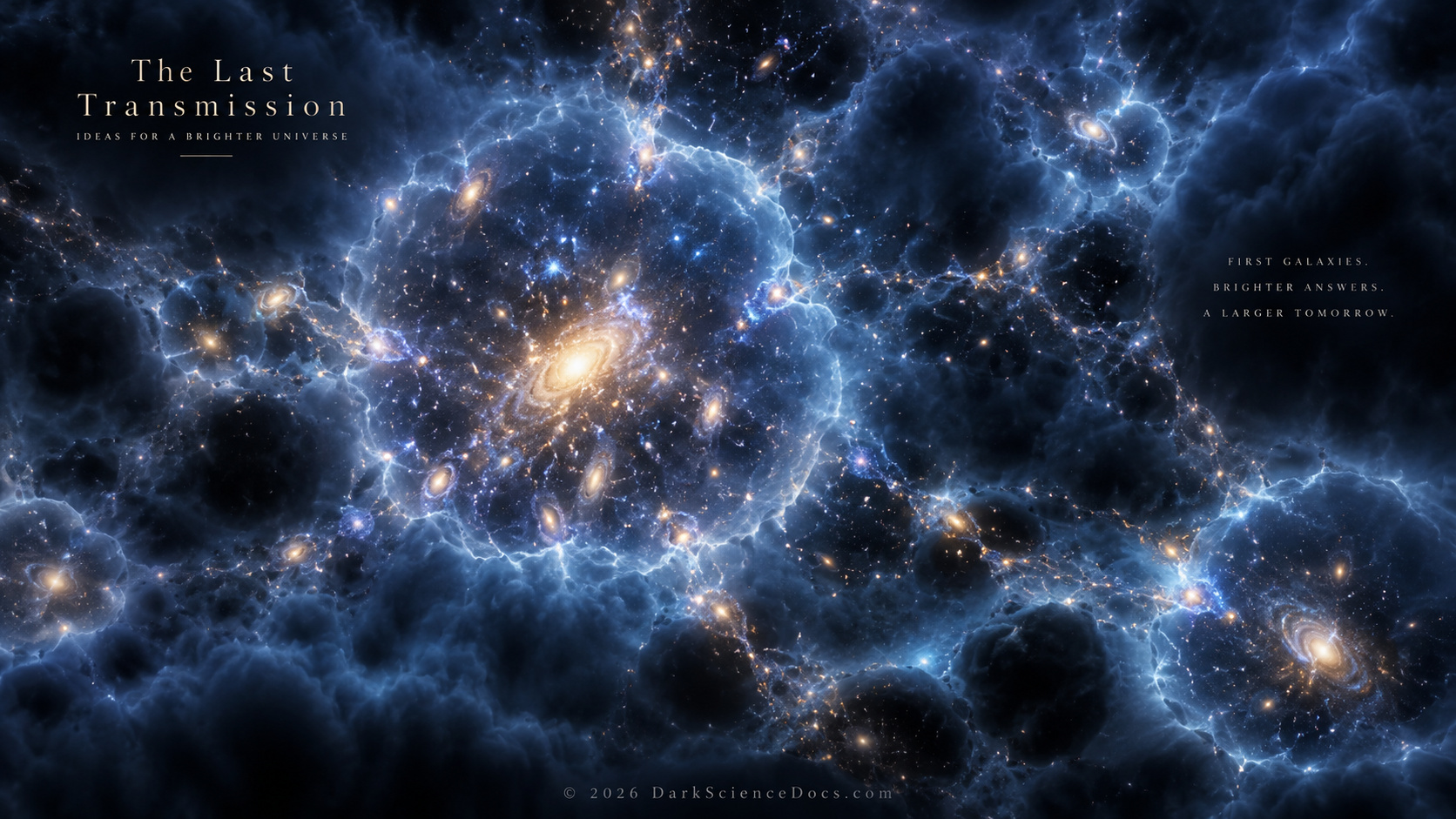
Early galaxies made light, but neutral hydrogen could still keep much of it from traveling far. Reionization was a patchwork of openings, not a single cosmic sunrise.
A telescope sees only the light that survived the journey. Around the first galaxies, ultraviolet radiation began changing neutral hydrogen into ionized gas, and separate clear regions grew and eventually met. A simulation such as THESAN makes that uneven geography visible, while distant galaxy and quasar spectra test it against the sky. The unsettling possibility is that two views of the same young galaxy could tell different stories because the surrounding gas offered one direction a way out and closed another.
The full investigation continues with the evidence, illustrations, and sources at The Last Transmission on Substack.
Continue reading on SubstackTHE EVIDENCE / THE OPEN QUESTION
What we know.
The early intergalactic medium did not remain neutral. Observations of distant quasars, galaxies, and the cosmic microwave background constrain its changing state. The THESAN project models radiation, gas, galaxies, and dust together to explore how Lyman-alpha light escaped along different paths.
What remains open.
THESAN is a simulation, not a recording of the early universe. Small-scale gas, dust, stellar feedback, and the intrinsic emission of each galaxy complicate an inference from missing light to the exact neutral fraction along one line of sight.
Why it matters.
If visibility depends on the material between a young galaxy and us, a faint detection cannot be read as a simple measure of how many stars it contains. The geometry of escape becomes part of the evidence for cosmic dawn.
GO DEEPER / EVIDENCE FILE
What Does Missing Light Tell Us About Cosmic Dawn?
Lyman-alpha visibility depends on neutral hydrogen, the galaxy's own emission, dust, and the viewing direction. THESAN models the journey; spectra provide the check.
FOLLOW THE EVIDENCE
Research behind the field note.
WATCH THE RELATED DOCUMENTARY
The story in motion.
VISUAL EVIDENCE
Inside the investigation.
FOLLOW THE THREAD
Related signals.
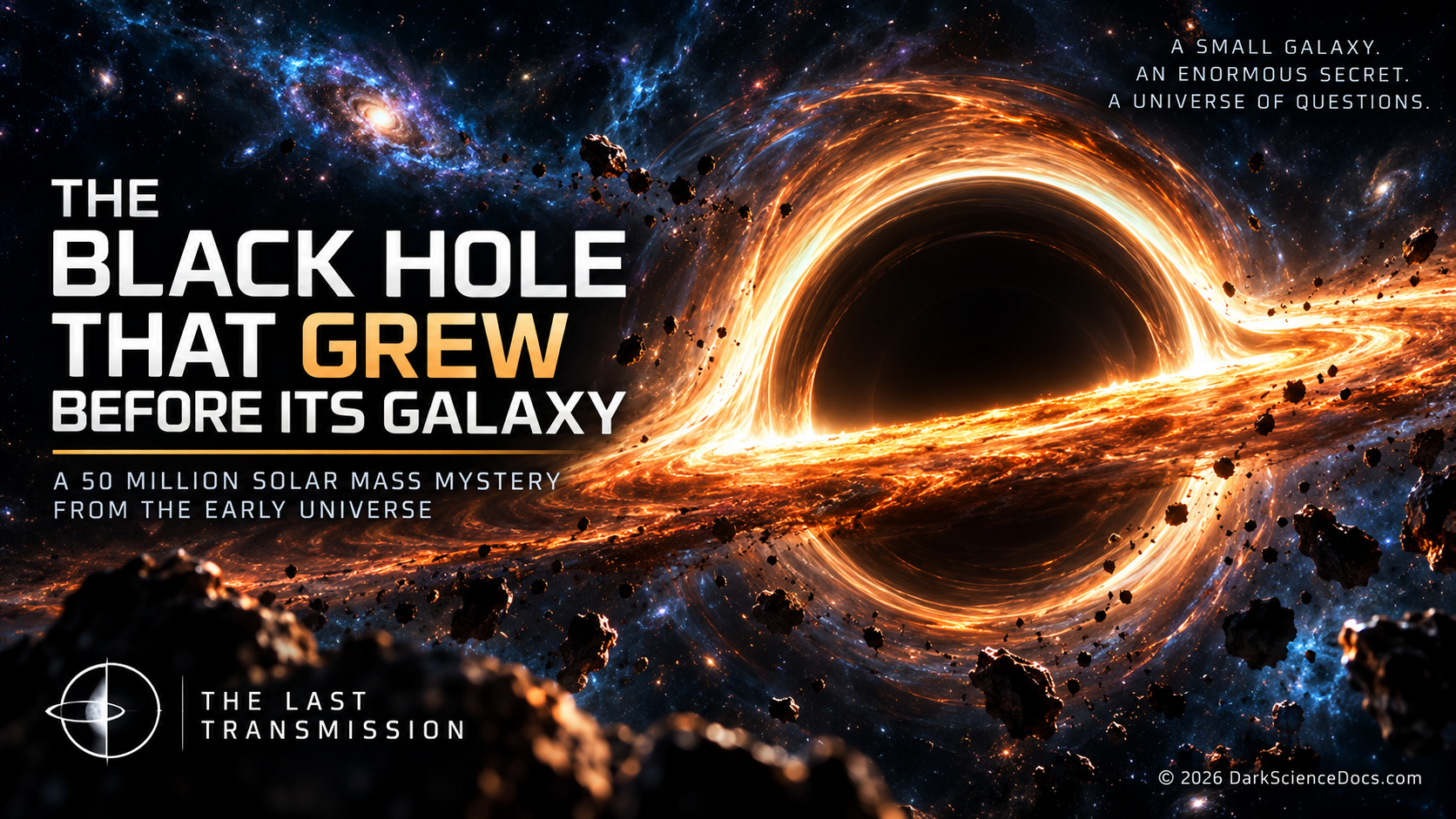
The Black Hole That Grew Before Its Galaxy
The James Webb Space Telescope has found an ancient black hole containing 50 million times the mass of our Sun, yet the stars surrounding it appear to weigh less than half as much.
A Star Blinked Twice. Whatever Caused It May Be Much Closer to Earth.
Two nearly identical optical disturbances, 4.4 seconds apart, appeared in HD 89389’s light. Follow the unexplained record, a foreground diffraction hypothesis, and the synchronized telescopes proposed to test it.
What If the Universe Is Accelerating Because Stars Die?
For nearly three decades, scientists have struggled to identify the mysterious force accelerating the expansion of the universe. Now a radical theory suggests the answer.