
VISUAL ARCHIVE / IMAGE STORY
The Galaxy That Never Stands Still
The runaway’s path belongs to a galaxy whose stars are also moving.
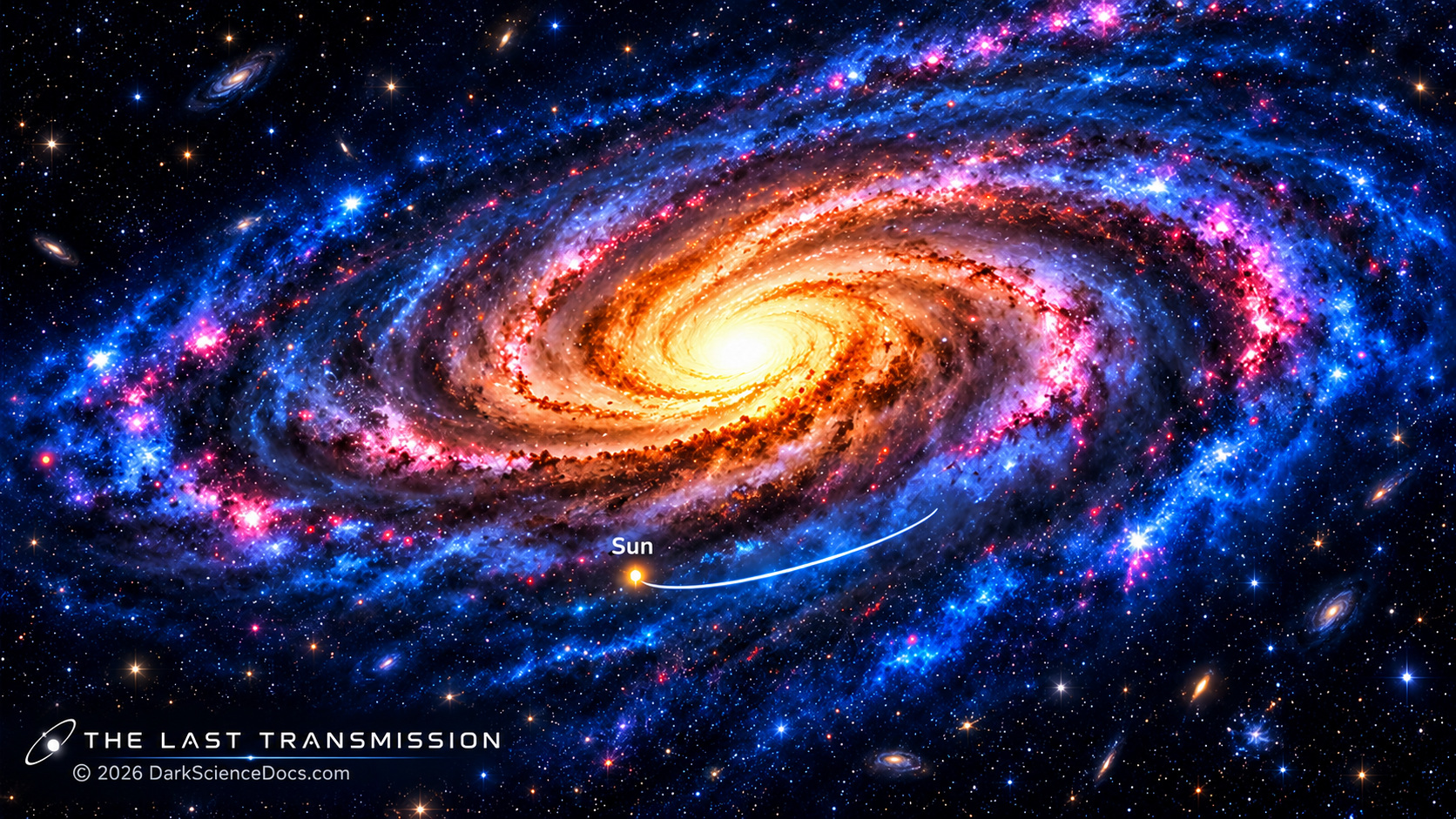
Our moving galaxy. A sweeping view of the Milky Way's spiral disk showing the Sun's approximate neighborhood and its orbital motion around the luminous galactic center.
THE OBSERVATION
What we can actually see.
Stellar positions and velocities help reconstruct Galactic motion and gravitational structure. The broad spiral composition here is an outside view that no spacecraft has photographed, and its luminous paths are not directly observed trails.
THE ILLUSTRATION
What the artwork imagines.
The composition visualizes this idea: The runaway’s path belongs to a galaxy whose stars are also moving. Our moving galaxy. A sweeping view of the Milky Way's spiral disk showing the Sun's approximate neighborhood and its orbital motion around the luminous galactic center.
FROM THE ILLUSTRATED ARTICLE
The story that inspired it.
The article follows S5-HVS1’s measured motion back toward the Galactic Center and introduces the Hills mechanism. It asks how one disrupted partnership could leave both a runaway star and a tightly bound companion without requiring either star to be swallowed. This frame focuses on the runaway’s path belongs to a galaxy whose stars are also moving.
Read The Black Hole That Tore Two Stars Apart and Sent One Into Eternal ExileCHECK THE RECORD
The image interprets the research below. Follow the original work for the measurements and limits behind the scene.
Research record: doi.org/10.1093/mnras/stz3081 Research record: doi.org/10.1038/331687a0 Research record: www.esa.int/Science_Exploration/Space_Science/Gaia/Gaia_spots_stars_flying_between_galaxies Research record: www.hq.eso.org/public/news/eso1825/ Research record: www.esa.int/Science_Exploration/Space_Science/Gaia/Five_fascinating_Gaia_revelations_about_the_Milky_WayOTHER IMAGE STORIES
Keep looking.
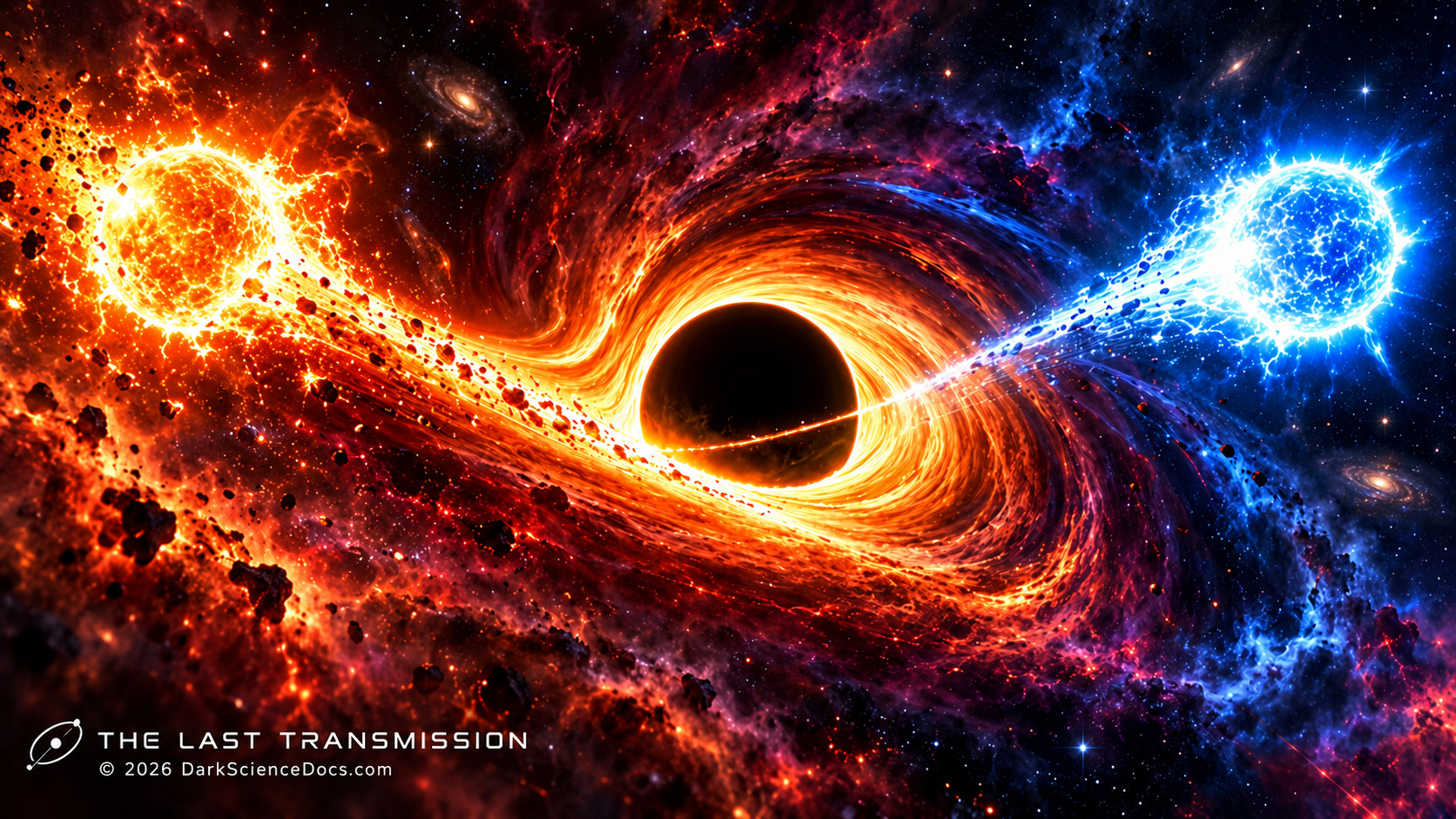 One Encounter, Two Futures
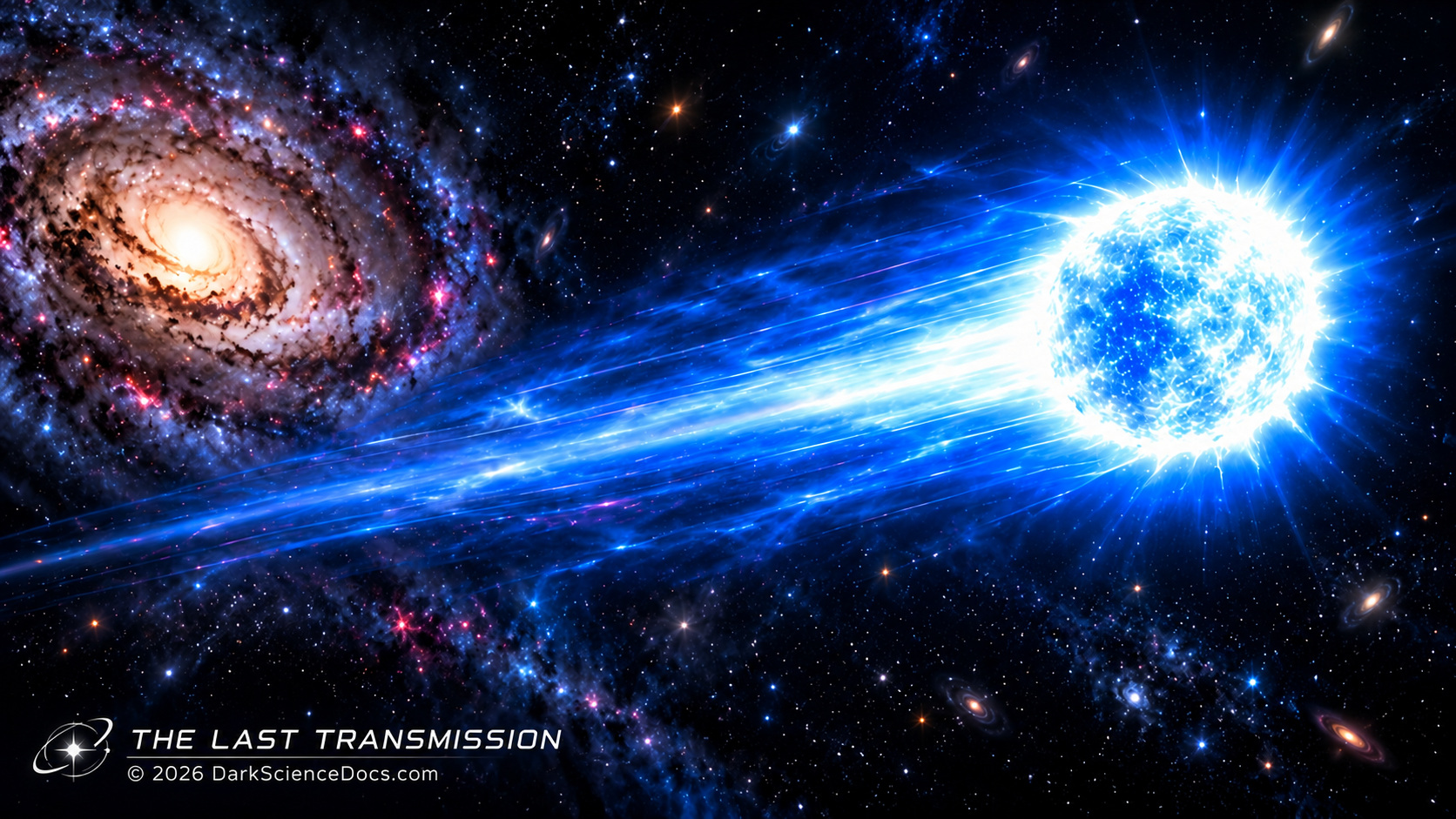 The Star Leaving Home
 The Mark Shared by Titan and Pluto
EXPLORE IN 3D / MAP G-01
Follow a star around Sagittarius A*
Follow an S2-inspired orbit and experiment with a released probe near Sagittarius A*. These teaching paths illustrate gravity; they do not reconstruct the original S5-HVS1 binary encounter.
Open Sagittarius A* map