
VISUAL ARCHIVE / IMAGE STORY
The Loop That Makes a Clock Run
Absorption changes become a correction to a drifting laser.
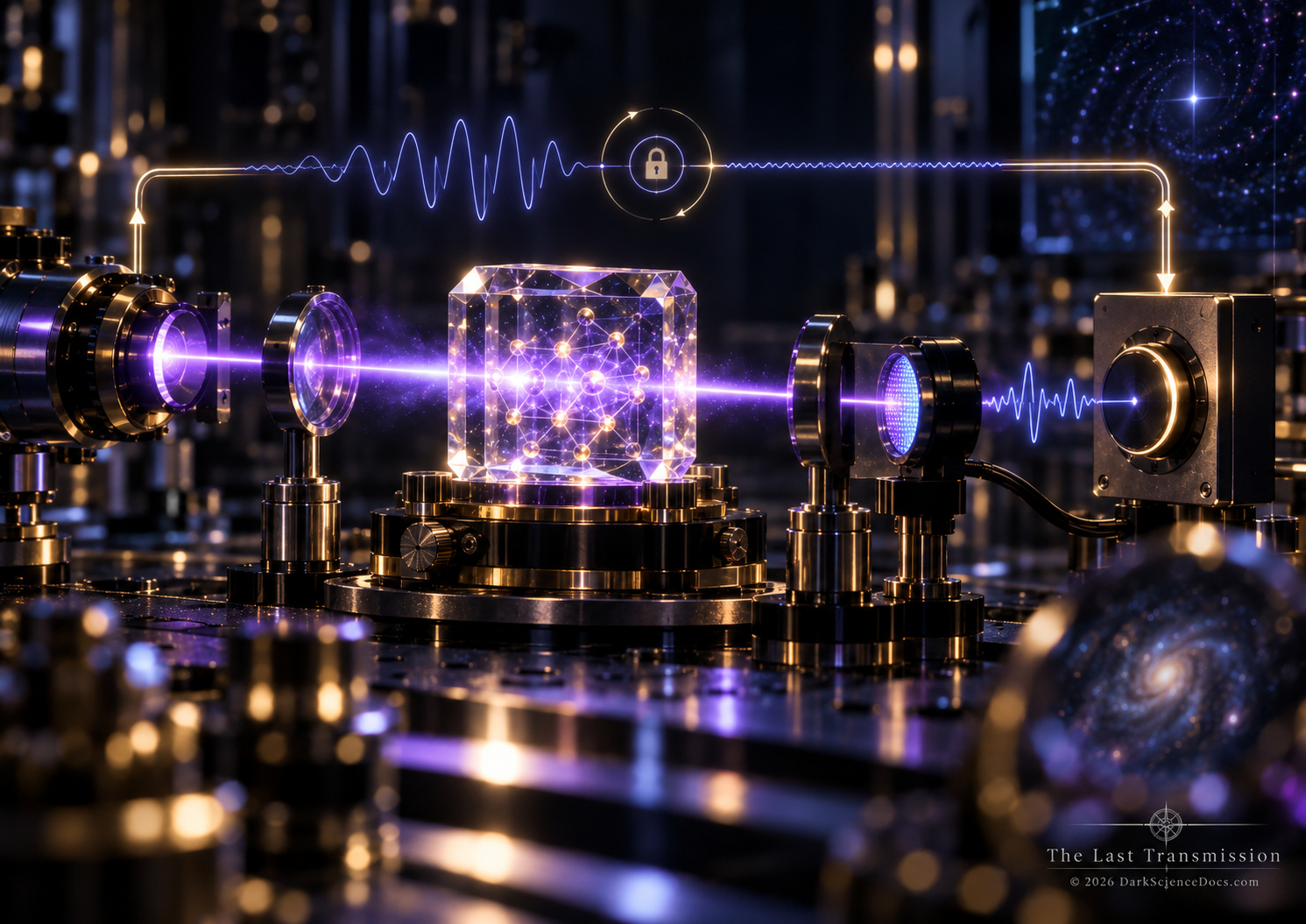
The crucial step is feedback. When the driving laser begins to drift away from the thorium-229 resonance, the nuclear response changes. That information can be fed back into the system so the laser is continually pulled toward the frequency set by the nucleus. Illustration: The Last Transmission.
THE OBSERVATION
What we can actually see.
A continuous-wave laser is steered toward the thorium transition using rapid feedback based on absorption spectroscopy. The team compared a subharmonic against a ytterbium-ion clock during continuous operation.
THE ILLUSTRATION
What the artwork imagines.
The visible arrows and instant correction dramatize a control signal. The picture is not an oscilloscope trace, and one successful loop does not imply record-setting clock performance.
FROM THE ILLUSTRATED ARTICLE
The story that inspired it.
The article traces the path from thorium-229 spectroscopy to a laser kept on a nuclear transition by feedback. Absorption changes become a correction to a drifting laser.
Read The First Nuclear Clock Has Started TickingCHECK THE RECORD
The image interprets the research below. Follow the original work for the measurements and limits behind the scene.
Thorium-229 clock feedback experimentOTHER IMAGE STORIES
 A Clock Deeper Than the Electron
 Two Places to Keep Time
 The Mark Shared by Titan and Pluto