
VISUAL ARCHIVE / IMAGE STORY
The Impact No One Witnessed
In the spring of 2024, a fragment of an asteroid or comet slammed into the Moon, unleashing a violent eruption of shattered rock and lunar dust that carved the 222-meter-wide McGetchin crater.
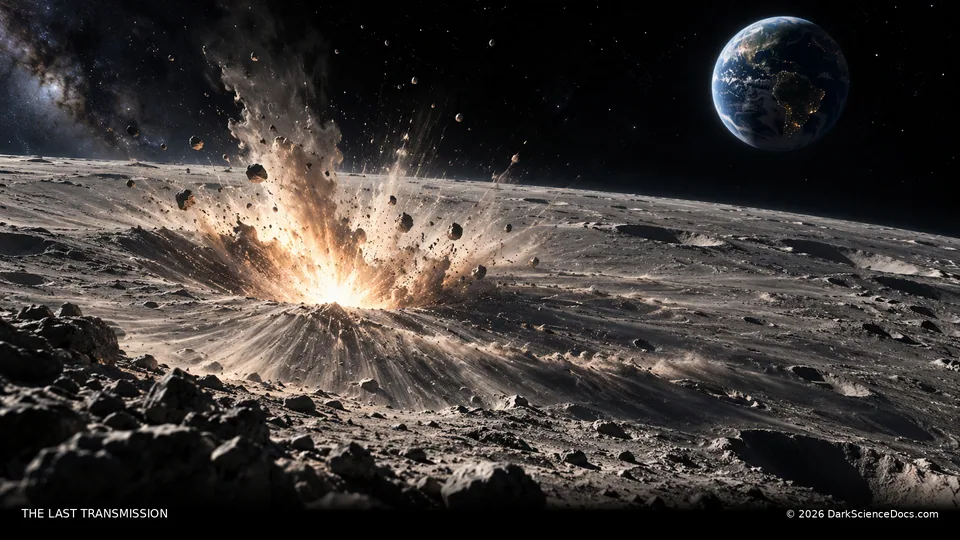
In the spring of 2024, a fragment of an asteroid or comet slammed into the Moon, unleashing a violent eruption of shattered rock and lunar dust that carved the 222-meter-wide McGetchin crater. No one witnessed the collision, and its extraordinary aftermath remained undiscovered until NASA’s Lunar Reconnaissance Orbiter revealed the evidence more than a year later. AI-generated artistic interpretation.
THE OBSERVATION
What we can actually see.
NASA reports a crater about 222 meters wide and approximately 43 meters deep. The research distinguishes a thermal cold spot around seven kilometers in diameter from localized distal optical disturbances extending to roughly 140 kilometers radially. These observations describe surface and thermal properties; they are not interchangeable measurements of a single destructive blast zone.
THE ILLUSTRATION
What the artwork imagines.
In the spring of 2024, a fragment of an asteroid or comet slammed into the Moon, unleashing a violent eruption of shattered rock and lunar dust that carved the 222-meter-wide McGetchin crater. No one witnessed the collision, and its extraordinary aftermath remained undiscovered until NASA’s Lunar Reconnaissance Orbiter revealed the evidence more than a year later. AI-generated artistic interpretation. The viewpoint, illumination, colors and simultaneous arrangement are artistic choices. This is a cinematic illustration, not a direct instrument image or a quantitative reconstruction of every feature.
FROM THE ILLUSTRATED ARTICLE
The story that inspired it.
McGetchin crater is 222 meters across, yet orbital image comparisons found localized surface disturbances about 140 kilometers away. The visible hole, thermal cold spot and distant optical changes measure different consequences of one impact. This frame focuses on the impact no one witnessed, within the complete illustrated article and its source-linked research context.
Read The Moon Was Hit. The Damage Reached 140 Kilometers.CHECK THE RECORD
The image interprets the research below. Follow the original work for the measurements and limits behind the scene.
A 222-m diameter lunar crater Lunar crater reveals extensive distal regolith modification NASA research-team account, 2026-09-16 Deep Structure of the Lunar South Pole–Aitken BasinOTHER IMAGE STORIES
Keep looking.
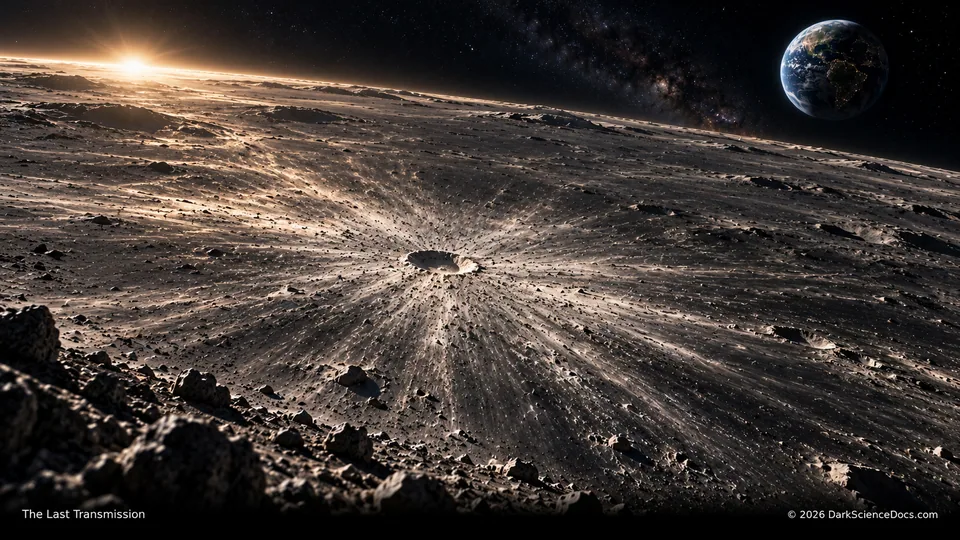 A Footprint Beyond the Visible Crater
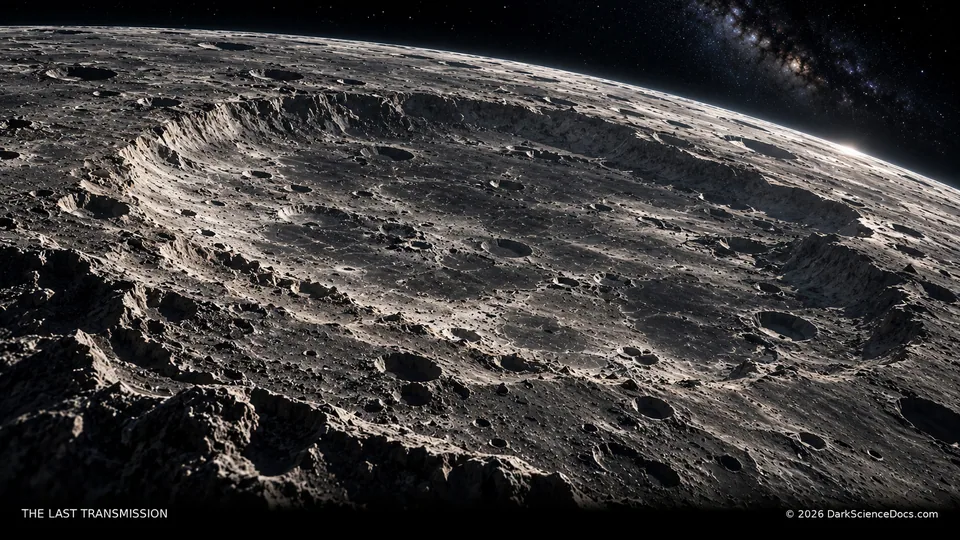 An Ancient Lunar Basin and a Deeper Question
 The Mark Shared by Titan and Pluto
EXPLORE IN 3D / MAP 06
Explore Earth and the Moon
Compare the nearby Earth–Moon system in an interactive teaching model. The explorer does not reconstruct the impact event or an unmeasured exoplanet climate.
Open Earth & Moon map