DESTINATION 01 / EARTH–MOON SYSTEM
Earth
The world we think we know
What made one rocky planet an inhabited world?
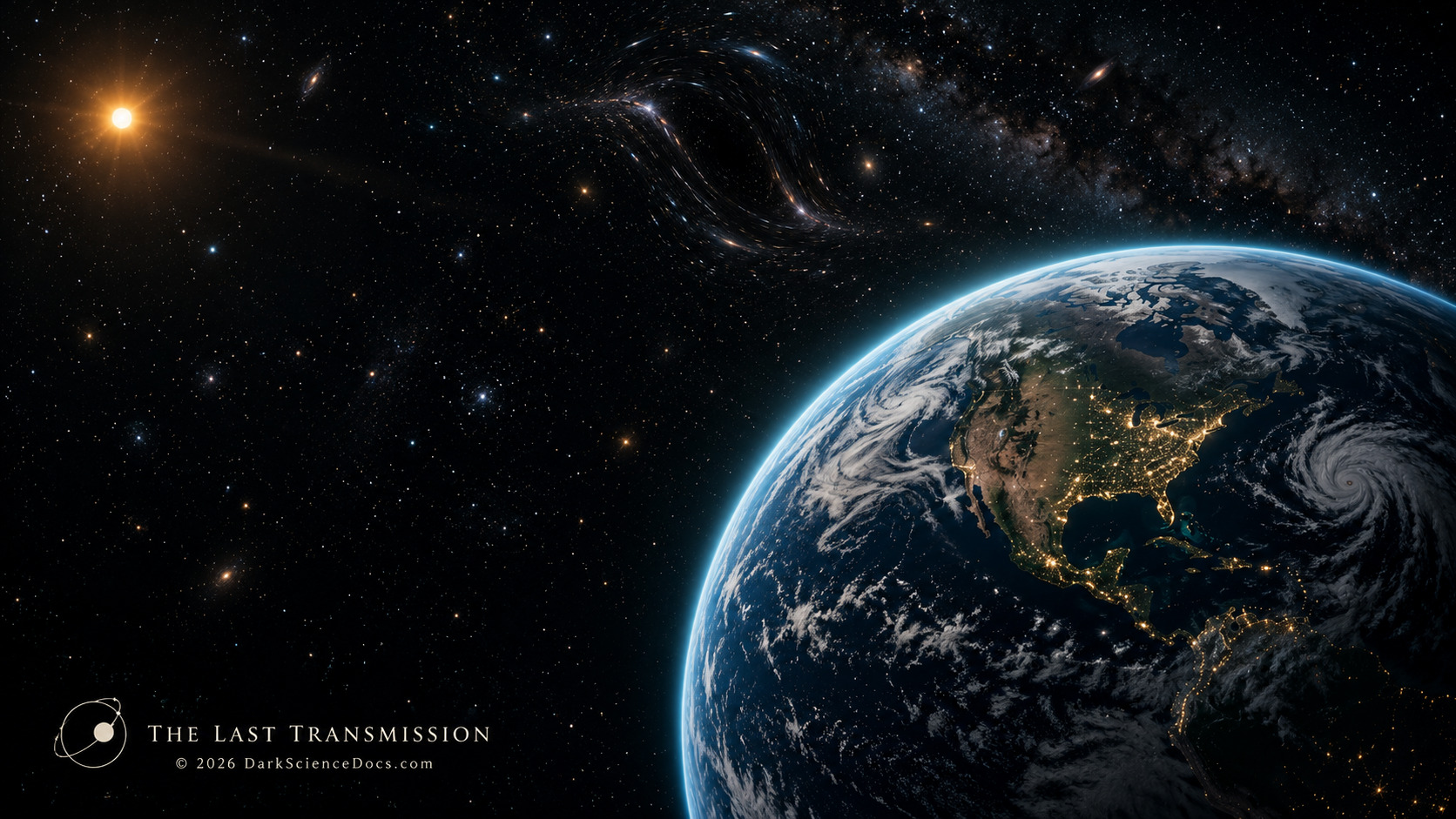
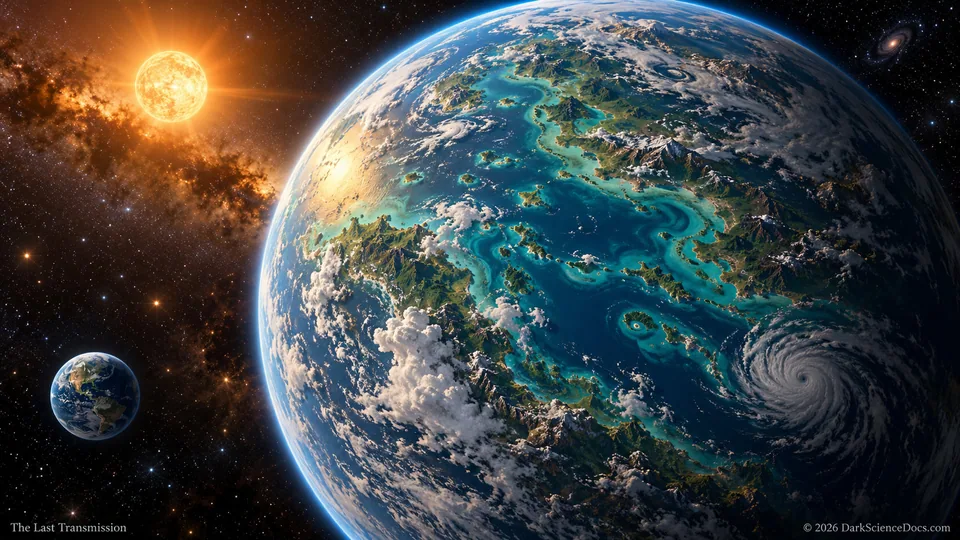
From orbit, the blue surface tells only part of Earth’s story. Liquid water, exposed land, an atmosphere, and an active interior interact over immense spans of time. The composite globe here shows surface color gathered over many observations; it cannot show those hidden systems moving beneath it.
DESTINATION 02 / EARTH–MOON SYSTEM
Magnetic Shield
A moving boundary
How does the Sun reach a world with a magnetic field?
Earth’s magnetic environment redirects much of the solar wind, but it is not an impenetrable shell. Disturbances can transfer energy into near-Earth space and produce auroras or technological effects on the ground. This globe does not render field lines or live space weather; the links lead to the measurements and the consequences.
DESTINATION 03 / EARTH–MOON SYSTEM
Deep Clock
Time written in rotation
Can something thousands of kilometers down change a day?
Atomic clocks and astronomical observations detect small variations in Earth’s rotation. A recent model links part of a slow variation to a gravitational interaction between the solid inner core and mantle. The evidence is a timing record and a physical reconstruction, not a visible feature on this textured globe.
DESTINATION 04 / EARTH–MOON SYSTEM
Young Earth
Ingredients under bombardment
Could impacts and sunlight have helped assemble life’s chemistry?
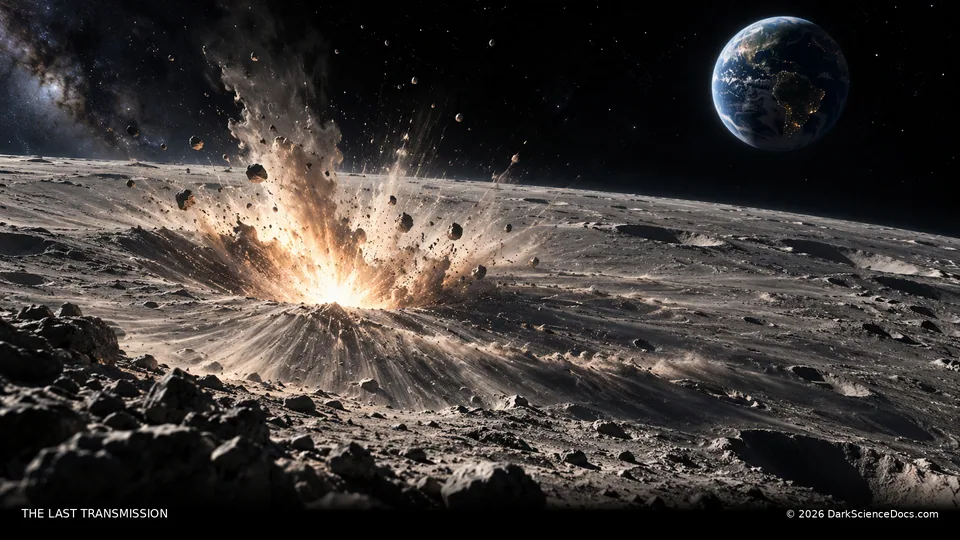
The early planet endured frequent impacts and a more active young Sun. Scientists test whether impact-heated settings and energetic particles could have produced or concentrated useful molecules. Neither mechanism establishes where life began. Compare the lunar impact record with the environmental pathways investigated in these articles.
DESTINATION 05 / EARTH–MOON SYSTEM
The Moon
The familiar near side
Why does one hemisphere keep facing us?
The Moon turns once as it completes an orbit around Earth, keeping roughly the same hemisphere facing our planet. The dark maria are ancient lava plains; bright highlands preserve older scars. Select the far side to rotate this model for inspection. That camera move is for exploration, not a simulation of the Moon suddenly spinning in its orbit.
DESTINATION 06 / EARTH–MOON SYSTEM
Far Side
A different face of the Moon
What did Earthbound observers have to wait to see?
The lunar far side is not permanently dark. It receives sunlight as the Moon moves through its phases, yet it is turned away from direct view from Earth. It has more heavily cratered highlands and fewer of the broad dark maria so familiar on the near side. The globe turns here to display the hemisphere mapped by spacecraft.
DESTINATION 07 / EARTH–MOON SYSTEM
South Pole
Shadows that can hold ice
How do we find water in places sunlight cannot reach?
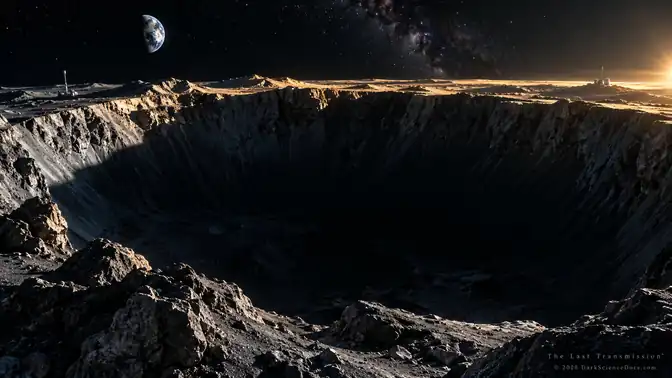
Some deep polar crater floors stay in permanent shadow. Remote measurements and the LCROSS impact experiment support water ice in parts of this cold environment. The global color mosaic is too coarse to mark individual ice deposits or safe landing terrain; those questions require dedicated polar measurements.
DESTINATION 08 / EARTH–MOON SYSTEM
The Pull
A system that changes together
How can the Moon move oceans without touching them?
The Moon’s gravity creates differences in the pull across Earth. As Earth rotates, coastlines move through a changing tidal pattern shaped by ocean depth and geography. Over much longer times, tidal interactions also transfer angular momentum between Earth’s spin and the lunar orbit. The sizes and spacing in this scene are arranged for navigation, so the gap is not a model of tidal strength.