
12 / The Moon / three different measures of reach
The Lunar Impact Whose Footprint Outgrew Its Crater
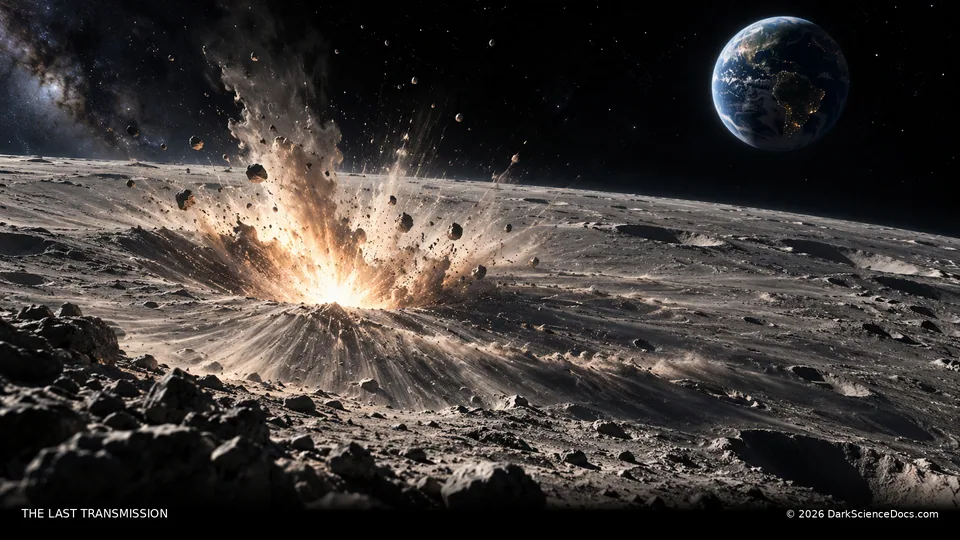
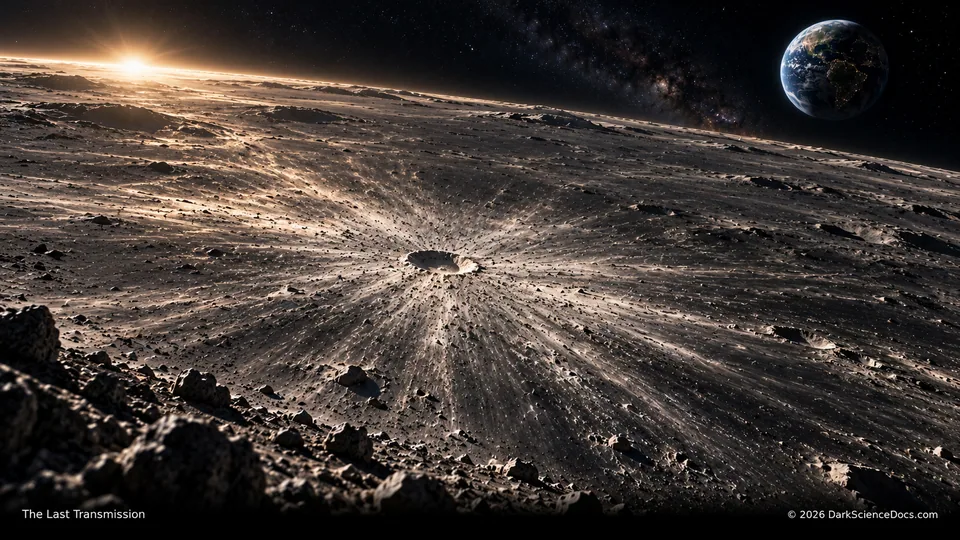
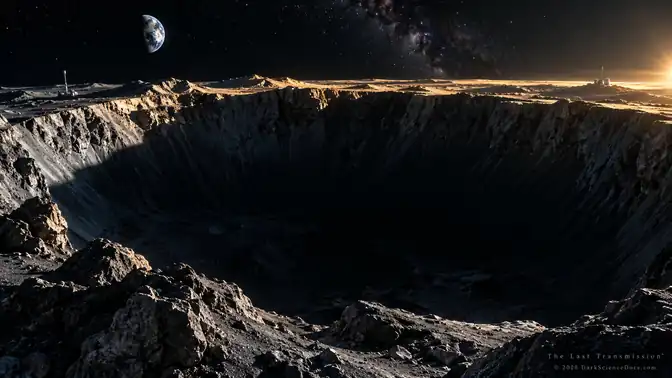
McGetchin crater is 222 meters across, yet orbital image comparisons found localized surface disturbances about 140 kilometers away. The visible hole, thermal cold spot and distant optical changes measure different consequences of one impact.
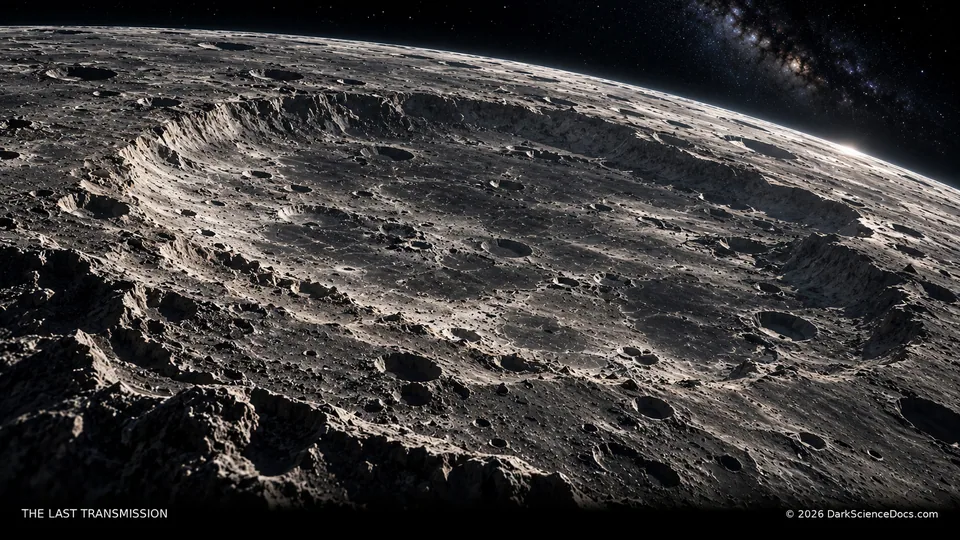
The Moon records changes without an atmosphere to carry ordinary weather across them. When fresh orbital images reveal a crater absent from an earlier frame, the interval constrains its formation and the surrounding terrain becomes a before-and-after experiment. McGetchin formed between April and May 2024 and was recognized later in the image record. Its scattered optical changes and altered nighttime temperatures show that an impact can modify regolith beyond the obvious excavation. The correct scale depends on which instrument and which kind of modification is being described.
The full investigation continues with the evidence, illustrations, and sources at The Last Transmission on Substack.
Continue reading on SubstackTHE EVIDENCE / THE OPEN QUESTION
What we know.
NASA reports a crater about 222 meters wide and approximately 43 meters deep. The research distinguishes a thermal cold spot around seven kilometers in diameter from localized distal optical disturbances extending to roughly 140 kilometers radially. These observations describe surface and thermal properties; they are not interchangeable measurements of a single destructive blast zone.
What remains open.
The distant detections do not establish uniform devastation across a 140-kilometer circle, a 140-kilometer-deep fracture, or a measured lethal radius for astronauts. Regolith structure, ejecta and related surface processes need to be separated when explaining the changed brightness and heat retention. A cold spot is not evidence of discovered lunar ice.
Why it matters.
Impact planning has to account for more than the size of the final hole. Before-and-after imaging and thermal measurements reveal processes that static crater counts can miss. Translating those measurements into engineering risk will require modeling and validation appropriate to actual habitats and equipment, rather than treating a striking distance as a ready-made safety boundary.
GO DEEPER / EVIDENCE FILE
What Does a 140-Kilometer Lunar Disturbance Actually Mean?
Separate McGetchin’s 222-meter crater, approximately seven-kilometer cold-spot diameter and localized optical effects roughly 140 kilometers away.
FOLLOW THE EVIDENCE
Research behind the field note.
EXPLORE IN 3D / MAP 06
Explore Earth and the Moon
Compare the nearby Earth–Moon system in an interactive teaching model. The explorer does not reconstruct the impact event or an unmeasured exoplanet climate.
Open Earth & Moon mapVISUAL EVIDENCE
Inside the investigation.
FOLLOW THE THREAD
Related signals.
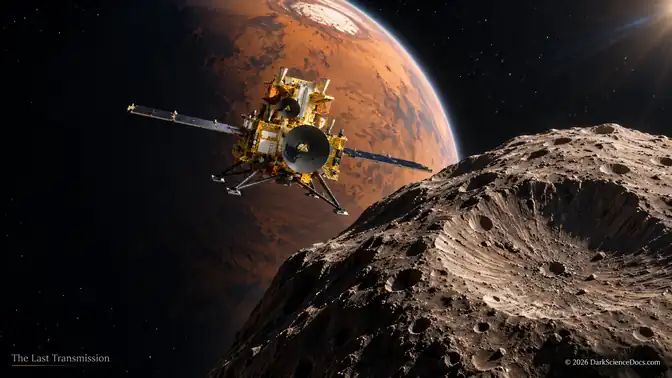
Phobos: The Moon That May Preserve Mars’s Past
MMX will investigate how Phobos formed and whether its dust contains fragments ejected from Mars. Follow the mission, the sample-return plan, and the limits of the evidence.

The People Who Cared for Laika Knew She Would Never Come Home
Before her one-way flight, a doctor brought her home to play with his children. That small kindness leaves us with a harder question about what it means to care.
The Moon Has No Owner. Its Most Valuable Ground Is Already Being Contested.
Two space powers are racing toward a crater where the Sun has barely touched the ground for billions of years. What lies in the darkness could determine humanity's future on the Moon.