

63 / A warning with changing odds
What Would an Asteroid Warning Actually Say?
An impact probability is updated as additional observations refine an orbit. Planetary defense depends on finding an object early, sharing uncertainty, and buying time for a response.
A first sighting provides a short arc across the sky, not a fixed address for an impact. Follow-up measurements can shrink or shift the predicted range, sometimes raising an early probability before eventually ruling Earth out. NASA's planetary defense office coordinates notification of credible threats and shares information with the public; a warning is not automatically a final impact forecast. DART proved that a spacecraft can alter an asteroid moon's orbit in a controlled test. Whether a similar intervention would help in a real case would depend on lead time, target properties, and a much more precise trajectory.
The full investigation continues with the evidence, illustrations, and sources at The Last Transmission on Substack.
Continue reading on SubstackTHE EVIDENCE / THE OPEN QUESTION
What we know.
NASA describes a notification role for its Planetary Defense Coordination Office when a potentially hazardous near-Earth object meets defined risk criteria. The DART impact changed Dimorphos's orbit around Didymos by about 33 minutes, demonstrating one deflection technique.
What remains open.
A discovered object's initial probability is not the same as a confirmed impact location. DART struck a known target under planned conditions; it does not show that every asteroid could be deflected with a short warning or by one spacecraft.
Why it matters.
The most consequential variable is often time. Detection, repeated measurements, communication, and response planning all improve when a possible threat is discovered years ahead rather than months ahead.
FOLLOW THE EVIDENCE
Research behind the field note.
EXPLORE IN 3D / MAP 06
See the world an impact would reach
Explore Earth and the Moon’s older impact record while the investigation follows modern warning and response.
Open Earth & Moon mapCOMING MILESTONE / SCIENCE COUNTDOWN
Hera returns to the DART impact site
A spacecraft changed a moonlet's orbit. Hera goes back to discover what the collision actually did to the asteroid. November 2026, expected arrival window.
COMING MILESTONE / SCIENCE COUNTDOWN
Apophis passes Earth safely
On April 13, 2029, a close encounter becomes a natural experiment in what Earth's gravity does to an asteroid. April 13, 2029, safe Earth flyby.
FOLLOW THE THREAD
Related signals.
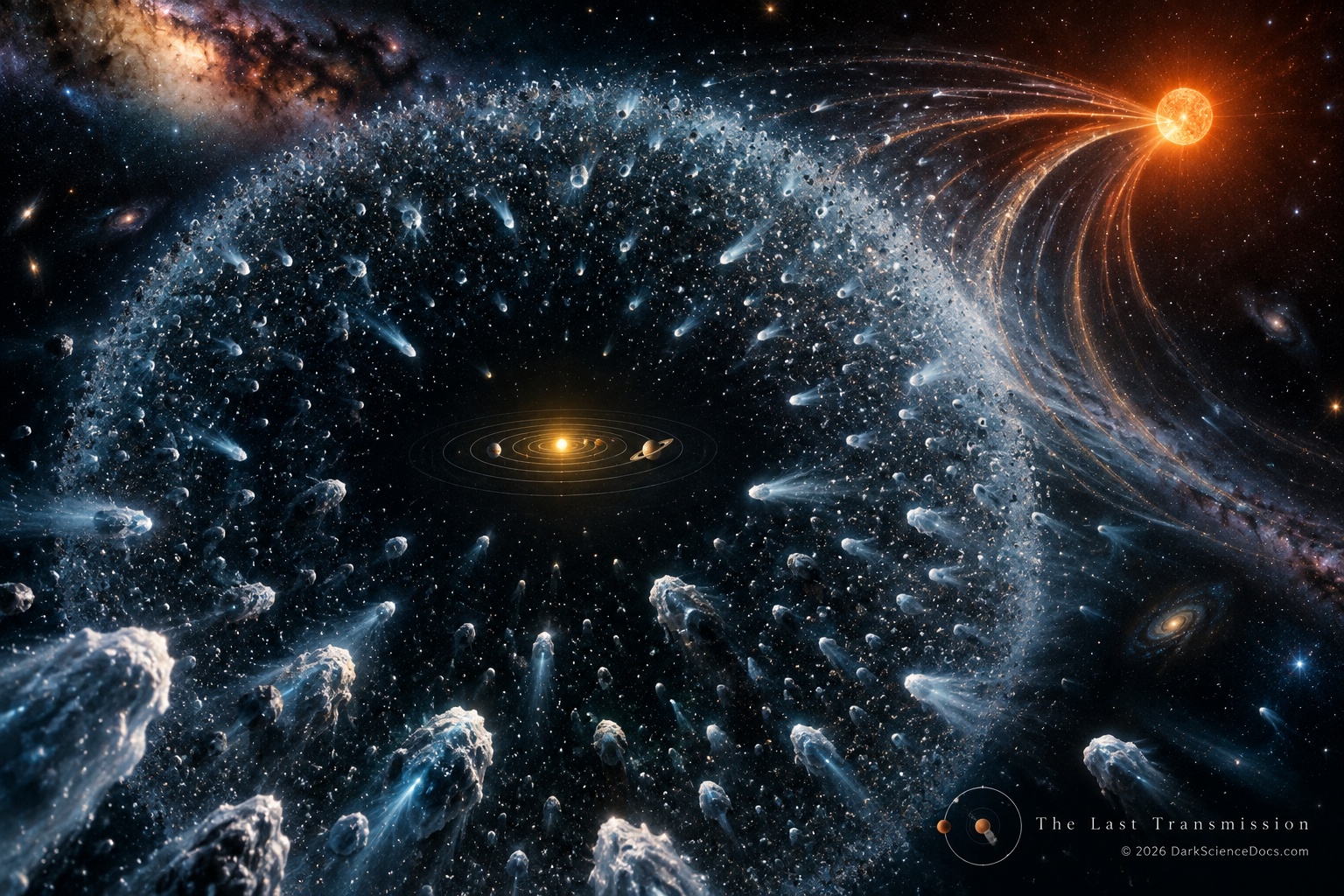
A Star Is Coming for the Solar System. It Could Wake the Oort Cloud.
Gliese 710 will pass through our distant comet reservoir in roughly 1.3 million years. Earlier stellar visitors suggest the Solar System has never been as isolated as it feels.
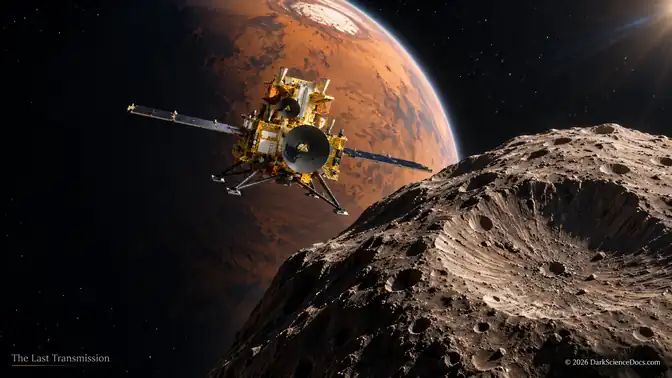
Phobos: The Moon That May Preserve Mars’s Past
MMX will investigate how Phobos formed and whether its dust contains fragments ejected from Mars. Follow the mission, the sample-return plan, and the limits of the evidence.

The People Who Cared for Laika Knew She Would Never Come Home
Before her one-way flight, a doctor brought her home to play with his children. That small kindness leaves us with a harder question about what it means to care.