
07 / RESEARCH / OBSERVATION & INTERPRETATION
Interstellar Flight: When Sparse Matter Becomes a Hazard
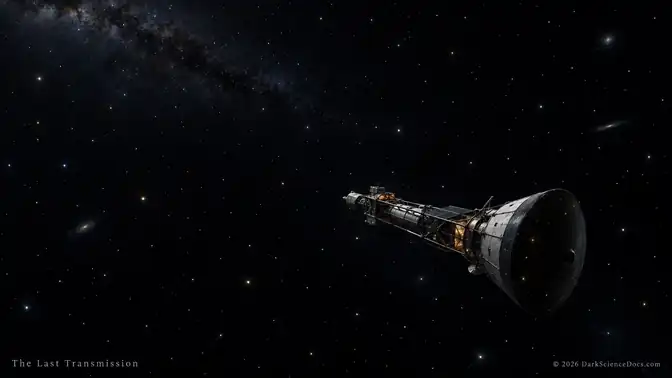
At high speed, the gas and dust between stars become an engineering problem. Travel time, shielding, propulsion and a closed habitat place connected demands on a hypothetical interstellar mission.
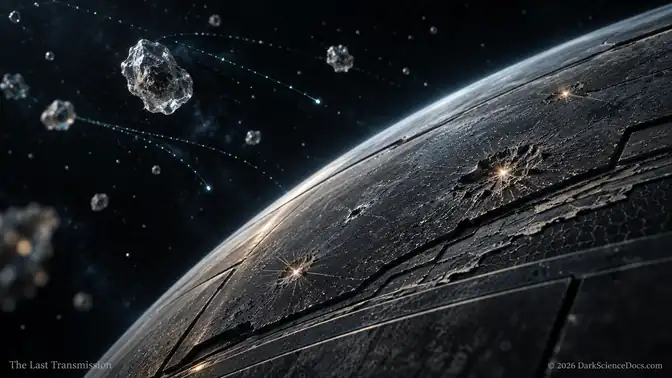
The interstellar medium contains gas and dust rather than a perfect vacuum. Increasing encounter speed raises the energy delivered by particles in the spacecraft frame, while additional protection adds mass that must also be accelerated. A calculated erosion or heating rate depends on the path, particle distribution, speed and shielding material. A conceptual starship does not demonstrate that those requirements can be met, and relativistic time effects do not cancel impact hazards.
Distance sets the first constraint
Proxima Centauri lies about 4.24 light-years away, roughly 40 trillion kilometers. Its apparent proximity on a diagram hides a distance that light itself needs more than four years to cross. If a spacecraft could cruise at one-tenth the speed of light, the journey would take about 42 years in the Earth frame before allowing for acceleration and braking. At one-fifth of light speed, the simple cruising estimate falls to about 21 years. Neither number is a prediction that we can build such a ship. They are the opening terms of the negotiation. A crew leaving in early adulthood might reach the nearest star in middle age or later, depending on the flight profile.
Empty space still contains matter
Interstellar space contains diffuse gas and dust rather than a perfect vacuum. The amount and composition vary along the route, which is one reason a serious mission would need to understand the path it intends to cross. From Earth, that thin material can seem almost irrelevant. From the front of a very fast spacecraft, it arrives as an ongoing stream of energetic impacts. The energy of an incoming hydrogen atom at 10 percent of light speed is approximately 4.7 million electron volts, calculated from relativistic kinetic energy. That figure describes the particle’s energy, not the radiation dose a passenger would receive.
Protection changes the propulsion budget
For rockets carrying their own propellant, the ideal rocket equation makes the mass burden explicit. With a fixed exhaust velocity, the required initial-to-final mass ratio grows exponentially with the desired change in velocity. Carrying more propellant means accelerating more propellant, which is why chemical engines are so poorly matched to a mission aiming for a substantial fraction of light speed. Different propulsion concepts change that accounting. A much higher exhaust velocity improves the rocket’s mass ratio, while a sail pushed by an external beam receives its propulsion energy from elsewhere. Nuclear and antimatter concepts bring their own demands for fuel production, control, shielding, and heat rejection.
Read the illustrated companion article for the full narrative and its source trail. The selected passages above follow that article’s investigation.
Continue reading on SubstackTHE EVIDENCE / THE OPEN QUESTION
What we know.
The interstellar medium contains gas and dust rather than a perfect vacuum. Increasing encounter speed raises the energy delivered by particles in the spacecraft frame, while additional protection adds mass that must also be accelerated.
What remains open.
A calculated erosion or heating rate depends on the path, particle distribution, speed and shielding material. A conceptual starship does not demonstrate that those requirements can be met, and relativistic time effects do not cancel impact hazards.
Why it matters.
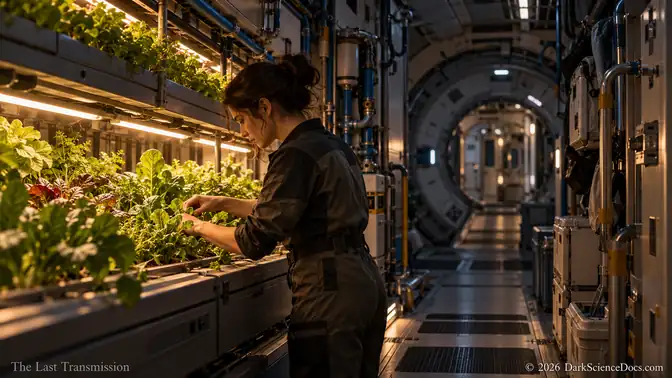
This is a tradeoff between several physical constraints rather than a single speed record. Studying them together clarifies why a small uncrewed probe and a long-lived human habitat face very different engineering problems.
COMPARE THE QUESTIONS
Follow what the light reveals.
Follow the relevant evidence and teaching models. Each model explains a mechanism and retains its own stated assumptions and limits.
FOLLOW THE EVIDENCE
Research behind the field note.
EXPLORE IN 3D / MAP 13
Explore the related science model
This is a tradeoff between several physical constraints rather than a single speed record. Studying them together clarifies why a small uncrewed probe and a long-lived human habitat face very different engineering problems.
Open Universe mapVISUAL EVIDENCE
Inside the investigation.
FOLLOW THE THREAD
Related signals.
The Faster We Chase the Stars, the Harder Space Hits Back
A faster engine could shorten the voyage to another sun. It would also turn the nearly empty space ahead into a more dangerous place.
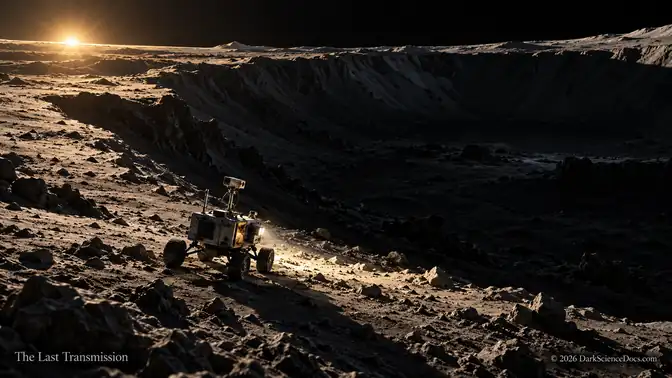
The Moon’s Darkest Places Could Decide Whether We Stay
NASA’s next lunar rovers must test whether ancient ice, dangerous terrain, and machines sent ahead of us can support something Apollo never attempted: a lasting human presence.
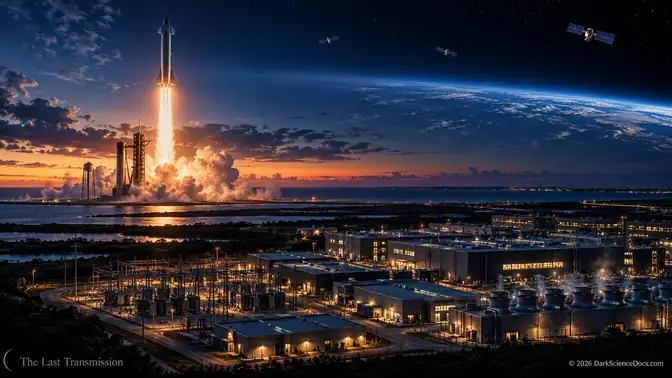
SpaceX Was Built to Reach Mars. Its Next Great Customer May Be AI.
Elon Musk’s selected update connects reusable rockets, a vastly larger Starlink network, and enormous computing campuses.