
10 / RESEARCH / OBSERVATION & INTERPRETATION
Mars Crews: Distance, Autonomy and the Limits of Rescue
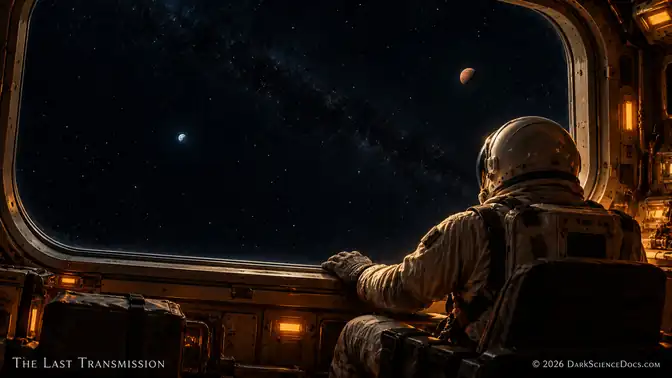
A crew beyond Earth would depend on local decisions during time-critical emergencies. Signal delay, changing physiology and environmental hazards make medical autonomy a mission-design problem.
Radio messages between Earth and Mars take minutes to travel, with the delay changing along the planets’ orbits. Earth-based specialists can advise a crew, but they cannot remove the propagation delay or provide immediate physical assistance. The health effects of a long mission combine several hazards whose interactions remain uncertain. Partial Martian gravity cannot be assumed to reverse every change caused by cruise, and a fictional medical emergency is not a prediction of one crew’s outcome.
When an answer cannot arrive in time
The International Space Station circles only a few hundred kilometers above us. Mission controllers can communicate with astronauts almost instantaneously, subject to the ordinary complexities of the communications system. Specialists on the ground can examine incoming data, troubleshoot equipment, and talk crews through difficult procedures. Even Apollo’s lunar explorers operated at a distance that allowed conversations with delays of only a few seconds. The distance between the two planets constantly changes as they orbit the Sun. NASA’s planning studies generally anticipate one-way communication delays of several minutes to more than 20 minutes, making ordinary real-time conversation impossible. Imagine reporting a strange vibration in the habitat’s oxygen system.
Radiation follows a different clock
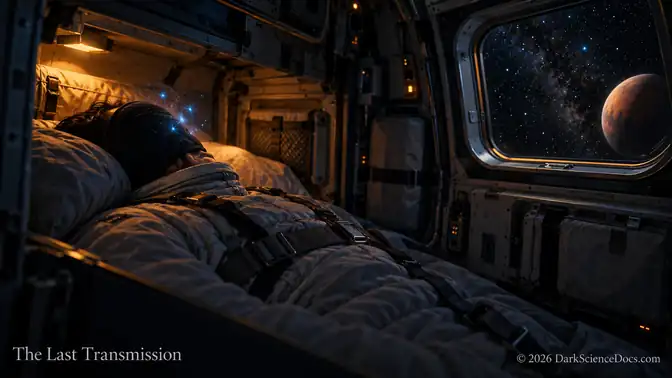
Long before the crew reaches Mars, another danger will have become part of their daily lives. It cannot be smelled or heard. It does not announce itself with pain. In most circumstances, astronauts cannot feel it passing through their bodies. Beyond Earth’s protective magnetic environment, spacecraft encounter galactic cosmic rays and energetic particles released by the Sun. Galactic cosmic rays include protons and heavier atomic nuclei traveling at extraordinary speeds. Some originate from violent astrophysical processes that occurred long before humanity existed. Their ability to penetrate matter makes them especially difficult to manage during extended journeys through deep space.
Arrival does not reset the human body
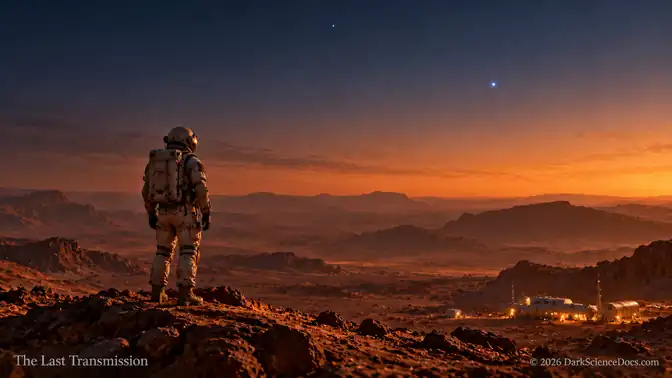
After months of confinement, the crew prepares to step onto a planet no human has ever touched. Outside the window are ochre plains, ancient impact scars, and a horizon that looks almost familiar until the eye begins to recognize everything that is missing. For an astronaut who has spent much of the preceding journey in microgravity, even the simple act of standing will represent another major transition. In weightlessness, the body begins adapting to an environment where supporting its own weight is no longer necessary. Bones and muscles can weaken, the cardiovascular system changes, and fluids redistribute toward the head.
Read the illustrated companion article for the full narrative and its source trail. The selected passages above follow that article’s investigation.
Continue reading on SubstackTHE EVIDENCE / THE OPEN QUESTION
What we know.
Radio messages between Earth and Mars take minutes to travel, with the delay changing along the planets’ orbits. Earth-based specialists can advise a crew, but they cannot remove the propagation delay or provide immediate physical assistance.
What remains open.
The health effects of a long mission combine several hazards whose interactions remain uncertain. Partial Martian gravity cannot be assumed to reverse every change caused by cruise, and a fictional medical emergency is not a prediction of one crew’s outcome.
Why it matters.
Understanding the delay changes how training, equipment and procedures are evaluated. Local diagnostic ability and robust habitats would need to support the crew during the interval in which even an excellent answer from Earth is still traveling.
COMPARE THE QUESTIONS
Follow what the light reveals.
Follow the relevant evidence and teaching models. Each model explains a mechanism and retains its own stated assumptions and limits.
FOLLOW THE EVIDENCE
Research behind the field note.
EXPLORE IN 3D / MAP M-01
Explore the related science model
Understanding the delay changes how training, equipment and procedures are evaluated. Local diagnostic ability and robust habitats would need to support the crew during the interval in which even an excellent answer from Earth is still traveling.
Open Mars Rover Surface Explorer mapVISUAL EVIDENCE
Inside the investigation.
FOLLOW THE THREAD
Related signals.
The First Humans on Mars Will Be Beyond Rescue
We are preparing to send people to another planet. But the greatest danger may arrive when someone calls Earth for help—and discovers that the answer cannot arrive in time.
The Moon’s Darkest Places Could Decide Whether We Stay
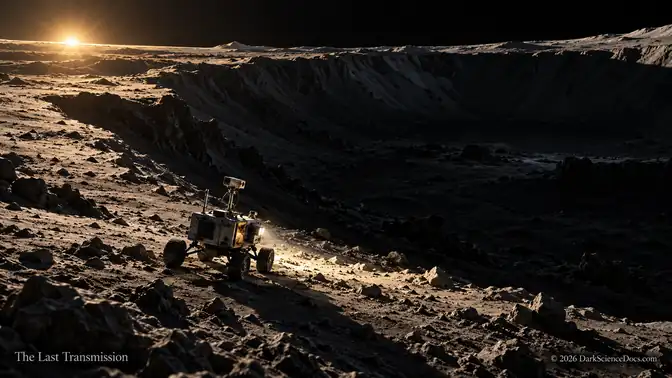
NASA’s next lunar rovers must test whether ancient ice, dangerous terrain, and machines sent ahead of us can support something Apollo never attempted: a lasting human presence.
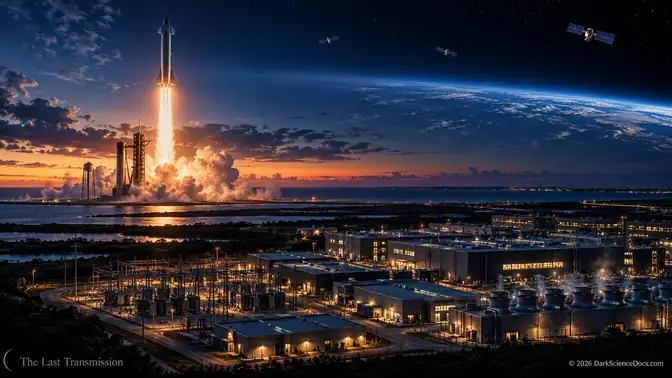
SpaceX Was Built to Reach Mars. Its Next Great Customer May Be AI.
Elon Musk’s selected update connects reusable rockets, a vastly larger Starlink network, and enormous computing campuses.